%20%20--%3E%0A%3Csvg%20version%3D%221.1%22%20id%3D%22Layer_1%22%20xmlns%3D%22http%3A%2F%2Fwww.w3.org%2F2000%2Fsvg%22%20xmlns%3Axlink%3D%22http%3A%2F%2Fwww.w3.org%2F1999%2Fxlink%22%20x%3D%220px%22%20y%3D%220px%22%0A%09%20width%3D%2239px%22%20height%3D%2240px%22%20viewBox%3D%220%200%2039%2040%22%20enable-background%3D%22new%200%200%2039%2040%22%20xml%3Aspace%3D%22preserve%22%3E%0A%3Cpath%20fill%3D%22%23FFFFFF%22%20d%3D%22M38.5%2C7H28.2v26h10.3V7z%22%2F%3E%0A%3Cpath%20fill-rule%3D%22evenodd%22%20clip-rule%3D%22evenodd%22%20fill%3D%22%23FFFFFF%22%20d%3D%22M26.1%2C25.5c0%2C5.8-4.1%2C7.5-12.9%2C7.5C3.9%2C33%2C0%2C31.2%2C0%2C25.2v-1.1h11.6%0A%09v2.4c0%2C0.7%2C0.1%2C1.4%2C1.2%2C1.4c1%2C0%2C1.2-0.4%2C1.2-1.3v-0.9c0-1.6-0.9-1.6-3.5-2.2C2.2%2C21.7%2C0%2C19.7%2C0%2C15.3v-0.9C0%2C9.3%2C5.5%2C7%2C12.9%2C7%0A%09c10.2%2C0%2C12.8%2C2.6%2C12.8%2C7.4v1.8h-11v-2.9c0-0.6-0.4-1.1-1.2-1.1c-0.6%2C0-1.2%2C0.4-1.2%2C1.1v0.9c0%2C1.5%2C0.9%2C2%2C3.3%2C2.5%0A%09c8%2C1.6%2C10.5%2C3.3%2C10.5%2C7.5V25.5z%22%2F%3E%0A%3C%2Fsvg%3E%0A)
North Dakota State Pushes to Change Longstanding NCAA Rule Ahead of FBS Move
In this story:

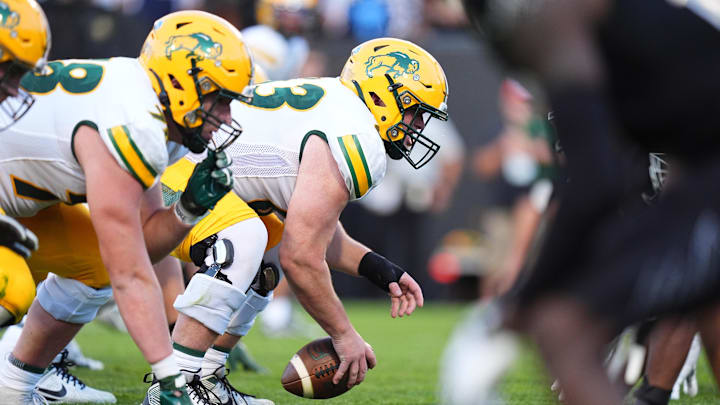
After capturing 10 national championships in the last 15 years at the FCS level, North Dakota State football is making the leap to the FBS, announcing a move from the Missouri Valley Conference to the Mountain West in time for the 2026 season. On Tuesday, the school signaled that it does not intend to wait before competing for the postseason despite the jump up in division.
NDSU will challenge the NCAA’s rule that requires a team to complete two transitional seasons at the FBS level before being eligible to play in the postseason—both the College Football Playoff and bowl games.
The current rules have been in place since the early 2000s when the two levels were still known as Division I-A and I-AA. In response from a challenge by James Madison in 2023, NCAA president Charlie Baker wrote, “The Division I Board of Directors and council believe clear standards and timelines for reclassification processes will promote strategic membership growth and allow for a uniform experience for all reclassifying institutions.”
To North Dakota State athletic director Matt Larsen, the rule doesn’t reflect the modern era of college athletics, with the advent of NIL, revenue sharing and the transfer portal.
“It’s a very antiquated rule,” Larsen told CBS Sports. “A lot of things have changed in our industry, and you could argue that's an overly punitive rule now.”
In response to the idea that the transition period allows programs to build up to FBS contention, including the rise in scholarships for a football program from 63 at the FCS level to 85, Larsen says that recent programs to make the same jump as the Bison have proven that the transition period is no longer necessary.
“I would argue whether I'm spending $5 million on football or $50 million on football, if my team is good enough, that shouldn’t matter,” Larsen said. “... If you’re truly trying to allow that program to be the most successful they can be, well, let them compete for championships. That’s going to help keep your players and maintain your roster.”
Even without a rule change, there is a pathway for North Dakota State to make a bowl game in 2026–27, albeit one that requires the Bison to get some help. Delaware and Missouri State, two teams that transitioned up in ‘25, both made bowl games as there were not enough eligible teams to fill 82 bowl spots. That would not, however, give NDSU a pathway towards the College Football Playoff in the event that the Bison immediately establish themselves as the top Group of 6 program. Another recent addition to the FBS ranks, 2025 College Football Playoff participant James Madison, found itself in a similar place just a few years ago.
James Madison challenged the NCAA’s two-year transition rule in 2023
JMU made its jump to the FBS and Sun Belt Conference in 2022, and the Curt Cignetti-led Dukes found immediate success, going 8–3 with a 6–2 league record, good enough to put them atop the East Division. However, because of the rule barring them from the postseason, Coastal Carolina, a team with the same conference record as James Madison that the Dukes defeated head-to-head by 40 points to end the regular season, advanced to the Sun Belt title game. JMU’s season came to a close after that late November win.
Cignetti’s team took a step forward from that impressive debut in 2023, winning its first nine games of the season, a start that would have had the program firmly in the mix for a College Football Playoff berth, though their postseason ineligibility kept the Dukes from being included in the selection committee’s rankings while they entered the AP and Coaches Poll Top 25 rankings. As a result, James Madison embarked on a mid-season push to change the NCAA rules, the same charge North Dakota State now makes ahead of its first FBS season.
“Our student-athletes have done everything the right way, and they view the postseason prohibition in this instance as inexplicable punishment in light of the NCAA's stated priorities,” James Madison officials wrote, per ESPN, ahead of a win over UConn that would push their record to 10–0. “As many commentators have noted, this is an opportunity for the NCAA to do the right thing for our student-athletes and recognize their exceptional efforts on and off the field.”
JMU was joined in the push by fellow ascendent FBS program Jacksonville State as well as Tarleton State, which had just moved up from Division II to FCS. Ultimately, the NCAA denied the appeal, despite public outcry on behalf of the Dukes.
Two years later, the postseason exclusions hardly blunted James Madison’s impressive move to the top of the Group of 6 ranks. After Cignetti’s departure for Indiana, the Dukes fell back to 9–4 (4–4) in their first year under Bob Chesney, but won their bowl game debut against Western Kentucky in the Boca Raton Bowl. And in 2025 JMU posted a miraculous 12–2 record, reaching the College Football Playoff as a second G6 program in the field, the main beneficiary of Duke’s ACC championship upset of Virginia.
North Dakota State likely sees JMU’s success as a roadmap for its own jump to the FBS ranks after years of speculation, but the Bison don’t intend to wait two years to prove themselves in December and beyond.
More College Football from Sports Illustrated
Listen to SI’s new college sports podcast, Others Receiving Votes, below or on Apple and Spotify. Watch the show on SI’s YouTube channel.

Dan Lyons is a staff writer and editor on Sports Illustrated's Breaking and Trending News team. He joined SI for his second stint in November 2024 after a stint as a senior college football writer at Athlon Sports, and a previous run with SI spanning multiple years as a writer and editor. Outside of sports, you can find Dan at an indie concert venue or movie theater.