%20%20--%3E%0A%3Csvg%20version%3D%221.1%22%20id%3D%22Layer_1%22%20xmlns%3D%22http%3A%2F%2Fwww.w3.org%2F2000%2Fsvg%22%20xmlns%3Axlink%3D%22http%3A%2F%2Fwww.w3.org%2F1999%2Fxlink%22%20x%3D%220px%22%20y%3D%220px%22%0A%09%20width%3D%2239px%22%20height%3D%2240px%22%20viewBox%3D%220%200%2039%2040%22%20enable-background%3D%22new%200%200%2039%2040%22%20xml%3Aspace%3D%22preserve%22%3E%0A%3Cpath%20fill%3D%22%23FFFFFF%22%20d%3D%22M38.5%2C7H28.2v26h10.3V7z%22%2F%3E%0A%3Cpath%20fill-rule%3D%22evenodd%22%20clip-rule%3D%22evenodd%22%20fill%3D%22%23FFFFFF%22%20d%3D%22M26.1%2C25.5c0%2C5.8-4.1%2C7.5-12.9%2C7.5C3.9%2C33%2C0%2C31.2%2C0%2C25.2v-1.1h11.6%0A%09v2.4c0%2C0.7%2C0.1%2C1.4%2C1.2%2C1.4c1%2C0%2C1.2-0.4%2C1.2-1.3v-0.9c0-1.6-0.9-1.6-3.5-2.2C2.2%2C21.7%2C0%2C19.7%2C0%2C15.3v-0.9C0%2C9.3%2C5.5%2C7%2C12.9%2C7%0A%09c10.2%2C0%2C12.8%2C2.6%2C12.8%2C7.4v1.8h-11v-2.9c0-0.6-0.4-1.1-1.2-1.1c-0.6%2C0-1.2%2C0.4-1.2%2C1.1v0.9c0%2C1.5%2C0.9%2C2%2C3.3%2C2.5%0A%09c8%2C1.6%2C10.5%2C3.3%2C10.5%2C7.5V25.5z%22%2F%3E%0A%3C%2Fsvg%3E%0A)
Love him or hate him, Bill Walton stands out as an ESPN commentator

TEMPE, Ariz.—“Tell them it’s about basketball, not hockey. Tell them we save our ice for margaritas!”
It’s Wednesday morning at the Walter Cronkite School of Journalism at Arizona State, and Bill Walton has taken over the morning news meeting. In Tempe, about 20 students gather to plan the nightly broadcast. Following along via video chat, four ASU students from the Washington, D.C. bureau—one of whom has pitched a story on a local hockey team—exchange bewildered looks. Who the hell is this guy and what is he talking about?
Waltonism: A phrase or comment that has no bearing or relation to the current activity; a quirky non sequitur.
Example: On the elevator ride up to the newsroom, Walton turns to a student photographer who has introduced herself as Courtney. “Just remember,” he says, “as a redhead, you are one of the chosen few. You have a solemn responsibility.”
To do what, he never explains.
Considered one of the best players of all-time, Walton, a 62-year-old former redhead whose hair is now white, lives his life exactly the way he analyzes college basketball games on ESPN and the Pac-12 Network: Randomly. He is popular and polarizing, celebrated and sneered at. Unpredictable and unquestionably authentic. Friendly, too.
“I’m Bill,” he says moments later, sticking out a giant hand and dwarfing a timid female student with his 6'11" frame. “Two L’s.”
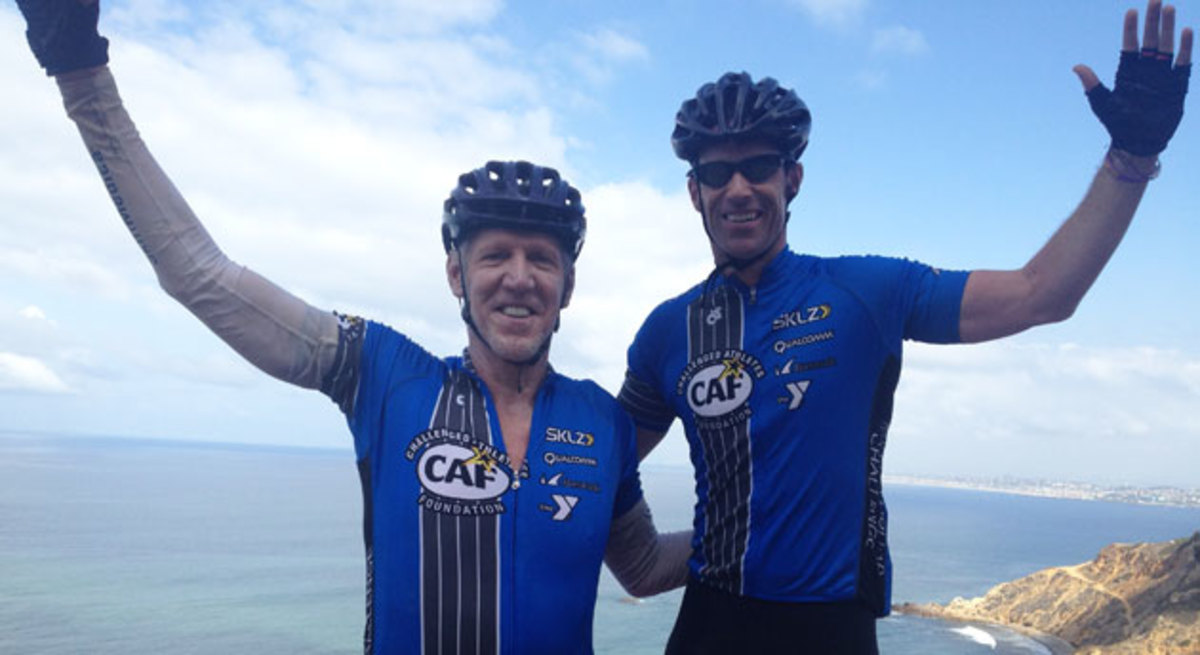
Walton’s in town for Arizona State-UCLA but first he has to film Walton’s World, a weekly segment where he does, well, anything he wants. He’s visited the Ken Kesey papers at University of Oregon’s library, shown clips from his October San Francisco-to-San Diego bike ride with producer Tim Sullivan and burned Sweetgrass with Utah coach Larry Krystkowiak. Two weeks ago, he and play-by-play partner Dave Pasch took a lesson with the Washington crew team, and he called the UW-Arizona game in a rowing singlet. Pasch was not surprised by that move, but didn’t expect Walton to “look like Andre the Giant on camera.”
This week Walton is touring ASU’s journalism facilities, some of the best in the country, with assistant dean Mark Lodato. After approximately 17 minutes, Lodato shakes his head, widens his eyes and says to no one in particular, “This is going to be the most exhausting day of my life.”
But so, so entertaining.
In a small, glass-windowed conference room, 13 students crowd around Walton as he starts to speak, telling the story of how he became a storyteller. Walton loves stories, loves learning, loves telling stories about all he’s learned. He’s full of completely useless, interesting, random facts and can babble on about them for hours. (Who else knows that Michelangelo died on this day in 1564 in Rome, Italy?) He’d be a terrific candidate for Who Wants to be a Millionaire’s phone-a-friend lifeline because he’s knowledgeable about so many topics. He’d also probably go off on a soliloquy and the timer would buzz before he got to the answer you needed, but think about how much you’d learn in those 30 seconds! If it weren’t for mandated TV timeouts every four minutes and various commercial breaks, Walton could fill an entire two-hour game broadcast all by himself. And he’d have plenty of information left over.
Dressed in blue jeans, white basketball shoes and a Carlos Santana T-shirt, Walton’s busy telling students about March 15, 1990. That's the day the oft-injured Hall of Famer, whose career had ended in 1990 because of various injuries, underwent his 30th operation. For all Walton accomplished in his playing career, no one ever would have predicted he’d take up a job in television. He says he was lying in hospital bed that day 25 years ago when “a lightning bolt hits the smoking crater that is my mind,” and he realized he should be on camera. Obviously.
Sullivan, sitting nearby, covers his mouth to keep from laughing out loud. “There’s no one quite like him in the world,” Sullivan says later. “He knows it, and he likes it that way.”
Walton talks about learning to like himself, shedding a life-long stuttering problem, that he’s still uncomfortable on camera, that he was the slowest learner John Wooden ever taught, and he ends almost every answer with, “What was your question again, I’m sorry.” He pokes fun at himself, too, saying he’d be an excellent guest on Pardon the Interruption.
Students share glances of amusement, confusion and appreciation. It’s clear they find Walton entertaining but they also don’t fully understand that this is Bill Walton, three-time college player of the year and two-time national champion at UCLA, an NBA MVP and world champion, one of the greatest players in the history of basketball. In a room full of 20somethings, he’s known for his TV work, not his playing ability. Senior Jared Cooper offered this when asked what he knew about Walton before studying him online: “He’s really tall and really funny?”
And so much more.
Good luck trying to keep him on task. Sullivan got that responsibility three years ago, when Walton started doing ESPN games. Sullivan, who Walton said had a promising career as a producer until he came along, has to create a box in which Walton fits, though maybe a "three-sided box is more accurate," allowing Walton to be unconventional as he feels necessary. Sullivan met Walton years ago, so long he can’t remember the exact date, at a Mexican restuarant in San Antonio. “My impression was just like anyone else’s—he’s out of his mind! But he’s so smart.” Sullivan says.
After the tour, Sullivan wants to grab lunch but Walton shakes his head. He needs to study, he says, grabbing the keys and heading to the car. For all the Waltonisms ("Beautiful basketball! The Ducks on fire after a poor start a start as you could have! They have somehow come back and have found their way back to the Oregon Trail! Lewis & Clark would be so proud.") he might drop, Walton has an insatiable appetite for taking notes. He craves details and background and six-degrees-of-separation stories, filling his notepad with tidbits other analysts wouldn’t think to ask about. Arizona State sports information director Doug Tammaro says he’s never met someone who prepares harder than Walton, and he’s been in the business 20 years. At UCLA’s shootaround, Walton walks right onto the floor to talk with coaches and players, a move fellow ESPN color analyst Jay Bilas calls “unusual.”
Bilas grew up in southern California idolizing Walton. He watched UCLA games on tape delay, fighting sleep to stay up late and watch Walton dominate in the early '70s. On Jan. 15, he teamed up with Walton and Pasch for the Arizona-Colorado game, and surprised Walton by showing up in a Grateful Dead shirt. (Bilas says he drew the line at wearing pants made of hemp, but he considered it.) They talked about evolution and creationism and Colorado legalizing marijuana. At the break Pasch closed with, “If no one gets fired, we’ll be back for the second half.”
This comes up again during ASU-UCLA, with 10:24 to go in the first half and UCLA leading 18-13. Walton, who the night before visited Pasch’s house and spent time with his family, brings up Pasch's wife's ongoing concern about paying their mortgage, lest Walton go too far and get everyone canned. In the truck, Sullivan yells, “We’re all worried!”
Sullivan tapes a GoPro camera to the courtside monitor during games, allowing him to watch interaction between Pasch and Walton. Typically, it goes something like this: Pasch is calling the game, and Walton is hitting him in a “Hey-I-have-something-to-say” manner while Pasch shoots him an “Oh-I’ll-bet-you-do” look. Then Pasch goes to break.
“When you work with him, the first thing he says is, ‘Say whatever you want. Nothing will ever offend me,’” Bilas says. “Since he played, he’s been irreverent and anti-establishment without being rude. He’s an original.”
He also doesn’t believe in scripts. Pasch says he is “not allowed” in pregame conversations with Sullivan and Walton. Whenever a good discussion breaks out prior to tip, Walton cries, “Save it for the air!” preferring to let conversations develop organically. It’s an acquired taste, Sullivan admits. Not everyone can handle someone as off the wall as Walton. (In the production truck during ASU-UCLA a graphics operator explains to a young assistant that “wacky tangents” are always a good time to put commentators' names on screen to remind viewers that yes, this is to be expected with this particular color analyst.) Not everyone likes it.
When Ben Howland was still at UCLA, the coaching fraternity did not appreciate Walton’s blatant disgust with the Bruins’ struggles, and his calling out of Howland. Walton has since reined in his criticism; it certainly helped that Howland left in 2013, replaced by Steve Alford. Now there are other issues. In December, an Arizona student started a petition to ban Walton from calling Wildcats games, gathering more than 1,500 signatures. Walton waves away questions about this—he generally does not like being interviewed in an official capacity—but Pasch believes Walton “relishes being the hero and the villain at the same time.”
Cooper, the ASU senior who now considers himself a Walton diehard and whose father reacted with a text message that read “No effing way!” when he heard his son got to visit with Walton, loves listening to the big man call games. “He makes it so personal,” Cooper says. “You feel like it’s just you and him, sitting there on the couch.”
Says Bilas: “I think there might be some people who don’t really get his goofball stuff and don’t understand how much he knows about the game. To me, he’s like Bill Raftery: ultra-prepared with a knowledge base that’s immense and incredibly deep, but they keep it fun. Every game, he turns to Pasch and says, 'It's Dave, right?' And every time, I'm on the ground laughing.”
At Arizona State, Walton delights in the ASU student section’s “Curtain of Distraction” and exclaims “Cortez!” when a fathead of his dog circles the crowd (it was Sullivan’s idea, and the rare time when Walton is surprised by Sullivan instead of the other way around). NBA All-Star James Harden, a former Sun Devils All-America, is in town to celebrate his jersey being retired, and joins Walton and Pasch on air in the second half. Walton straps on a foam beard—available to fans at the game in honor of Harden—and conducts the entire interview wearing it. For any other commentator team, this would seem bizarre. With Walton, it’s practically expected. If anything, the game lacks for Waltonisms. A close contest—ASU’s 68-66 win features 17 lead changes and three ties—coupled with Harden’s visit means Walton’s time to be himself is considerably cut down.
He’s still a hit. Lee Fitting, the ESPN producer responsible for creating a cult-like following for the football version of College GameDay, sits in the production during the game, cracking up repeatedly. “Bill makes a generic game not generic,” he says afterward. “I love being entertained by him.” Asked if there’s a place for Walton on GameDay, Fitting says Walton as a guest picker during football season could make for epic television.
After every game, Walton welcomes a long line of autograph and picture seekers. One man brings 31 vintage Sports Illustrateds to the game, each featuring Walton on the cover. He signs all of them. He records a video birthday message via an iPhone for Evelyn, a 1962 UCLA grad, telling her “I miss you!” Another fan unfolds a 1986 Sporting News cover and gives it to Walton with shaking hands. He’s been saving it forever, he says, and when Walton hands it back to him, the fan looks like he might be crying. Sullivan thinks he attracts so many because “there’s no one with his resume, his cache, his ability to articulate” who was also a terrific player. A lot of great athletes are boring; Walton is one of the best, truest characters in sports.
He’ll stay for hours to greet new friends. In the Oregon library before the Feb. 11 game between the Ducks and USC, a young girl approached Walton overcome with emotion. She explained that her dad is a big UCLA fan, huge, and she grew up with not one but two rooms in their home dedicated to the Bruins. At her request, Walton wrote her father a birthday note: “To Jim, Thanks. You’re a great dad. Rachel is an angel. Congrats and happy birthday!”
“She couldn’t stop shaking,” Sullivan says, smiling. “She was so excited. It’s like she was meeting The Beatles.”
At postgame dinner with the crew, Walton tells stories about Larry Bird and Bill Russell, Wooden’s favorite player John Stockton, riding his bike every day and fielding calls from Nixon (Bob the ABC producer, not Richard the president). Because it’s Walton, he throws in anecdotes about being a Wheel of Fortune World Champion (no, seriously. Also did you know Vanna White’s birthday is today, Feb. 18?) and the time he climbed a tree in the Philippines to pet an eagle for an environmental documentary (it won an Emmy in 1979). Sullivan eggs him on, asking him to tell this story and that story, and remember the time you almost got us killed on that bike ride? (Walton rolls his eyes at this accusation and says Sullivan is being dramatic.)
As he gathers his jacket, Walton pops a guacamole-loaded chip into his mouth and says, “When the doctor tells me I have one minute to live, I know where I’ll be—at a basketball game.”
The question, of course, is what he’ll be saying at that game.
 Add us as a preferred source on Google
Staff writer Lindsay Schnell joined SI in 2014 as a national college sports writer after covering Oregon State athletics for The Oregonian.