%20%20--%3E%0A%3Csvg%20version%3D%221.1%22%20id%3D%22Layer_1%22%20xmlns%3D%22http%3A%2F%2Fwww.w3.org%2F2000%2Fsvg%22%20xmlns%3Axlink%3D%22http%3A%2F%2Fwww.w3.org%2F1999%2Fxlink%22%20x%3D%220px%22%20y%3D%220px%22%0A%09%20width%3D%2239px%22%20height%3D%2240px%22%20viewBox%3D%220%200%2039%2040%22%20enable-background%3D%22new%200%200%2039%2040%22%20xml%3Aspace%3D%22preserve%22%3E%0A%3Cpath%20fill%3D%22%23FFFFFF%22%20d%3D%22M38.5%2C7H28.2v26h10.3V7z%22%2F%3E%0A%3Cpath%20fill-rule%3D%22evenodd%22%20clip-rule%3D%22evenodd%22%20fill%3D%22%23FFFFFF%22%20d%3D%22M26.1%2C25.5c0%2C5.8-4.1%2C7.5-12.9%2C7.5C3.9%2C33%2C0%2C31.2%2C0%2C25.2v-1.1h11.6%0A%09v2.4c0%2C0.7%2C0.1%2C1.4%2C1.2%2C1.4c1%2C0%2C1.2-0.4%2C1.2-1.3v-0.9c0-1.6-0.9-1.6-3.5-2.2C2.2%2C21.7%2C0%2C19.7%2C0%2C15.3v-0.9C0%2C9.3%2C5.5%2C7%2C12.9%2C7%0A%09c10.2%2C0%2C12.8%2C2.6%2C12.8%2C7.4v1.8h-11v-2.9c0-0.6-0.4-1.1-1.2-1.1c-0.6%2C0-1.2%2C0.4-1.2%2C1.1v0.9c0%2C1.5%2C0.9%2C2%2C3.3%2C2.5%0A%09c8%2C1.6%2C10.5%2C3.3%2C10.5%2C7.5V25.5z%22%2F%3E%0A%3C%2Fsvg%3E%0A)
Michigan State's playoff loss shows how far the program still must go
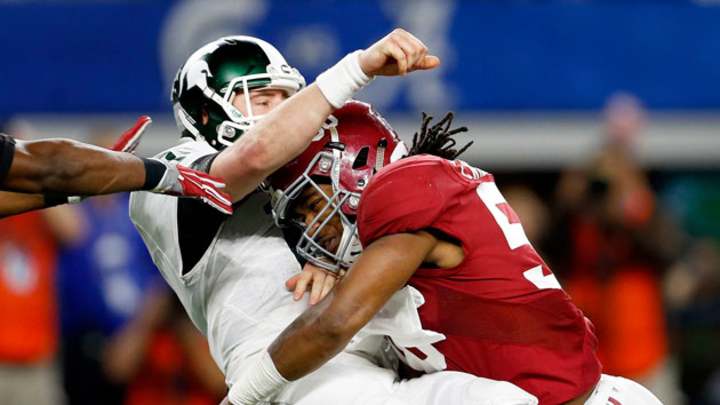
ARLINGTON, Texas — Almost five years ago to the day, Michigan State played Alabama in a bowl game. The result was something like pulp in an ash heap run over by several heavy construction trucks, with a house then dropped on it. The Spartans lost by six touchdowns in the Citrus Bowl on that Jan. 1, and no one liked to talk about that going into a reunion with the Crimson Tide in this week’s Cotton Bowl playoff semifinal. And what happened on Thursday wasn’t as bad.
It was, in its own bloody and miserable way, something worse.
A 38–0 bludgeoning suffered by the Spartans demonstrated that, no, all of the upgrades in talent, confidence and standards over the last four years were not enough. That it is insufficient to walk into a game with a massive chip on your shoulder when the other guys are stronger and faster and not concerned with respecting you, because they would prefer to take that chip and bash you with it. Everything Michigan State had done since Jan. 1, 2011 was intended to prevent a repeat of that day. Yet it left AT&T Stadium broken, Sparty down, wondering how far it had really come when it was so far from where it expected to be.
“I don’t even think they were that good,” said sophomore defensive tackle Malik McDowell, who may well have been one of the few Spartans to hold his own. “I’m not gonna say they’re not good—obviously they’re good, they beat us 38–0. I don’t know what happened today. I can’t even tell you. I ain’t never been through nothing like this. I can’t even explain what’s going on.”
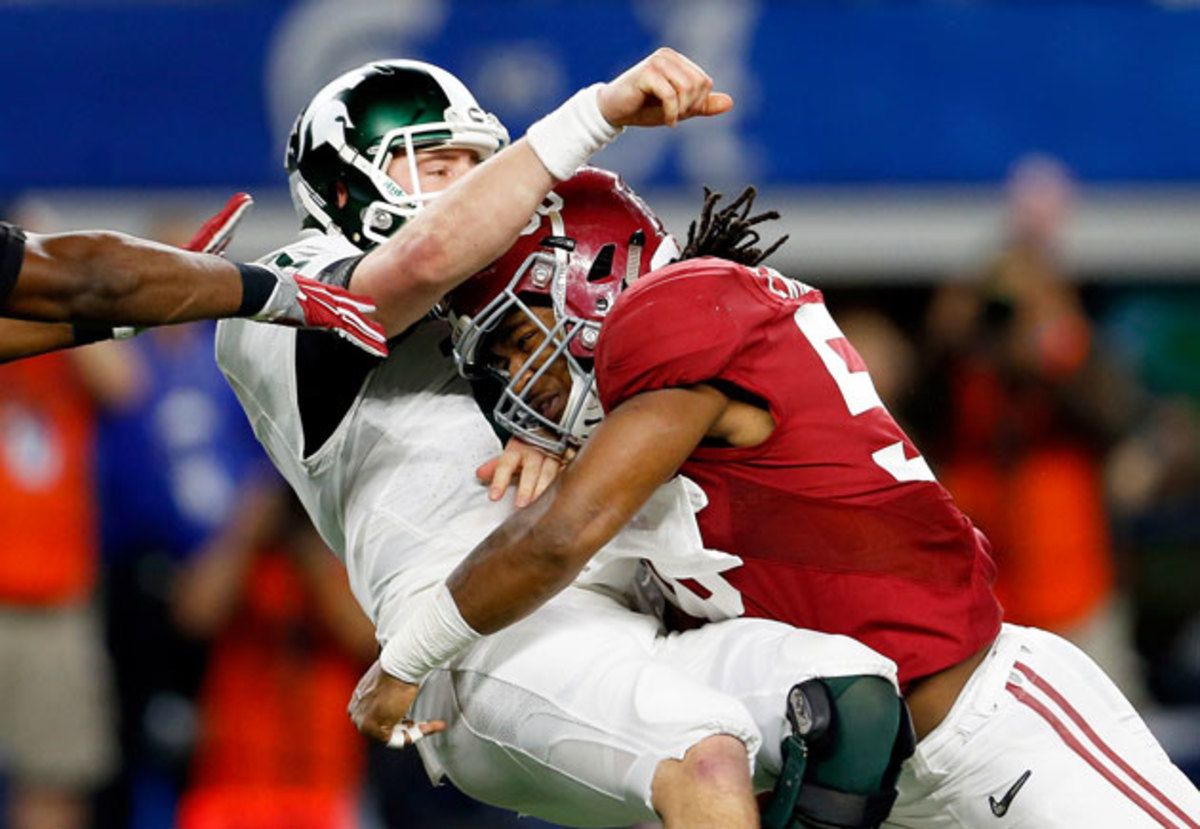
It was an assessment that neatly covered the psychological and physical disconnect here. If one loss didn’t undo winning at least 11 games in five of the last six seasons, did it cast a Texas-sized pall over those accomplishments? Is the measure of the difference between Alabama and Michigan State just a bunch of minor errors laid end to end, as the Spartans suggested after the game? Or is it a symptom of shortcomings much more complex and difficult to address?
This is the identity crisis coach Mark Dantonio’s program comes to now. If this is what a championship contender looks like, it bore little resemblance to what Michigan State mustered Thursday.
The blue-collar Big Ten champion managed 29 rushing yards and hit on less than half its pass attempts. It surrendered four sacks, gave up a punt return touchdown and allowed the opposing quarterback to go 25 for 30 on a night when the defense otherwise held a Heisman Trophy-winning tailback in check. From along the line of scrimmage to deep in the secondary, Alabama was better than Michigan State just about everywhere. “It wasn’t that anybody was too hurt or wasn’t prepared enough or wasn’t good enough,” senior left tackle Jack Conklin said. “We just dropped the ball and didn’t come out and play the way we usually do.”
Forceful lines guide Clemson past Oklahoma, give championship look
Losing this way without any available excuse might actually be the more insidious thing. It would’ve been far easier to swallow if, say, Connor Cook’s right shoulder was a mess, which the Spartans senior quarterback insisted was not the case. (“I’m not going to be out there playing on a shoulder that needed to be operated on,” Cook said. “I’m fine.”) So, the defeat certainly reconfirms the urgency in East Lansing to pile up more players with top-shelf raw ability, which the staff is doing with increasing regularity; Michigan State’s last two recruiting classes ranked in the national top 25 and its current crop of commitments from the 2016 class features nine composite four-star recruits alone and stands to be the best haul of Dantonio’s tenure. (The Spartans are 10th in Scout.com's team rankings.)
It may be foolish to think the Spartans can regularly match the depth of ability on the Crimson Tide’s roster. Maybe no one can. But if you start with highly talented players, and you coax out of them what you coaxed out of zero- to two-star recruits the past few years, then you can close a gap that seemed so expansive Thursday.
Because, for one example, getting outclassed on the line of scrimmage as Michigan State was in the Cotton Bowl isn’t a matter of schematic adjustments or technical proficiency. “It wasn’t that we couldn’t handle them,” Conklin said. “We thought we had more than a chance. We thought we could handle these guys. They’re a good team. But Ohio State has just a good a front seven. Penn State has a great front seven. Iowa. It wasn’t that these guys were super-talented, way faster and way bigger than all of us and pushing us around.”
Yet the 82,812 in the building saw just that, and their eyes did not deceive them. Derrick Henry made that abundantly clear by stiff-arming Shilique Calhoun to the turf in the fourth quarter, the Heisman winner treating the three-time All-Big Ten defensive end like a tumbleweed bumping up against his ankle, just before Henry strode into the end zone for the final score of the evening. Dantonio’s theme for the season was Reach Higher, and, in the end, his program’s reach did not extend quite far enough. “If we were sitting in here and we lost by five points, people might be saying nice things about you a little bit more, but we wouldn’t feel any better,” the Spartans ninth-year coach said.
The conundrum, of course, is Michigan State beat the one Big Ten team purported to be a talent peer for Alabama: Ohio State. The Spartans had enough to win on that rainy Nov. 21 night in Columbus, even with Cook injured and unable to play. But Thursday recast even that victory as perhaps the residue of providence, with Michigan State benefiting from several strange turns, including the Buckeyes staff temporarily forgetting star tailback Ezekiel Elliott was good.
Nick Saban stood up for the talent along the opposite sideline—“I see a lot of improvement in quality of player, size of player,” the Crimson Tide coach said Thursday, when asked about the difference from 2011—and he was essentially right. It’s not a matter of whether the Spartans are better. It’s a matter of whether they’re better enough.
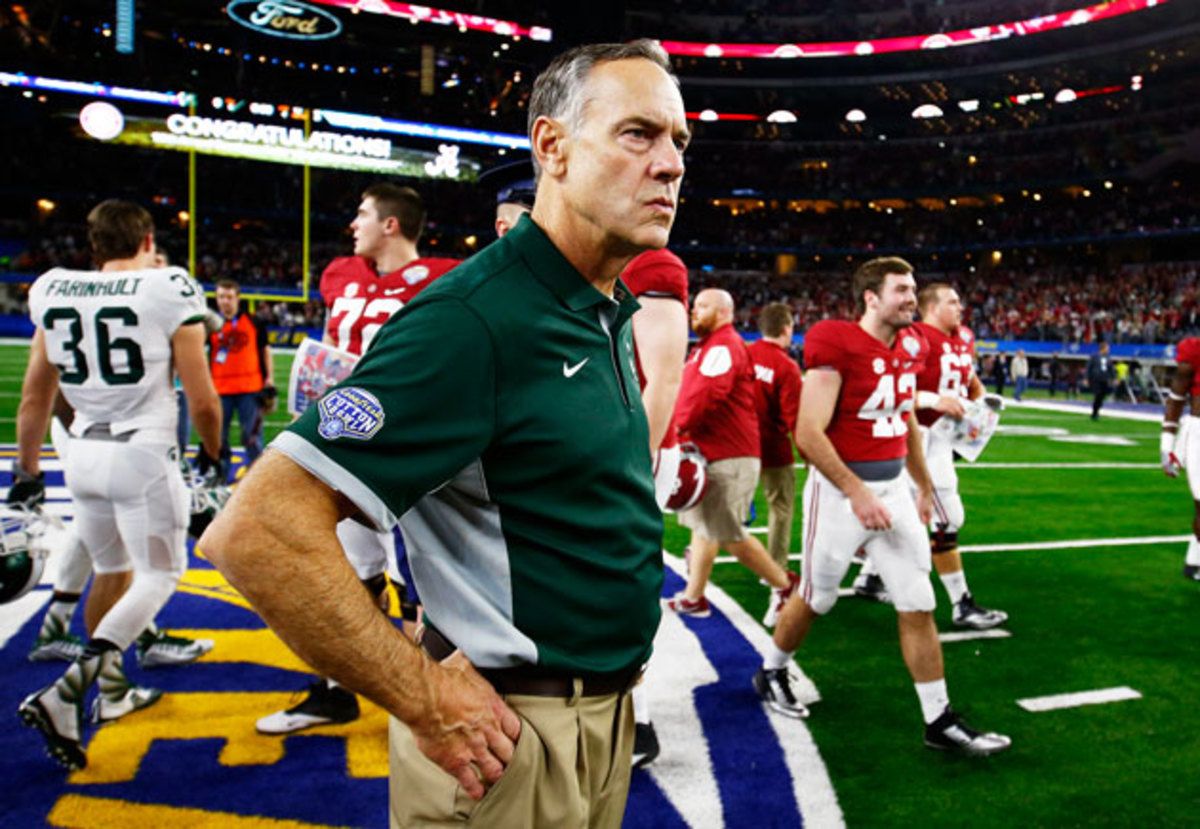
The answer appeared clearer than Michigan State would admit on Thursday. Conklin walked off the field chewing his mouthpiece, half-heartedly raising his helmet toward Spartans fans in the stands while blankly staring ahead. Senior fullback Trevon Pendleton’s lower lip quivered as he headed to the locker room. Between bowl debacles against Alabama, this is a program that won 54 of 67 games. But the bookend disasters suggest something is still missing, even if all the hard work put in since New Year’s Day 2011 was meant to ensure the Spartans had everything they needed.
“It’s something I guess we can measure up to,” junior linebacker Riley Bullough said. “All we can do now is try to get back here.”
There’s much more to it than that. Calhoun alluded to this in a speech to a team still in shock in the locker room: The garrulous defensive end said, according to fellow captain Darien Harris, that he was excited to see what would come next. He was excited to see how younger talent, like former five-star recruit McDowell, will build upon what these seniors leave behind. Everything was about progress, even in the moments when everyone takes a giant step back.
“This will be a little bit of fuel to the fire,” Harris said. “That chip on the shoulder that keeps popping up—here it is.”
Here it is, and as Thursday demonstrated all too emphatically, it isn't nearly enough.
Alabama's path to the national championship
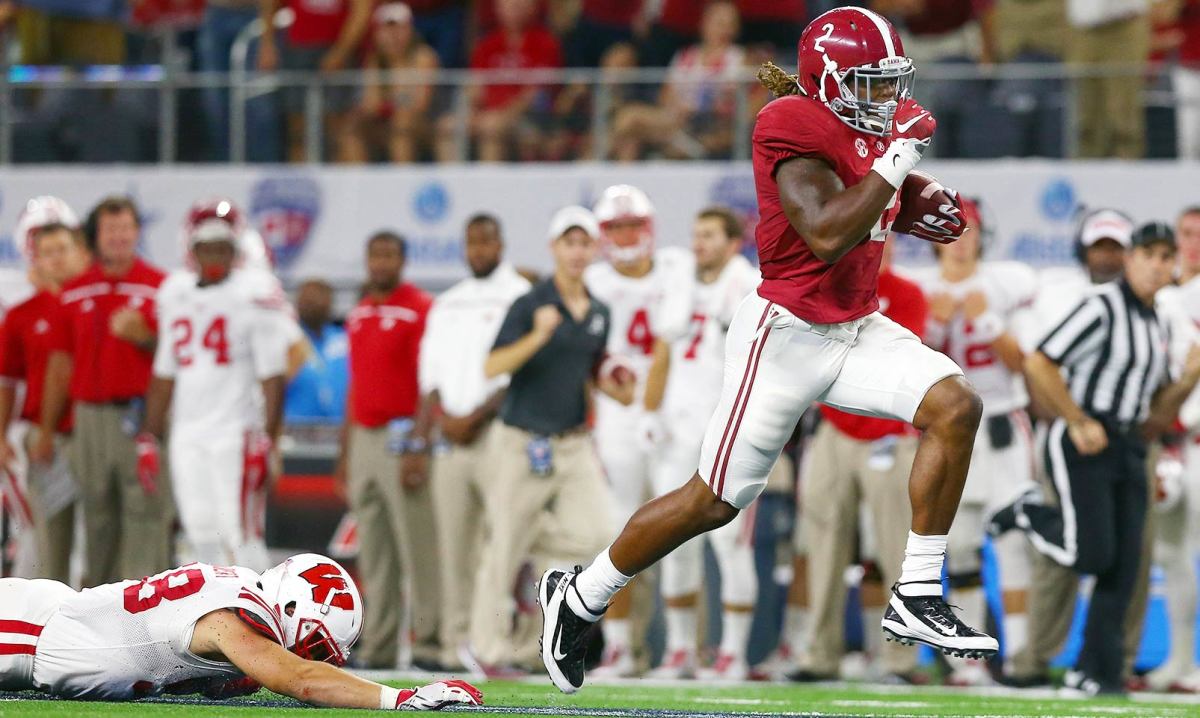
Alabama 35, Wisconsin 17: Derrick Henry steamrolled the Badgers for 147 yards on 13 carries with three touchdowns as the Crimson Tide kicked off the season with a win in Arlington, Texas.
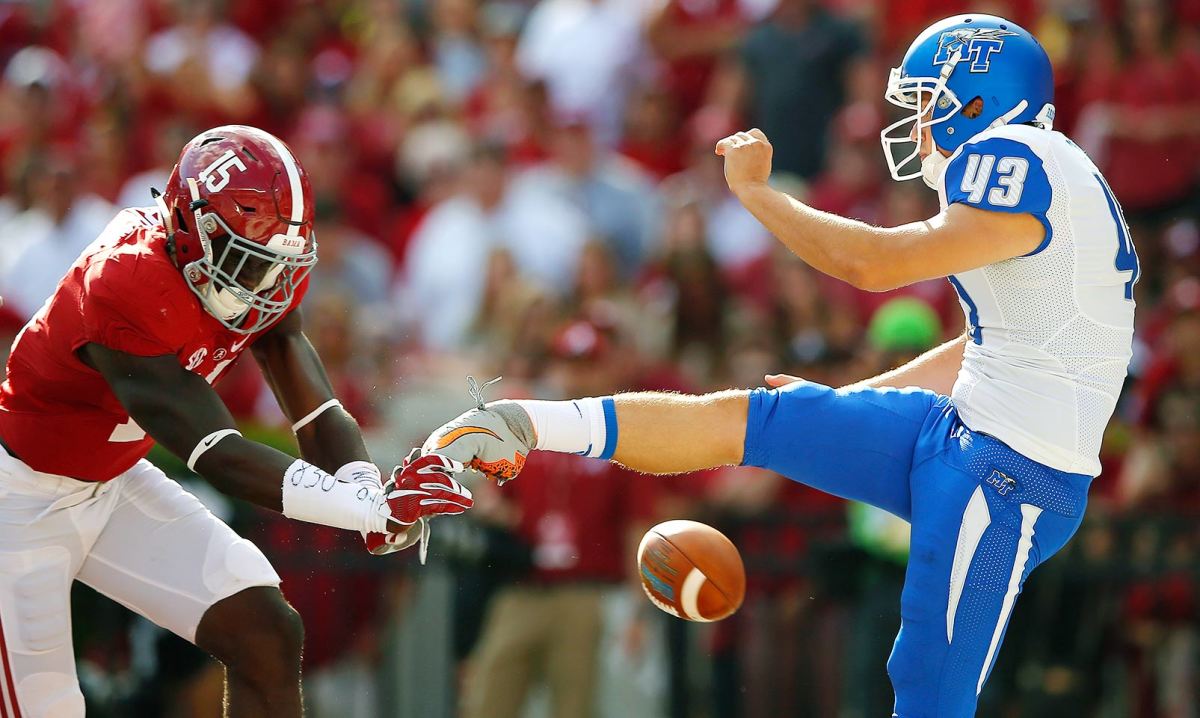
Alabama 37, Middle Tennessee 10: Ronnie Harrison's blocked punt for a safety was just part of the onslaught as the Crimson Tide built a 37–3 lead by the end of the third quarter.
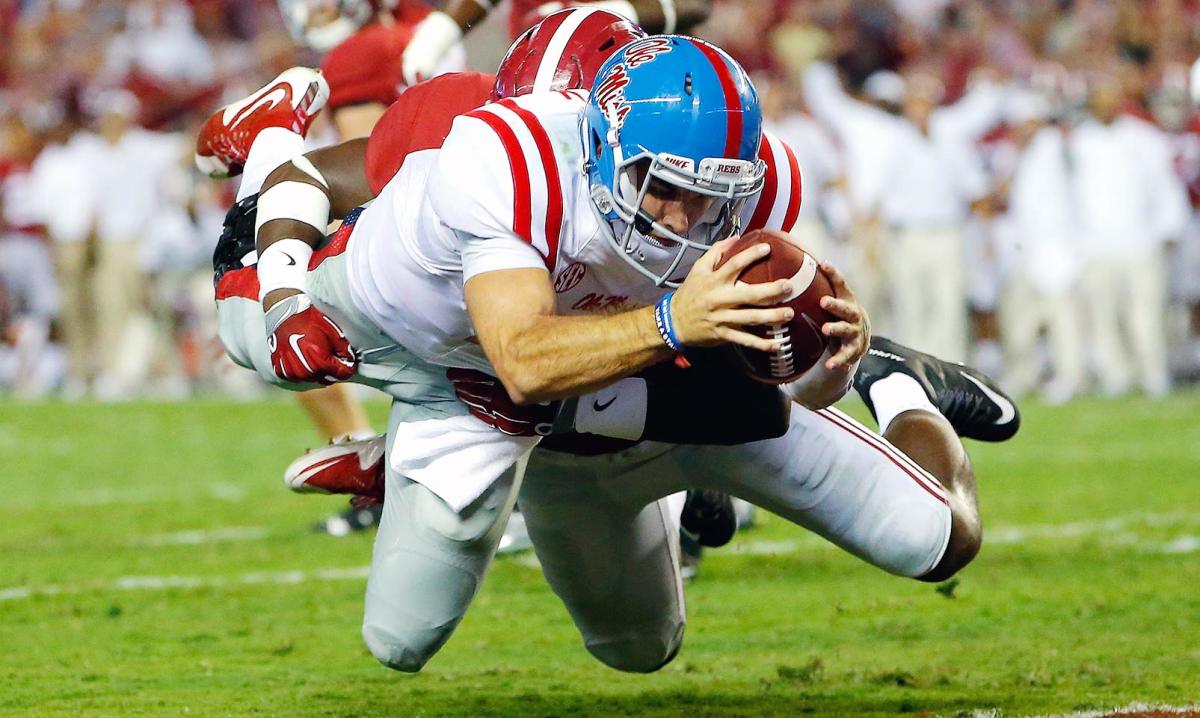
Ole Miss 43, Alabama 37: For the second straight year, the Rebels took down the Crimson Tide, this time in Tuscaloosa. Ole Miss capitalized on five Alabama turnovers and 341 yards passing from Chad Kelly to build a 43–24 lead before narrowly hanging on for the win.
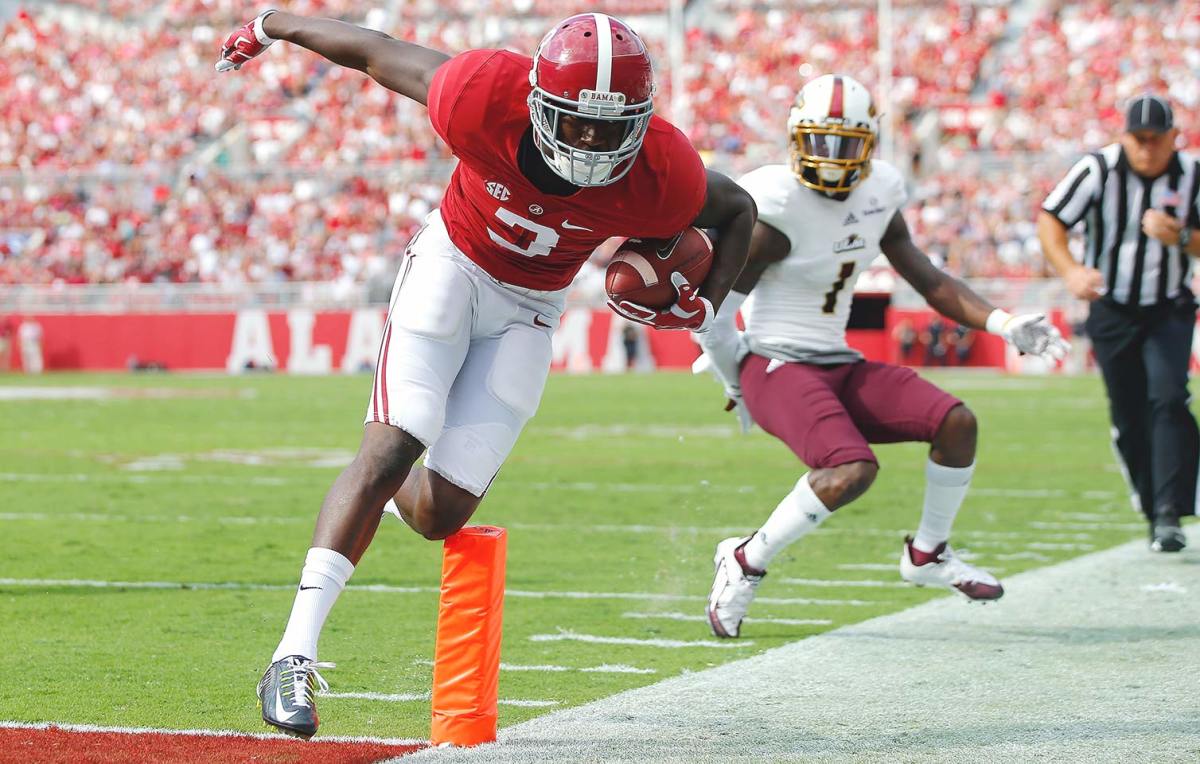
Alabama 34, Louisiana Monroe 0: Despite a relatively sluggish offensive performance (just 166 yards passing and 3.9 yards per carry), the Crimson Tide easily put away the Warhawks to rebound from their loss to Ole Miss.
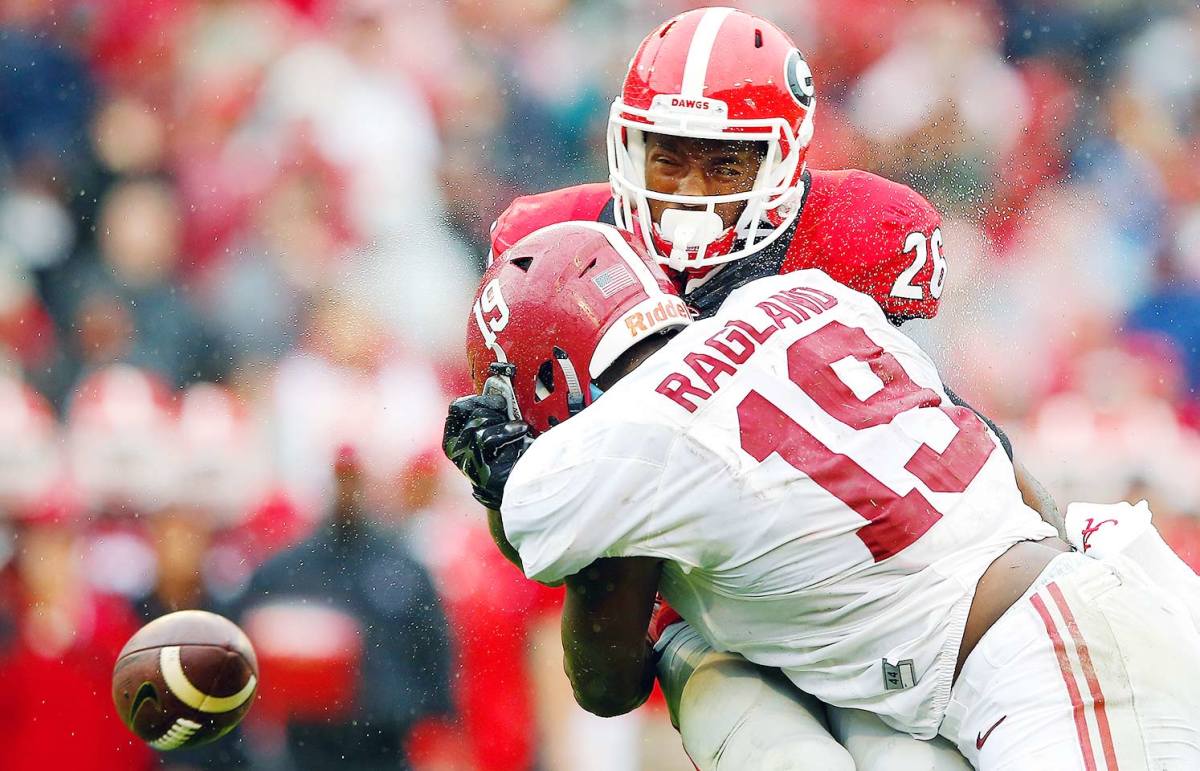
Alabama 38, Georgia 10: A highly anticipated matchup with the unbeaten Bulldogs turned into a rout. The Crimson Tide sent Georgia starting quarterback Greyson Lambert to the bench, contained vaunted running back Nick Chubb for all but one meaningless late touchdown run and moved the ball efficiently on offense. Even special teams got into the mix with a touchdown for Minkah Fitzpatrick on a blocked punt.
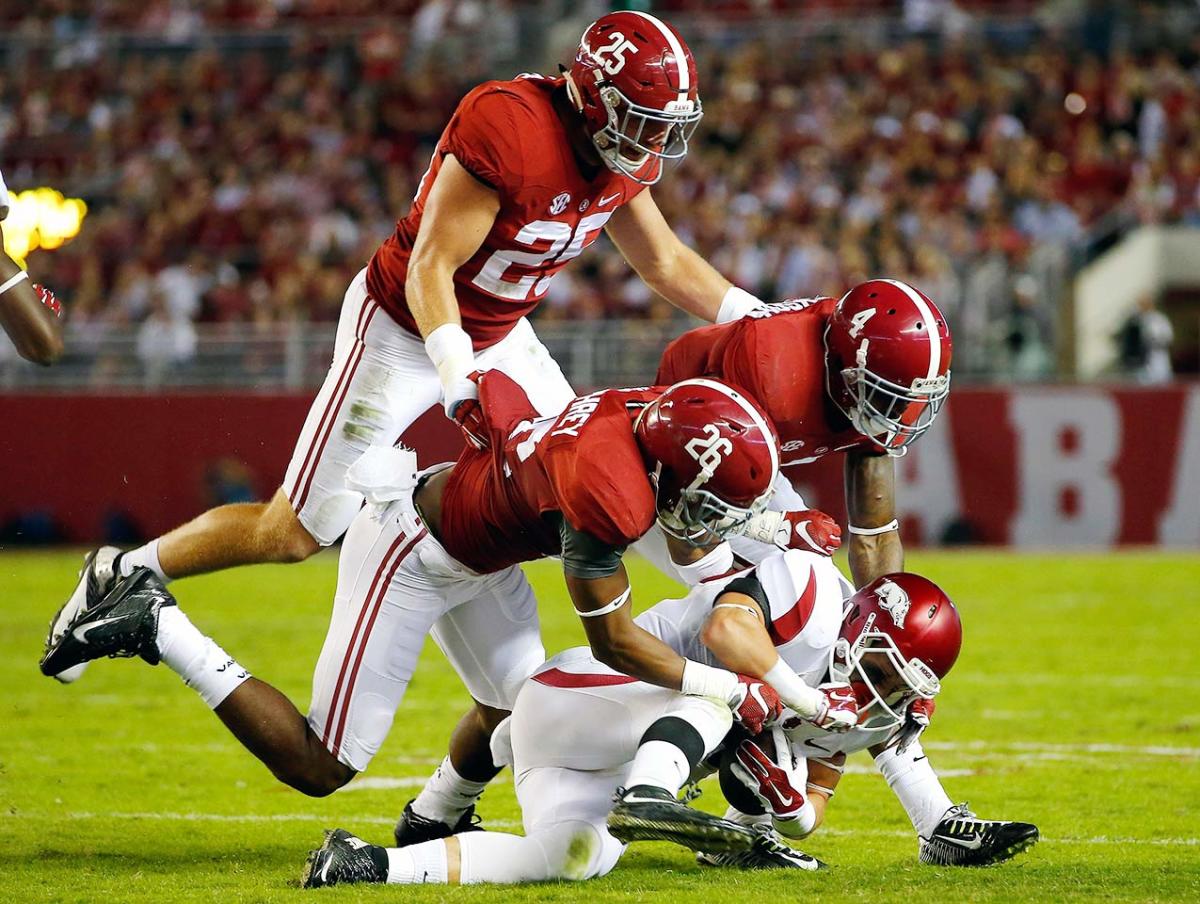
Alabama 27, Arkansas 14: The Crimson Tide defense stymied the Razorbacks' offense, limiting Arkansas to just 44 yards rushing. After scoring just three points before halftime, Alabama's offense found its footing late, tacking on 17 points in the fourth quarter to pull away.
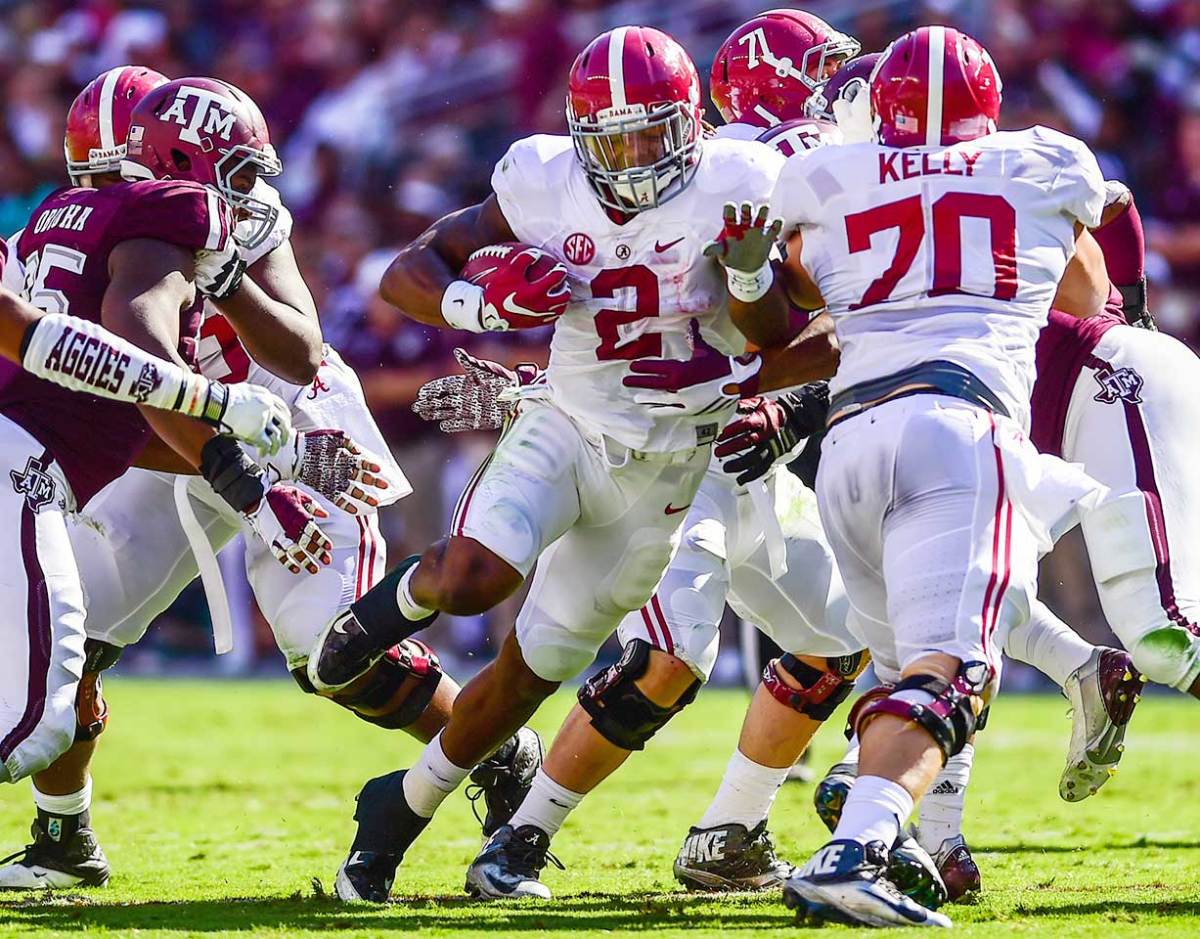
Alabama 41, Texas A&M 23: The Crimson Tide handed the Aggies their first loss of the season as Derrick Henry rushed for a then-career-high 236 yards. Alabama also turned three Kyle Allen interceptions into touchdowns, including two by Minkah Fitzpatrick.
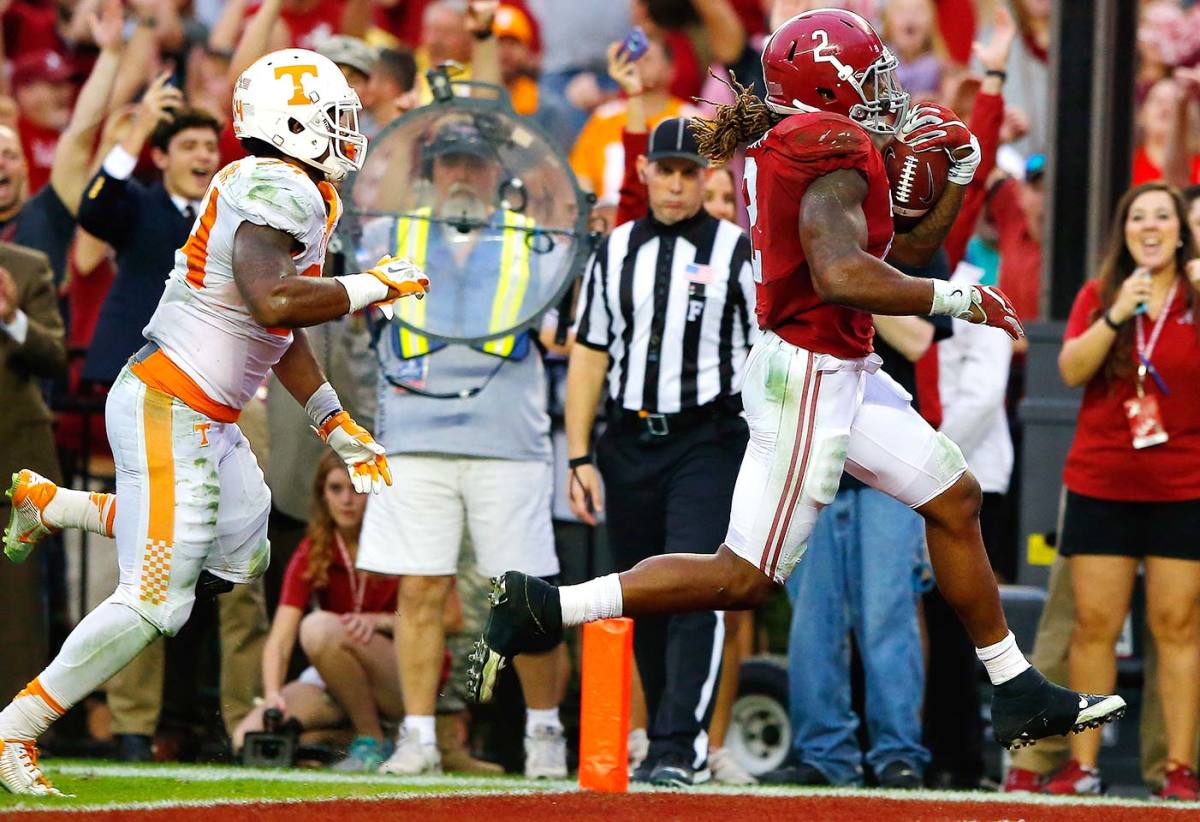
Alabama 19, Tennessee 14: It took a Derrick Henry touchdown run with 2:24 remaining to give the Crimson Tide the lead for good. Two Alabama sacks on the Volunteers' ensuing drive helped seal the win, especially the second, which resulted in a fumble recovery by Ryan Anderson.
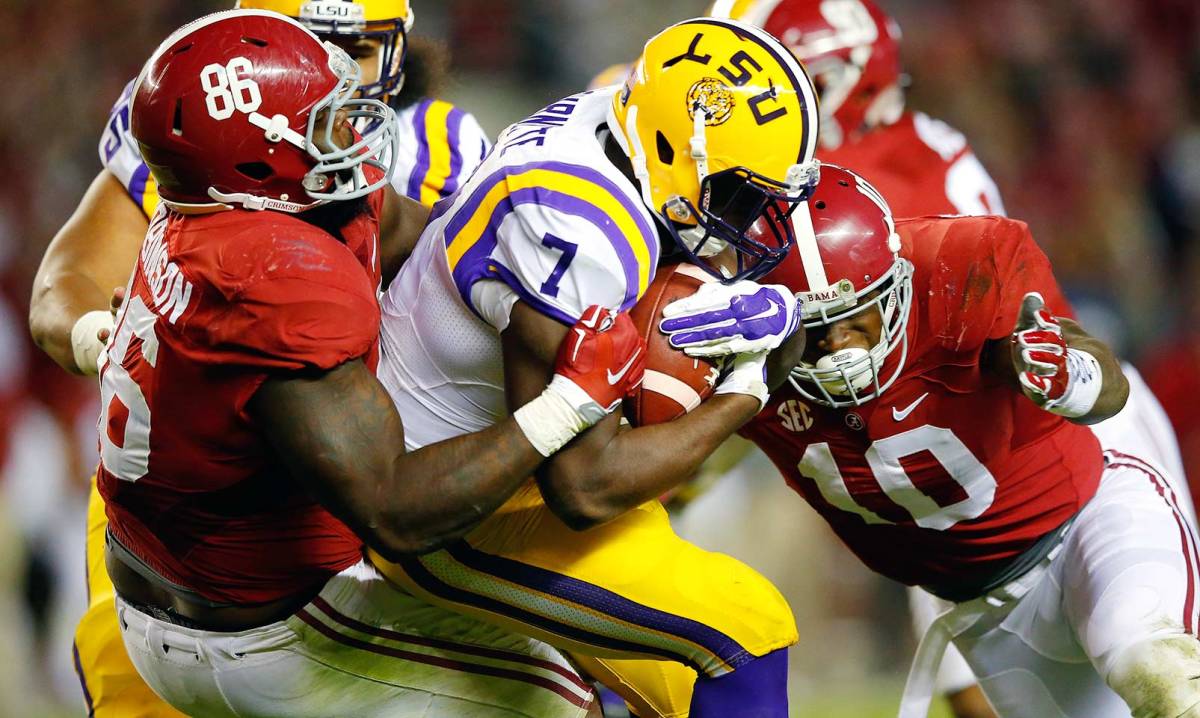
Alabama 30, LSU 16: The Crimson Tide defense did what had previously seemed impossible—stop Leonard Fournette. Alabama held the Tigers' star running back to 31 yards on 19 carries while Derrick Henry rushed for 210 yards and three touchdowns.
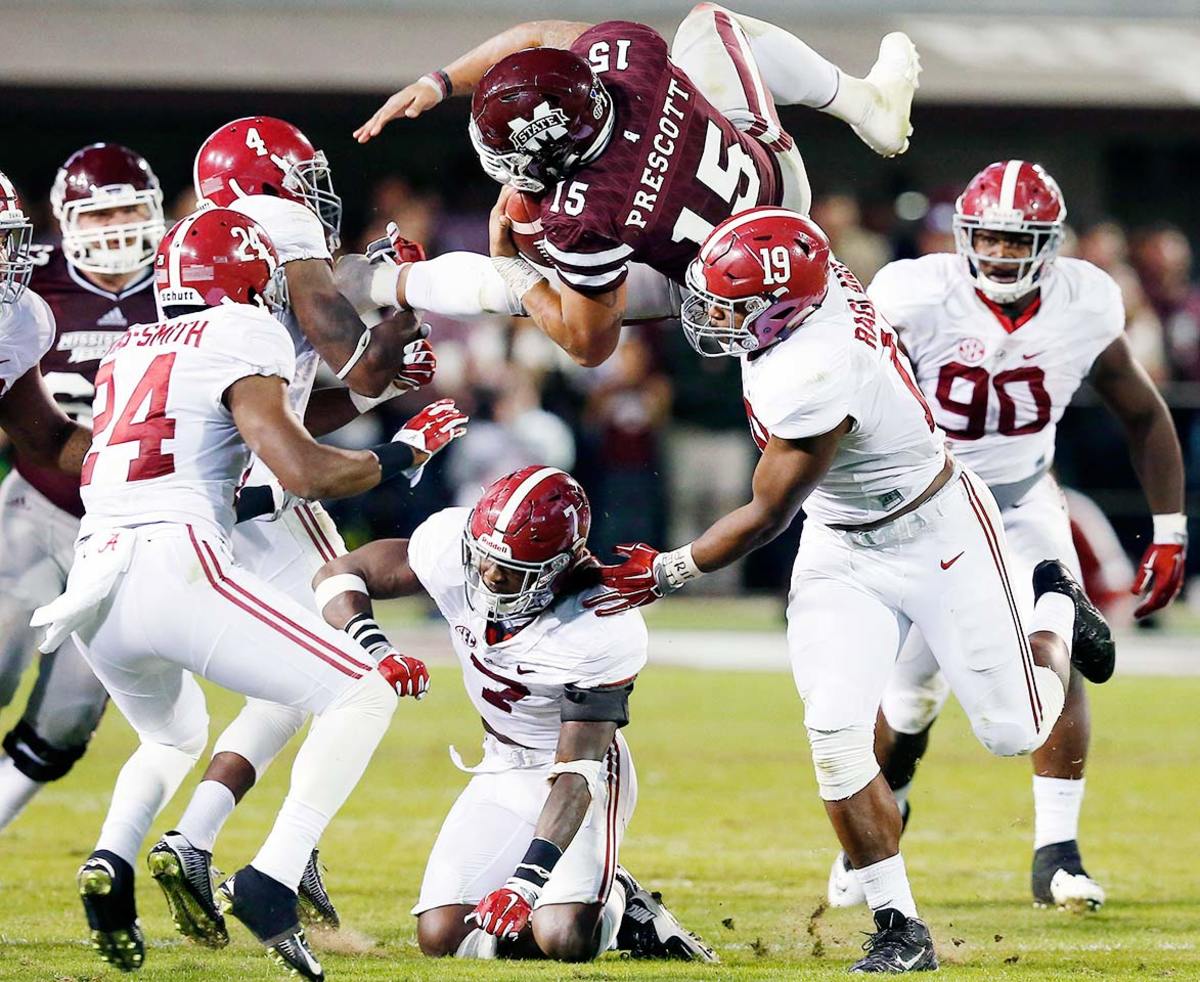
Alabama 31, Mississippi State 6: The Crimson Tide bludgeoned Dak Prescott for nine sacks to help keep the Bulldogs out of the end zone. Derrick Henry rushed for 204 yards and two scores on the ground.
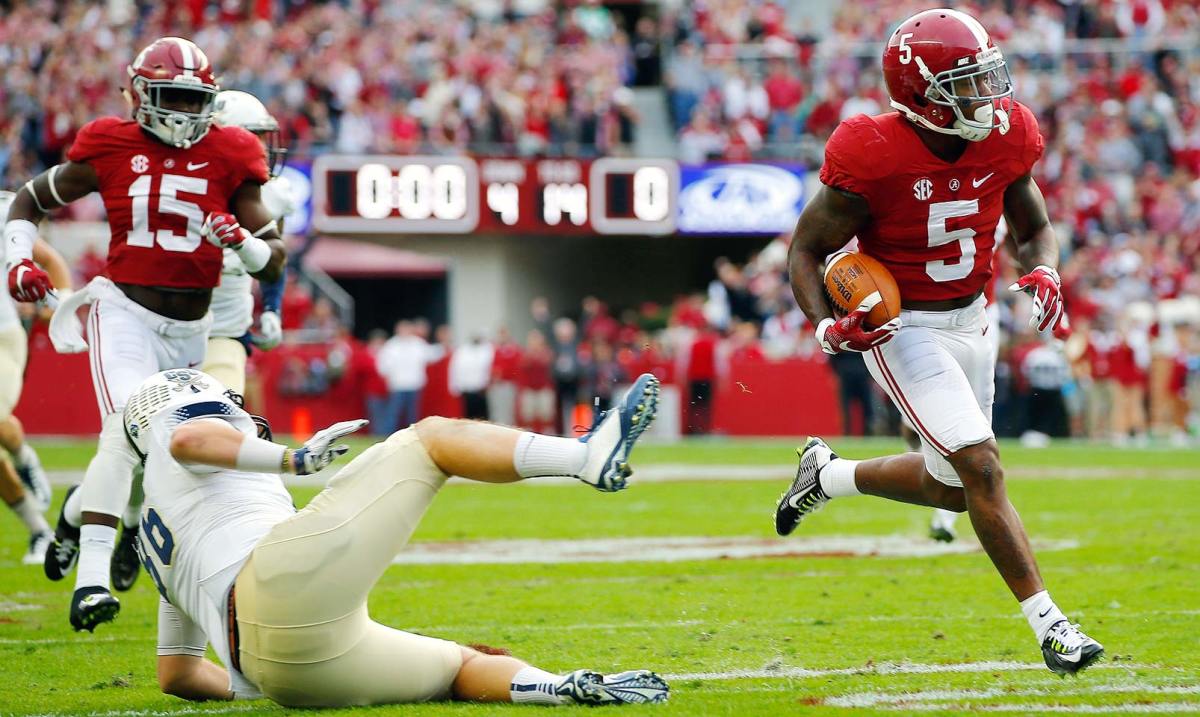
Alabama 56, Charleston Southern 6: Cyrus Jones returned two punts for touchdowns as the Crimson Tide raced to a 49–0 lead by halftime.
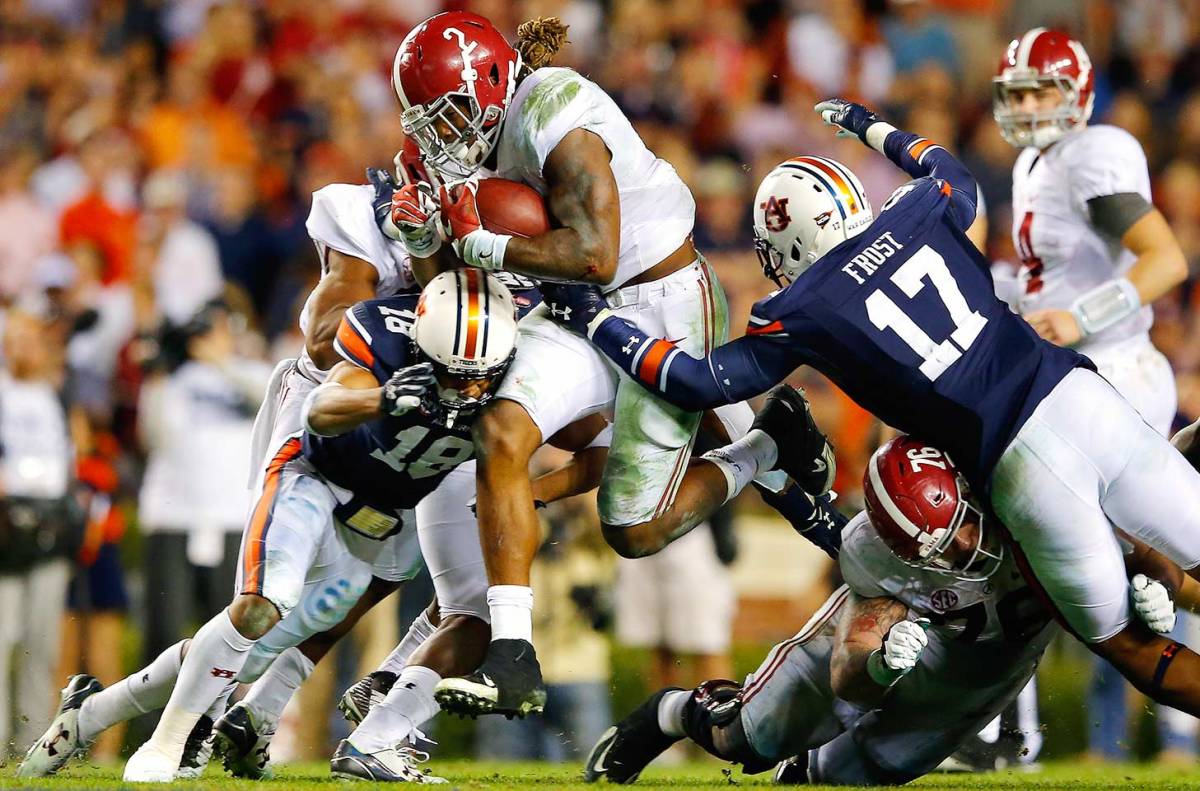
Alabama 29, Auburn 13. The Crimson Tide kept feeding Derrick Henry the rock, and he kept delivering. Henry rushed 46 times for 271 yards to propel Alabama to victory in the Iron Bowl.
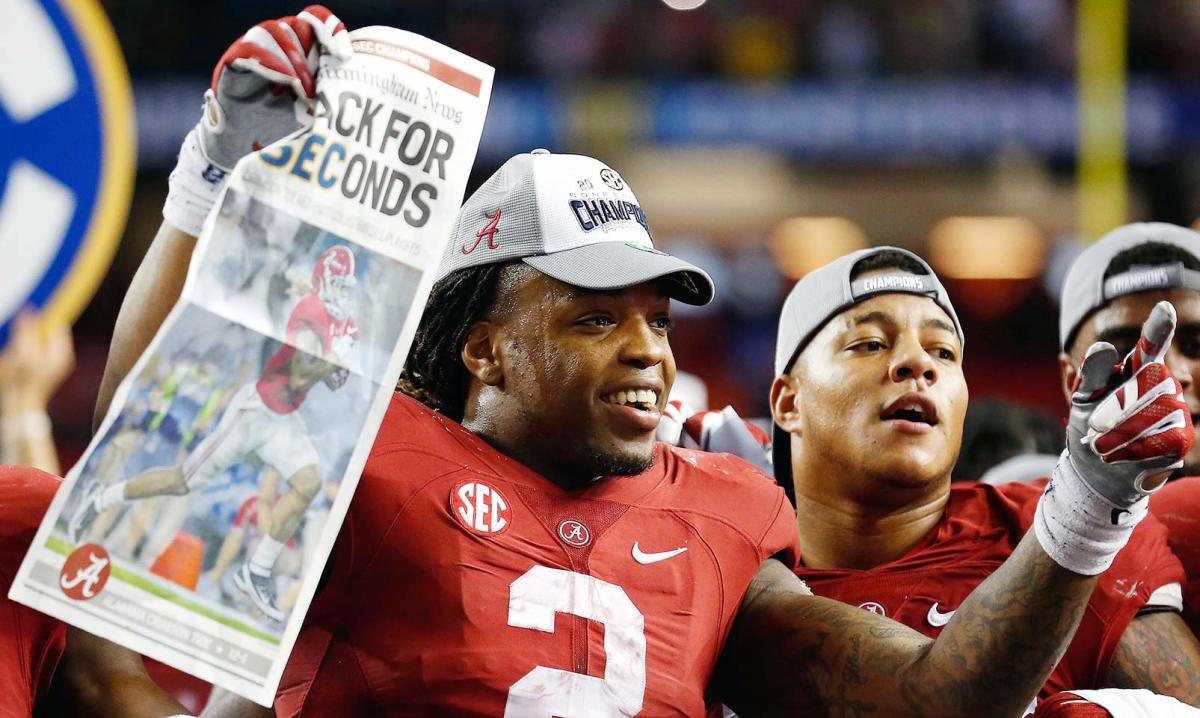
Alabama 29, Florida 15: The Crimson Tide repeated as SEC champions with a victory over the Gators. Florida's offense got nothing going, including just 15 yards on the ground. Alabama found that giving the ball to Henry was its best option again, as he carried 44 times for 189 yards.
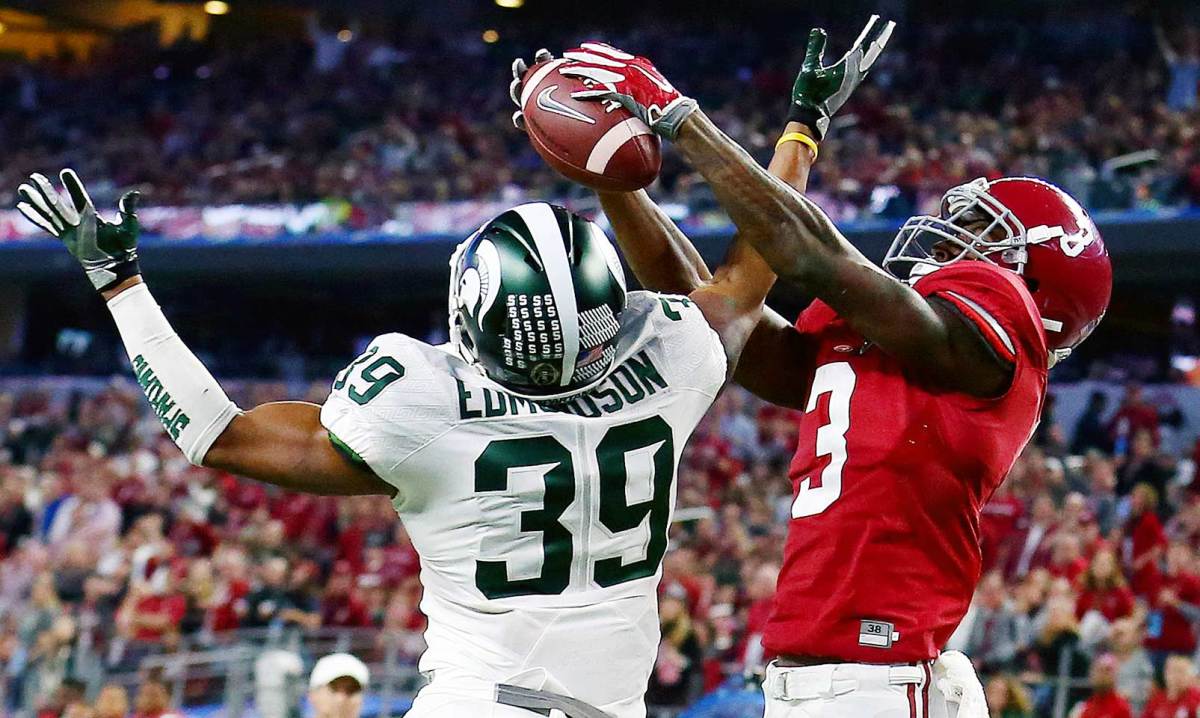
Alabama 38, Michigan State 0: The Crimson Tide blanked the Spartans in the Cotton Bowl to advance to the national championship game against Clemson. True freshman Calvin Ridley led the offense with eight catches for 138 yards and two touchdowns.
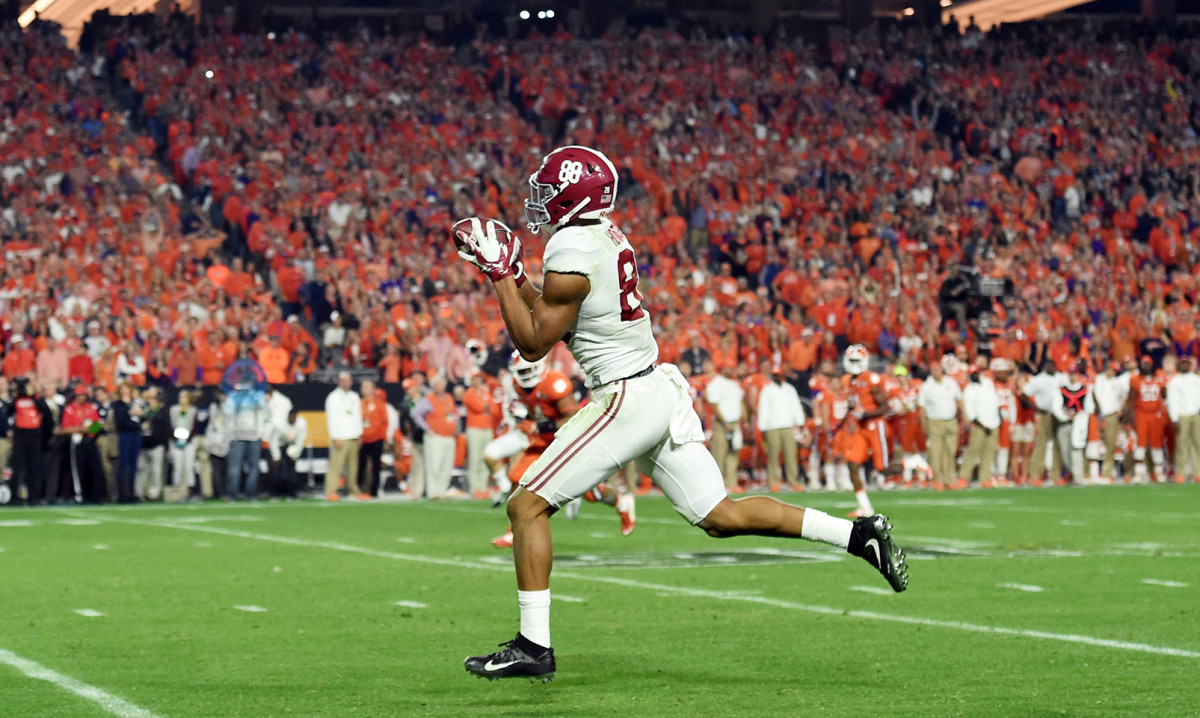
Alabama 45, Clemson 40: With Clemson's defense focused on stopping Heisman Trophy winner Derrick Henry, Crimson Tide tight end O.J. Howard caught five passes for 208 yards and two touchdowns to lead his team to a five-point win in the national title game.
 Add us as a preferred source on Google
Staff writer Brian Hamilton joined Sports Illustrated in 2014 after working at the Chicago Tribune for eight years. He primarily covers college football and college basketball.