%22%3E%0A%3Cpath%20d%3D%22M0%208.83838H6.17001L13.1878%2017.5423V8.83838H19.7252V28.5542H13.866L6.53739%2019.4546V28.5542H0V8.83838Z%22%20fill%3D%22white%22%2F%3E%0A%3Cpath%20d%3D%22M21.4489%2020.9618V20.9052C21.4489%2016.3178%2024.7458%2012.823%2029.3616%2012.823C34.8251%2012.823%2037.359%2016.6286%2037.359%2021.3009C37.359%2021.64%2037.359%2022.0356%2037.3308%2022.3747H27.4399C27.8921%2023.7218%2028.9659%2024.4283%2030.3412%2024.4283C31.4999%2024.4283%2032.4513%2023.8913%2033.4686%2022.8457L36.9069%2025.5775C35.3809%2027.5463%2033.2143%2028.931%2029.8891%2028.931C24.8494%2028.931%2021.4395%2025.7471%2021.4395%2020.9618H21.4489ZM31.5281%2019.5488C31.3868%2018.0887%2030.5108%2017.2409%2029.3898%2017.2409C28.2689%2017.2409%2027.5624%2018.1452%2027.3646%2019.5488H31.5376H31.5281Z%22%20fill%3D%22white%22%2F%3E%0A%3Cpath%20d%3D%22M37.2559%2013.181H43.3694L44.9519%2019.3793L46.8076%2013.1245H51.9038L53.7877%2019.4358L55.4174%2013.181H61.4461L56.7456%2028.6767H51.3951L49.3416%2022.0828L47.2315%2028.6767H41.9093L37.2653%2013.181H37.2559Z%22%20fill%3D%22white%22%2F%3E%0A%3Cpath%20d%3D%22M75.8489%2021.574L68.4072%208.83838H75.7924L79.1741%2015.3192L82.5841%208.83838H89.8845L82.4428%2021.4893V28.5636H75.8489V21.574Z%22%20fill%3D%22white%22%2F%3E%0A%3Cpath%20d%3D%22M86.9268%2020.924V20.8675C86.9268%2016.5343%2090.5346%2012.8135%2095.6025%2012.8135C100.67%2012.8135%20104.222%2016.4778%20104.222%2020.8109V20.8675C104.222%2025.21%20100.614%2028.9309%2095.5459%2028.9309C90.4781%2028.9309%2086.9268%2025.2665%2086.9268%2020.9334V20.924ZM98.0799%2020.924V20.8675C98.0799%2019.3414%2096.9495%2018.1357%2095.5459%2018.1357C94.1424%2018.1357%2093.0685%2019.3509%2093.0685%2020.8109V20.8675C93.0685%2022.3935%2094.1989%2023.5992%2095.6025%2023.5992C97.006%2023.5992%2098.0799%2022.3841%2098.0799%2020.924Z%22%20fill%3D%22white%22%2F%3E%0A%3Cpath%20d%3D%22M105.776%2013.1809H112.172V16.28C113.048%2014.1982%20114.452%2012.8418%20116.986%2012.9548V19.7465H116.307C113.604%2019.7465%20112.163%2021.2443%20112.163%2024.6449V28.5635H105.767V13.1809H105.776Z%22%20fill%3D%22white%22%2F%3E%0A%3Cpath%20d%3D%22M118.201%208H124.597V17.9191L127.894%2013.1809H134.856L130.042%2019.4357L134.94%2028.5636H128.092L125.869%2024.3341L124.597%2025.9731V28.5636H118.201V8Z%22%20fill%3D%22white%22%2F%3E%0A%3Cpath%20d%3D%22M141.751%2025.2949L146.065%2021.6588C146.828%2022.7327%20147.563%2023.3732%20148.627%2023.3732C149.692%2023.3732%20150.455%2022.4689%20150.455%2021.0936V8.83838H156.879V20.9806C156.879%2023.5711%20156.286%2025.3514%20154.826%2026.8115C153.469%2028.168%20151.501%2028.9498%20149.136%2028.9498C145.359%2028.9498%20143.192%2027.4238%20141.751%2025.2855V25.2949Z%22%20fill%3D%22white%22%2F%3E%0A%3Cpath%20d%3D%22M158.405%2020.9618V20.9052C158.405%2016.3178%20161.702%2012.823%20166.318%2012.823C171.781%2012.823%20174.315%2016.6286%20174.315%2021.3009C174.315%2021.64%20174.315%2022.0356%20174.287%2022.3747H164.396C164.848%2023.7218%20165.922%2024.4283%20167.297%2024.4283C168.456%2024.4283%20169.407%2023.8913%20170.425%2022.8457L173.863%2025.5775C172.337%2027.5463%20170.17%2028.931%20166.845%2028.931C161.805%2028.931%20158.396%2025.7471%20158.396%2020.9618H158.405ZM168.494%2019.5488C168.352%2018.0887%20167.476%2017.2409%20166.355%2017.2409C165.234%2017.2409%20164.528%2018.1452%20164.33%2019.5488H168.503H168.494Z%22%20fill%3D%22white%22%2F%3E%0A%3Cpath%20d%3D%22M177.028%2023.411V18.117H175.229V13.181H177.028V9.31885H183.424V13.181H186.975V18.117H183.424V22.0074C183.424%2023.1661%20183.961%2023.5805%20184.978%2023.5805C185.572%2023.5805%20186.25%2023.411%20186.919%2023.1001V28.0361C185.901%2028.5731%20184.385%2028.9122%20182.83%2028.9122C179.053%2028.9122%20177.028%2027.1695%20177.028%2023.4204V23.411Z%22%20fill%3D%22white%22%2F%3E%0A%3Cpath%20d%3D%22M187.428%2026.6985L189.594%2023.0624C191.45%2024.2211%20193.541%2024.7769%20195.284%2024.7769C195.906%2024.7769%20196.216%2024.6356%20196.216%2024.2682V24.2117C196.216%2023.9008%20195.934%2023.703%20194.389%2023.3074C190.499%2022.3465%20188.106%2021.3103%20188.106%2018.1264V18.0699C188.106%2014.6882%20190.809%2012.8042%20194.813%2012.8042C197.347%2012.8042%20199.853%2013.4542%20201.718%2014.5751L199.692%2018.3808C198.053%2017.4765%20196.085%2016.9395%20194.794%2016.9395C194.172%2016.9395%20193.89%2017.1091%20193.89%2017.4199V17.4765C193.89%2017.7873%20194.229%2017.9851%20195.774%2018.3808C199.664%2019.3416%20202%2020.406%20202%2023.5617V23.6182C202%2026.9717%20199.495%2028.9122%20195.322%2028.9122C192.335%2028.9122%20189.632%2028.1492%20187.437%2026.6891L187.428%2026.6985Z%22%20fill%3D%22white%22%2F%3E%0A%3Cpath%20fill-rule%3D%22evenodd%22%20clip-rule%3D%22evenodd%22%20d%3D%22M211.368%204.36764C217.191%20-1.45588%20226.632%20-1.45588%20232.456%204.36764C238.279%2010.1912%20238.279%2019.6324%20232.456%2025.4559L221.912%2036L211.368%2025.4559C205.544%2019.6324%20205.544%2010.1912%20211.368%204.36764ZM214.009%207.55761C213.948%207.86849%20213.916%208.39718%20213.916%209.14566V10.4189C213.916%2011.1832%20213.948%2011.7198%20214.013%2012.0267C214.078%2012.3317%20214.278%2012.6168%20214.617%2012.8762C214.956%2013.1376%20215.403%2013.3316%20215.958%2013.4623C216.512%2013.593%20217.1%2013.6584%20217.837%2013.6584C218.573%2013.6584%20219.217%2013.591%20219.769%2013.4524C220.322%2013.3158%20220.761%2013.1178%20221.086%2012.8604C221.411%2012.6029%20221.605%2012.3178%20221.666%2012.0069C221.728%2011.6961%20221.759%2011.1674%20221.759%2010.4189V9.14566C221.759%208.38134%20221.728%207.84473%20221.662%207.53781C221.597%207.23287%20221.397%206.94971%20221.058%206.68834C220.72%206.42696%20220.272%206.23291%20219.718%206.10223C219.163%205.97154%20218.536%205.90619%20217.839%205.90619C217.102%205.90619%20216.459%205.97352%20215.906%206.11213C215.352%206.24875%20214.914%206.44677%20214.589%206.70418C214.265%206.9616%20214.071%207.24673%20214.009%207.55761ZM219.276%2024.8638C222.876%2024.8638%20224.557%2024.2064%20224.557%2021.862V21.858V21.3155C224.557%2019.6581%20223.516%2018.971%20220.252%2018.3136C219.278%2018.1136%20218.908%2017.9136%20218.908%2017.3136V16.9414C218.908%2016.6543%20219.177%2016.5117%20219.413%2016.5117C219.749%2016.5117%20219.918%2016.7137%20219.918%2016.9414V18.1136H224.391V17.3988C224.391%2015.4563%20223.347%2014.4266%20219.177%2014.4266C216.15%2014.4266%20213.896%2015.3414%20213.896%2017.3711V17.7433C213.896%2019.5155%20214.805%2020.3155%20218.201%2021.0303C218.28%2021.0472%20218.355%2021.063%20218.427%2021.0781C219.329%2021.2674%20219.647%2021.3341%20219.647%2021.9174V22.2897C219.647%2022.6619%20219.546%2022.8045%20219.142%2022.8045C218.67%2022.8045%20218.637%2022.5471%20218.637%2022.262V21.2897H213.894V21.7471C213.894%2024.149%20215.476%2024.8638%20219.276%2024.8638ZM225.424%2024.5569H229.925V14.7355H225.424V24.5569ZM226.955%2013.5019H229.925V6.06064H227.092V9.411L225.193%206.06064H222.359V13.5019H225.193V10.1199L226.955%2013.5019ZM218.269%2012.152C218.204%2012.2688%20218.055%2012.3262%20217.825%2012.3262L217.827%2012.3282C217.604%2012.3282%20217.459%2012.2767%20217.398%2012.1758C217.336%2012.0748%20217.305%2011.8074%20217.305%2011.3758V7.90068C217.305%207.51852%20217.352%207.28684%20217.445%207.20962C217.538%207.13239%20217.675%207.09279%20217.851%207.09279C218.059%207.09279%20218.198%207.14031%20218.265%207.23734C218.332%207.33239%20218.366%207.55416%20218.366%207.90068V11.3203C218.366%2011.7579%20218.334%2012.0352%20218.269%2012.152Z%22%20fill%3D%22white%22%2F%3E%0A%3C%2Fg%3E%0A%3Cdefs%3E%0A%3CclipPath%20id%3D%22clip0_15232_2543%22%3E%0A%3Crect%20width%3D%22237%22%20height%3D%2236%22%20fill%3D%22white%22%2F%3E%0A%3C%2FclipPath%3E%0A%3C%2Fdefs%3E%0A%3C%2Fsvg%3E%0A)
20 NFL Draft Picks That Changed a Franchise Forever
In this story:
From a team coming off a successful season to a struggling franchise looking to find the player who can turn it into a contender for years to come, the NFL Draft can make or break a team.
While teams fumble their selections and are left second-guessing their draft picks early on, others find the kind of generational talent who can take the league by storm and become the face of a franchise for decades.
From achieving success at a historic level to completely turning a franchise around that had primarily struggled beforehand or was in desperate need of a talented player who could come in and make an immediate impact, these players left their mark in multiple ways.
In no particular order, here are 20 NFL Draft picks that changed a franchise forever and the legacy they are either currently leaving or will be remembered for during their tenure.
20. “Mean” Joe Greene, 1969, Round 1, Pick 4 (Pittsburgh Steelers)
Although Bradshaw was the mastermind behind the offensive improvement the Steelers made during Greene’s playing days, his fierceness and overall presence changed how they were viewed, both on the field and from those watching from afar. As part of the vaunted “Steel Curtain” defense, Greene won two Defensive Player of the Year awards and led them to four Super Bowls.
Greene was only the second Steeler (after Ernie Stautner) to have his jersey number retired in 2014 after spending all 13 seasons of his illustrious career with Pittsburgh and even returning as a coach and front-office special assistant. Fellow Hall of Famer and former teammate Mel Blount called Greene a “stabilizer,” “a great leader” and “a tremendous guy for the Steelers,” which perfectly sums up the type of impact he had on the entire organization.
19. Aaron Donald, 2014, Round 1, Pick 13 (St. Louis Rams)
The Rams nailed it with their selection of Donald in 2014 during their days in St. Louis, immediately going from a franchise that was struggling to find its way to a formidable contender. Donald helped lead the Rams to a Super Bowl LVI win and was so dominant in his 10-year run with the organization that opponents had to tweak how they blocked to account for his ability to disrupt the run and pass.
In total, Donald amassed 111 sacks and forced 24 fumbles, another reminder of his versatility as a pass rusher and run stopper. That type of ferociousness, combined with his clutch performance in the Super Bowl win over the Cincinnati Bengals, was a major reason why he earned three Defensive Player of the Year honors and will forever go down as one of the most dominant defenders the league has seen.
18. Patrick Mahomes, 2017, Round 1, Pick 10 (Kansas City Chiefs)
While Mahomes is still in the middle of a career that is Hall of Fame-worthy already, his impact on the Chiefs organization is already legendary. Kansas City only had one playoff win in 22 years before they drafted Mahomes. Since then, he has taken the franchise to five Super Bowls, winning three of them, as well as multiple MVPs and nine consecutive AFC West titles from 2016 to 2024 before the Denver Broncos played spoiler last season.
The decision to draft Mahomes changed Kansas City forever in more ways than one. Not only has he completely turned the franchise around and increased its popularity, but he has redefined what it means to play the QB position. From his contested throws and sidearm dimes to no-look passes that even catch the league’s best defenders by surprise, Mahomes is a unique talent and someone who continues to rewrite the history books for the Chiefs.
17. Terry Bradshaw, 1970, Round 1, Pick 1 (Pittsburgh Steelers)
The Steelers had never won a championship before Bradshaw’s playing career, but that lack of success was a thing of the past upon his arrival. Bradshaw led Pittsburgh to eight division titles, four Super Bowls in a six-year span and completely altered the perception of the franchise after turning the Steelers into the league’s most dominant franchise in the 1970s.
While the “Steel Curtain” defense rightfully attracted a lot of attention, Bradshaw’s arm talent and playoff success turned the Steelers into a complete team that was its best in the most clutch situations. After all, he was an astounding 14-5 in the postseason and set a high bar for future Steelers QBs that anything short of elite play under center would not be tolerated.
16. Emmitt Smith, 1990, Round 1, Pick 17 (Dallas Cowboys)
Alongside Aikman and Michael Irvin, Smith completed the legendary “Triplets” trio and was a major contributor to Dallas’ three Super Bowl titles in the 1990s. Smith’s most impressive achievement was when he broke Water Payton’s all-time rushing yards record (18,355) and recorded an NFL-record 164 rushing TDs.
His toughness was also on display when he won NFL MVP and Super Bowl XXVIII MVP after finishing the regular season with a separated right shoulder. In addition, Smith won four rushing titles and eclipsed 1,000 yards a record 11 times, providing another reminder of how elite he was in a Cowboys uniform and why he was so instrumental to their success at that time.
15. Randy Moss, 1998, Round 1, Pick 21 (Minnesota Vikings)
Moss instantly became a deep-ball threat for the Vikings and immediately turned Minnesota into a dominant passing offense. He began his career with an NFL rookie record 17 receiving TDs and formed the legendary “Three Deep” receiving corps with Cris Carter and Jake Reed. That group contributed to the highest-scoring offense in league history at the time (556 points).
Moss was so dominant against cornerbacks that opposing coordinators implemented zone coverage to account for his deep-ball abilities. He also led the NFL in receiving TDs for five different seasons, another sign of his playmaking ability and his overall impact on the Vikings franchise.
14. Deion Sanders, 1989, Round 1, Pick 5 (Atlanta Falcons)
Known as “Prime Time,” Sanders put a struggling franchise in the spotlight and made an immediate impact with a TD on a punt return five minutes into his first NFL game, where he became famous for his high-step into the end zone. In total, Sanders had 24 interceptions, three defensive TDs and five special teams TDs as a Falcon and injected his larger-than-life persona in no time.
The two-sport athlete, who also played for the MLB’s Atlanta Braves, did not shy away from his flashy and outspoken nature, putting the Atlanta area in the national spotlight at a time when its cultural identity was still emerging. The on-field success did not translate to more than a 1991 playoff push, but Sanders left a huge cultural impact on the Falcons organization during his brief stint.
13. Lawrence Taylor, 1981, Round 1, Pick 2 (New York Giants)
Taylor was one of the most ferocious defenders in the league, and his impact on the Giants was felt on numerous occasions. His most impressive season came in 1986 when he had a career-high 20.5 sacks and 105 tackles on his way to becoming the unanimous MVP and the second defensive player (Alan Page, 1971) to win the award.
Taylor also delivered when the lights were the brightest in the playoffs, leading the Giants to a pair of Super Bowl titles and forcing other teams to create new schemes to block him. As former teammate Phil Simms said, “There’s only about five or six people who affected pro football in a unique way, and he’s one of those guys.” The Giants had endured a brutal playoff drought prior to Taylor’s arrival, and it did not take long for him to show what they had been missing during that time.
12. Barry Sanders, 1989, Round 1, Pick 3 (Detroit Lions)
Sanders was key to the Lions attaining some relevance in the 1990s after years of struggles and a lack of postseason success. With his array of spin moves and cuts that had defenders catching their breath, Sanders made the Lions a must-watch team, leading them to their only postseason win between 1958 and 2013 when they defeated the Cowboys in 1991.
Sanders had 10 consecutive seasons with at least 1,000 rushing yards and is the only player in league history with more than 1,500 rush yards in four consecutive seasons. He shared the 1997 MVP award with Favre and finished with the third-most rushing yards all-time (15,269) when he stepped away, bringing his highlight-reel runs to a fanbase that did not have much to cheer for before he got there.
11. Walter Payton, 1975, Round 1, Pick 4 (Chicago Bears)
It could be argued that Payton is the greatest player to ever step foot on a football field. Payton led the league in rushing in 1977 with 1,852 yards, making 178 consecutive starts from 1975 to 1987 and even threw eight TD passes in his career. Payton could do it all and showed that running backs are not just one-dimensional, becoming the face of the Bears franchise and leading the franchise to its only Super Bowl win in 1985, all while setting the all-time rushing record in the process at the time.
Payton was famously known for training on sand dunes and would choose not to partake in end zone celebrations, a nod to his selflessness and humility. The Man of the Year Award was even named after him to pay tribute to his off-field legacy, a reminder of the legacy he left both with the Bears organization and the entire league.
10. Jim Brown, 1957, Round 1, Pick 6 (Cleveland Browns)
Brown only played in nine seasons, but he was a Pro Bowler every season, led the league in rushing eight times, won three MVP awards and held every major rushing record when he retired. He is still the only player to average at least 100 rushing yards per game in his career (104.3) and led the Browns to the NFL Championship in 1964.
Brown was known for his civil rights and social activism off the field during and after his playing career and even took his talents to Hollywood after retiring in peak physical form in 1966. NBA superstar Kareem Abdul-Jabbar simply said, “There were no question marks about Jim Brown,” something Browns fans found out in his brief, but legendary career.
9. Peyton Manning, 1998, Round 1, Pick 1 (Indianapolis Colts)
When Manning first arrived in Indianapolis, the Colts had a previous Super Bowl win in 1971 when they were in Baltimore, but the success had not followed them to Indianapolis. That quickly changed with Manning under center, winning Super Bowl XLI, as well as making an additional Super Bowl appearance, three AFC Championship games and 11 playoff appearances.
In addition to his economic and cultural impact on the city, Manning elevated the position to a whole other level with his pre-snap audibles and no-huddle offense. From “Omaha, Omaha” to “Balboa, Balboa,” Manning had some memorable phrases and completely turned the city and its franchise around with years of success.
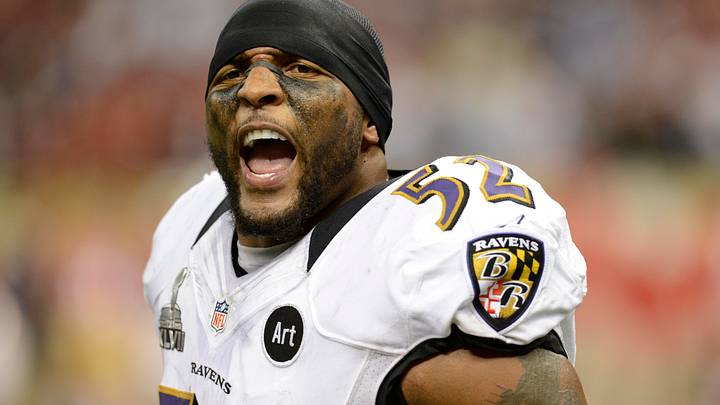
8. Ray Lewis, 1996, Round 1, Pick 26 (Baltimore Ravens)
Lewis was the cornerstone and the heartbeat of Baltimore’s defense from the time he was drafted in 1996. Lewis won two Super Bowls and helped establish a brotherhood and fierce competition with his teammates, which was especially vital for a franchise that was still searching for its own identity after relocating from Cleveland.
Lewis will always be remembered for his pregame huddle and his vocal leadership on the sideline. He was also the cornerstone for the 2000 Ravens team that set the NFL record for the fewest points allowed in a 16-game season and went out in style with his 2012 Super Bowl win over the 49ers.
7. Aaron Rodgers, 2005, Round 1, Pick 24 (Green Bay Packers)
It was always going to be a high bar for Rodgers to meet when the Packers selected him in the first round of the 2005 draft, but he wasted no time living up to the standard that previous greats Bart Starr and Brett Favre set before him, going on to break Favre’s passing TD record in the process.
Additionally, Rodgers led the Packers to a Super Bowl XLV win, eight division titles and earned four MVP awards. He will mostly be remembered for rallying the Packers even when their season appeared to be lost, as well as possessing one of the best touchdown-to-interception ratios in league history and perfecting the free play when an extra defender was on the field or an opposing player jumped offside.
6. Troy Aikman, 1989, Round 1, Pick 1 (Dallas Cowboys)
The Cowboys had some success with two Super Bowl wins and five total appearances in the 1970s, but Aikman helped return them to the top of the sport with three Super Bowl titles in a four-year span from 1993 to 1996. Aikman endured a brutal 1-15 rookie season under HC Jimmy Johnson, but he earned Johnson's trust and became the leader of the team with his performance in pressure-packed situations.
Even when the Cowboys underwent coaching changes, Aikman kept the team disciplined and was one of the more clutch and accurate QBs in the history of the game. Roger Staubach is regarded by many fans as the greatest signal-caller in franchise history, but the decision to draft Aikman was just as important for other reasons as he turned the Cowboys back around into Super Bowl contenders.
5. Jerry Rice, 1985, Round 1, Pick 16 (San Francisco 49ers)
Part of three Super Bowl teams in the Bay Area and known for his elite route running and relentless work ethic, Jerry Rice also helped put the West Coast offense on the map.
Rice is widely considered the greatest wide receiver in NFL history and holds the record for the most career receptions (1,549), receiving yards (22,895), receiving TDs (197), total TDs (208) and all-purpose yards (23,546).
In addition to his raw talent, Rice was also instrumental with his conditioning during the offseason and using his legendary training regimens to motivate his teammates. Most importantly, he paved the way for future 49ers wideouts and was a force with both Montana in the 1980s and Steve Young in the 1990s.
4. John Elway, 1983, Round 1, Pick 1 (Denver Broncos via Baltimore Colts)
That franchise-altering trade completely changed the complexion of the Broncos organization as the 16-year NFL veteran and eventual Hall of Famer led Denver to its first two Lombardi Trophies in five total appearances. Elway was mostly known for his arm talent and knack for late-game comebacks, including “The Drive” against the Cleveland Browns in 1987, a near-flawless 15-play, 98-yard drive in the AFC Championship game to force overtime and lead to an eventual game-winning kick.
It took him until the end of his career to achieve Super Bowl glory, but Elway led the league in pass attempts, completions and completion percentage throughout his career and became just the third player to pass for 45,000 yards before he even won a Super Bowl, a clear sign of his consistency and importance to the Broncos organization.
3. Dan Marino, 1983, Round 1, Pick 27 (Miami Dolphins)
While Marino never won a Super Bowl in Miami and only made “The Big Game” once in 1984, he was instrumental in transforming the Dolphins into more of a pass-heavy team with his rocket of an arm and quick release. During that 1984 campaign, Marino became the first QB in the league’s history at the time to eclipse 5,000 passing yards in a single season, accumulating 5,084 yards and 48 TDs.
The Dolphins ended Marino’s free fall in the 1983 draft as other teams lost confidence in him following a poor senior season at Pittsburgh, and one of the league’s most iconic careers ensued afterward. Marino ended his career with the most passing yards (61,361) and TDs (420) at the time of his retirement and left an indelible mark on the Dolphins organization.
2. Joe Montana, 1979, Round 3, Pick 82 (San Francisco 49ers)
Montana joined a franchise that had never won a Super Bowl prior to his arrival, and turned them into the standard for champions. The Pro Football Hall of Famer led the 49ers to four titles, throwing 11 touchdowns and zero interceptions in those four victories and showing his ability to step up in the biggest moments and turn the 49ers into a formidable franchise.
Montana was famously known for executing legendary head coach Bill Walsh’s complex West Coast offense that was designed around short, high-percentage, and quick-rhythm passes. Montana also earned the nicknames “Joe Cool” and “The Comeback Kid” after leading his teams to 26 fourth-quarter comebacks in his career, a trait former 49ers owner Edward DeBartolo Jr. simply said was “just another day at the office” for the Notre Dame product.
1. Tom Brady, 2000, Round 6, Pick 199 (New England Patriots)
Brady entered the league as an afterthought after his playing career at Michigan. After spending his rookie season as the team’s QB4, Brady came in for an injured Drew Bledsoe in Week 2 of the 2001 season and the rest is history from there.
In total, Brady won six of his seven Super Bowl rings with the Patriots and led New England to 17 AFC East division titles during his time under center. Prior to his arrival, the Patriots lost both of their prior Super Bowl appearances and were never really viewed as a threat in the league. After leading them to nine Super Bowls and winning six of them, Brady completely changed the franchise and became arguably the greatest QB to ever play the game.
 Add us as a preferred source on Google
Colby is a writer for New York Jets OnSI who brings experience writing for Yardbarker and FanSided and has had numerous articles featured on MSN. Colby also covers the NFL and NASCAR on FanSided, and holds a bachelor's in Computer & Information Technology and a minor in Psychology from Western Kentucky University.