%20%20--%3E%0A%3Csvg%20version%3D%221.1%22%20id%3D%22Layer_1%22%20xmlns%3D%22http%3A%2F%2Fwww.w3.org%2F2000%2Fsvg%22%20xmlns%3Axlink%3D%22http%3A%2F%2Fwww.w3.org%2F1999%2Fxlink%22%20x%3D%220px%22%20y%3D%220px%22%0A%09%20width%3D%2239px%22%20height%3D%2240px%22%20viewBox%3D%220%200%2039%2040%22%20enable-background%3D%22new%200%200%2039%2040%22%20xml%3Aspace%3D%22preserve%22%3E%0A%3Cpath%20fill%3D%22%23FFFFFF%22%20d%3D%22M38.5%2C7H28.2v26h10.3V7z%22%2F%3E%0A%3Cpath%20fill-rule%3D%22evenodd%22%20clip-rule%3D%22evenodd%22%20fill%3D%22%23FFFFFF%22%20d%3D%22M26.1%2C25.5c0%2C5.8-4.1%2C7.5-12.9%2C7.5C3.9%2C33%2C0%2C31.2%2C0%2C25.2v-1.1h11.6%0A%09v2.4c0%2C0.7%2C0.1%2C1.4%2C1.2%2C1.4c1%2C0%2C1.2-0.4%2C1.2-1.3v-0.9c0-1.6-0.9-1.6-3.5-2.2C2.2%2C21.7%2C0%2C19.7%2C0%2C15.3v-0.9C0%2C9.3%2C5.5%2C7%2C12.9%2C7%0A%09c10.2%2C0%2C12.8%2C2.6%2C12.8%2C7.4v1.8h-11v-2.9c0-0.6-0.4-1.1-1.2-1.1c-0.6%2C0-1.2%2C0.4-1.2%2C1.1v0.9c0%2C1.5%2C0.9%2C2%2C3.3%2C2.5%0A%09c8%2C1.6%2C10.5%2C3.3%2C10.5%2C7.5V25.5z%22%2F%3E%0A%3C%2Fsvg%3E%0A)
Alexi Pappas Q&A: Running for Greece, debut of her film and more

Get all of Chris Chavez’s columns as soon as they’re published. Download the new Sports Illustrated app (iOS or Android) and personalize your experience by following your favorite teams and SI writers.
Alexi Pappas may not have any world championship or Olympic medals yet, but the 26-year-old has garnered a strong following on social media after her days as collegiate runner for Dartmouth and Oregon. And since announcing that she’ll represent Greece, where she has dual citizenship by birth, in international competition, she’ll surely gain even more followers this summer.
At the Payton Jordan Invitational in Stanford on May 1, Pappas ran a personal best of 31:46.85 in the 10,000 meters, setting the Greek national record and punching her ticket to the 2016 Olympics in Rio de Janeiro. She’ll become the first female athlete to race the 10,000-meter distance for Greece in the Summer Games.
The next few weeks will be busy for Pappas. Not only will she be traveling abroad for high-altitude training with her new Greek teammates, but she’ll also see years of hard work pay off in another aspect of her life: filmmaking. Her independent film TrackTown is set to debut at the Los Angeles Film Festival, which opens on June 1. And due to popular demand, Tracktown will also have a showing in Eugene, Ore. on July 5 at the McDonald Theater. The film tells the story of a young athlete named Plum Marigold, played by Pappas, who twists her ankle in the middle of her first U.S. Olympic Trials in Eugene, Ore. and is forced to take a day off between rounds.
• Danny Mackey: Why harnessing momentum is so important for runners
SI.com caught up with Pappas and fellow director Jeremy Teicher (also her boyfriend) to talk about competing in Rio de Janeiro later this summer, the release of her film and more.
Chris Chavez:You recently made the allegiance switch to Greece and qualified for your first Olympic team in the 10,000 meters. What’s the feeling like to add “Olympian” to the resume?
Alexi Pappas: This is something I’ve visualized and wanted for a long time. I broke a national record that stood for 10 years and I’ll be the first Greek woman to run the 10,000 meters at the Olympics—to do so for the birthplace of the Olympics is such an honor. I’m super excited to see the film into the world and then really do the most damage that I can do at the Olympics. I really want to soak in the experience of entering the stadium first with the Greek team, and I know there’s lots of young athletes that may be inspired to run. I hope I can continue that tradition of the Olympics.
CC:It seems like the Greek Olympic Committee has been welcoming. How do you respond or tune out those that have criticized the move of some recent Americans to switch countries?
Nike sues 800-meter runner Boris Berian, rocks track and field world
AP: My dad always told me to focus on my goals. For me, running for the Greek team helps me achieve my goals of running at the highest level and impacting the most people. I’ve gotten so much support from the people that I admire. I got a note from Joan Benoit Samuelson [1984 Olympic marathon champion] that said this will help me elevate the sport and inspire others. Since she inspired me along with Deena Kastor, I know I’m doing the right thing if she encouraged me. It’s the most Alexi thing because it wouldn’t really be me if I wasn’t stepping out of my comfort zone.
One of the big takeaways from Payton Jordan was that I showed I can be competitive on the international level. I’m think it showed in my race that it’s not ‘What’s the easiest way of making an Olympic team?’ but how can I show up to the Olympics and perform my best. As a Greek athlete, I will do that.
CC:What’s your Greek background?
AP: My γιαγιά, Mary Pappas, was born in Rhodes and I’m Greek through her and my dad, who raised me as a single parent. The influential females in my life have been from that background. I’m actually headed from the L.A. Film Festival to Greece and join my new teammates in altitude camp. I’ll run at the Greek national championships before the European championships in Amsterdam. I’m looking forward to spending an entire month getting to know my teammates and what it’s like being a European and Greek athlete.
CC:Is it at all like My Big Fat Greek Wedding?
AP: My γιαγιά is a bit like the dad in the movie. I think what you learn from it is that family is important and that characterizes the way I carry myself.
• RYAN HILL: It takes a team to chase individual Olympic glory
CC:Does Zika, the water or any of the many problems facing Brazil have you concerned?
AP: We’re just concerned with getting ourselves there. I haven’t thought about it much. I’ve mostly been focused on my training, racing and athletic goals. The Greek Federation will be looking out for me in that sense. I’m sure the IOC, IAAF and everyone involved will make sure the athletes are in the best situation possible.
CC:Are you shooting for any sort of time or place at the Olympic yet?
AP: I want to be a player. I always race to win. Whether or not that’s possible at the Olympics, I’ll be there.
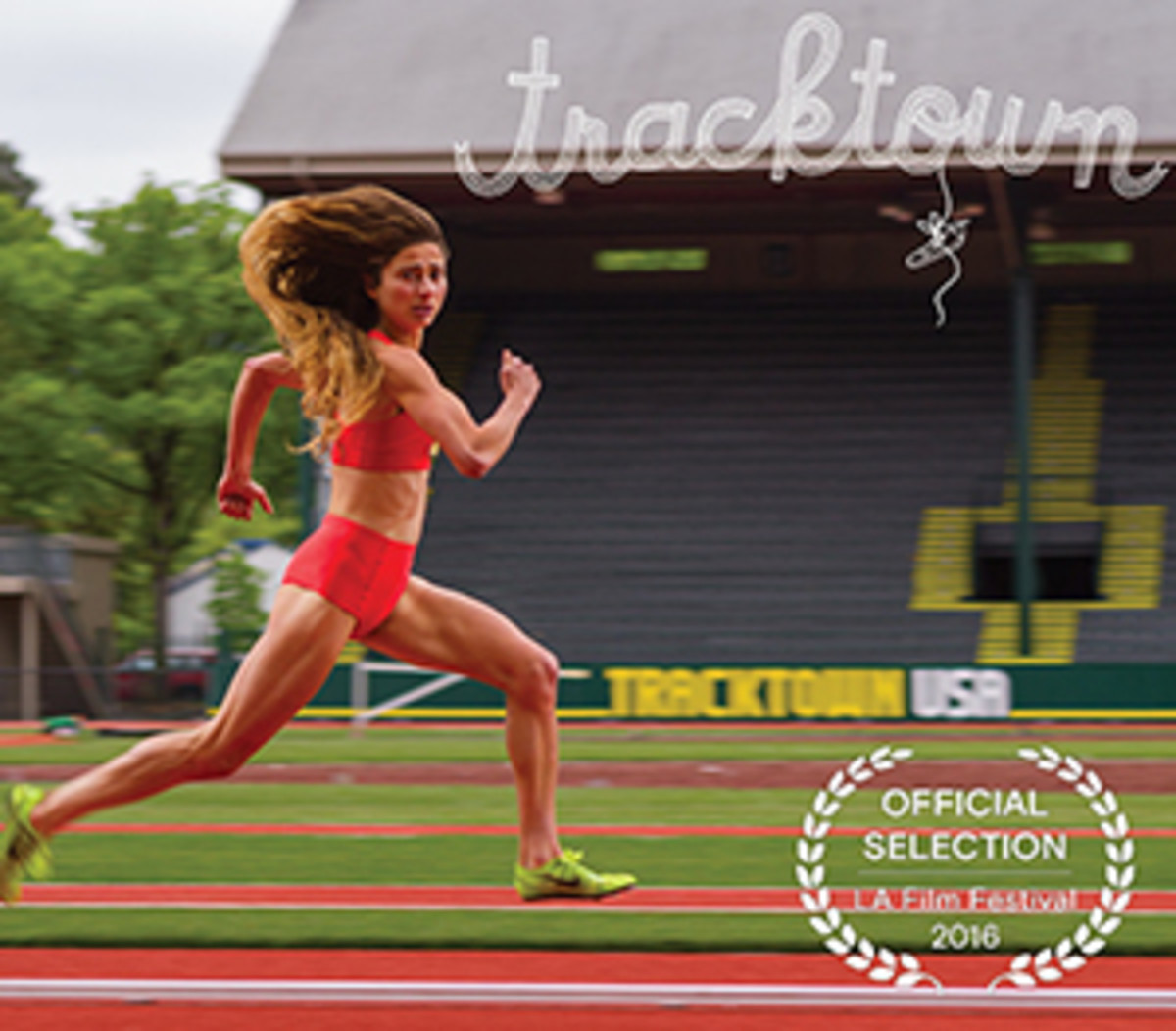
CC:Your film finally debuts on the big screen. What is your overall feel about how the movie turned out?
Jeremy Teicher: We’re very proud of the film and it’s also really cool how the timing has worked out. When we were making it, we didn’t know when it would premiere as is the deal with any indie film. It’s incredible to premiere the film in June 2016 just as Alexi’s running has been coming together and a lot of work is coming into fruition with us.
AP: It feel like years of day-dreaming and working in the running, and the film has come together at the right time.
CC:When you first described the movie a few years ago, all you said that it was about “Running to and running from.” How did that transform into TrackTown?
AP: In a broad sense, it’s still about that as this young athlete is facing her dreams and something that not all her peers are doing. When she’s forced to take this day off, she really looks at herself in the mirror for the first time in maybe her whole life and has to evaluate it.
JT: The core of the film is still about figuring out who you are and what you want.
CC:What was the process like from the film’s initial concept to finally watching the final product?
‘We’re in it to win it’: Kerri Walsh Jennings talks Rio Olympics, more
AP: We were first inspired to write the movie when I came to run a fifth-year with the Ducks. In TrackTown, I found a place in TrackTown that embraced running the way that some cities do for football and other sports. Jeremy was finishing up work on his first film when I called him to tell him that people out on the trails would congratulate me on my race and recognized me. I figured that we can make a movie about Eugene. From there we gathered our key team along with executive producer John Legere, who is the T-Mobile CEO that recently purchased space on Nick Symmonds’ arm. People like that made it progress from a script to the production.
JT: We did our first shoot at the 2014 Pre Classic, with the help of meet organizer Tom Jordan, for shots of the crowd and the fans. Then we shot in August and September.
AP: That was my month off from running so I was fully committed to being a director and an actress. I hung up my running shoes in exchange for my director’s hat and acting make-up. The next year was in post-production before submitting to film festivals. The first anyone saw of the film was a “behind the scenes” video that premiered at the New York City Marathon. That was the first time that the running and film world came together under one roof.
• ‘We’re in it to win it’: Kerri Walsh Jennings ready for fifth Olympics
CC:How would you break down the film in terms of percentage of comedy, drama, romance and sports?
JT: I think it’ll be a different experience for different people Even though it hasn’t come out yet, we’ve shown the film to a few people and it’s different to watch it with a group of elite athletes than it might be with some filmmaker friends. We’re excited to see what that will be like in a big theatre and what people take away from it.
CC:Jeremy, what did you learn from your first film, Tall as the Baobab Tree, that helped make this one possible?
JT: The success of my first film is what made the success of TrackTown possible. Making a feature film is so hard and to be able to show people that you can do it is a huge help. In my first film, I was working in an off-the-beaten path location with a specific community. When you’re working with a community, it’s important to stand by that community and produce something that they can be proud of.
AP: There was one day that a few of the female runners were nervous because they were athletes about to be in a movie. He started directing us as if we were athletes and he was a coach. He handled it in a positive way that made us realize that running around a track is exactly what we normally do. The best directors are able to get people to do what they already have inside of them.
 Add us as a preferred source on Google
An avid runner, Chris Chavez covers track and field, marathons and the Olympics for Sports Illustrated.