%20%20--%3E%0A%3Csvg%20version%3D%221.1%22%20id%3D%22Layer_1%22%20xmlns%3D%22http%3A%2F%2Fwww.w3.org%2F2000%2Fsvg%22%20xmlns%3Axlink%3D%22http%3A%2F%2Fwww.w3.org%2F1999%2Fxlink%22%20x%3D%220px%22%20y%3D%220px%22%0A%09%20width%3D%2239px%22%20height%3D%2240px%22%20viewBox%3D%220%200%2039%2040%22%20enable-background%3D%22new%200%200%2039%2040%22%20xml%3Aspace%3D%22preserve%22%3E%0A%3Cpath%20fill%3D%22%23FFFFFF%22%20d%3D%22M38.5%2C7H28.2v26h10.3V7z%22%2F%3E%0A%3Cpath%20fill-rule%3D%22evenodd%22%20clip-rule%3D%22evenodd%22%20fill%3D%22%23FFFFFF%22%20d%3D%22M26.1%2C25.5c0%2C5.8-4.1%2C7.5-12.9%2C7.5C3.9%2C33%2C0%2C31.2%2C0%2C25.2v-1.1h11.6%0A%09v2.4c0%2C0.7%2C0.1%2C1.4%2C1.2%2C1.4c1%2C0%2C1.2-0.4%2C1.2-1.3v-0.9c0-1.6-0.9-1.6-3.5-2.2C2.2%2C21.7%2C0%2C19.7%2C0%2C15.3v-0.9C0%2C9.3%2C5.5%2C7%2C12.9%2C7%0A%09c10.2%2C0%2C12.8%2C2.6%2C12.8%2C7.4v1.8h-11v-2.9c0-0.6-0.4-1.1-1.2-1.1c-0.6%2C0-1.2%2C0.4-1.2%2C1.1v0.9c0%2C1.5%2C0.9%2C2%2C3.3%2C2.5%0A%09c8%2C1.6%2C10.5%2C3.3%2C10.5%2C7.5V25.5z%22%2F%3E%0A%3C%2Fsvg%3E%0A)
Dos-A-Cero once again: USA beats Mexico behind Morris, Agudelo

SAN ANTONIO – Of course, the score was dos-a-cero.
The U.S. national team maintained its recent run of results over Mexico on Wednesday night in San Antonio, defeating El Tri by the traditional score of 2-0 thanks to second-half goals by forwards Jordan Morris and Juan Agudelo. U.S. coach Jurgen Klinsmann now is 3-0-3 against his team’s chief rival, which hasn’t beaten the Americans since the 2011 CONCACAF Gold Cup final.
Here are three thoughts on the latest match in the USA-Mexico rivalry:
Morris’s Moment
Add Morris’s name to the lengthening list of USA-Mexico lore.
Klinsmann clearly has an affinity for young, fearless and athletic players. Offering opportunities to promising but untested internationals was a key part of his 2004-05 overhaul of Germany, and it’s been a hallmark of his four years on the U.S. bench. And for the most part, it’s worked out—look no further than the contributions of DeAndre Yedlin and Julian Green at last summer’s World Cup.
Jordan Morris turns Alamodome into field of dreams for USA vs. Mexico
On Wednesday, Morris, a Stanford University sophomore, became the latest newcomer to repay Klinsmann’s faith. The Seattle product isn’t even a pro, yet he handled the pulsating Alamodome atmosphere like a seasoned veteran. His strong, 31st-minute run down the Mexican right provided a glimpse of his awareness and athleticism. Morris had his head up looking for support while outrunning a pair of Mexican defenders. The play fizzled out at the endline as Jordan lacked a supporting runner.
In the 49th, Morris made history. The play started with a smart turn by Michael Bradley, who beat two defenders then laid the ball off to Gyasi Zardes. The LA Galaxy forward’s return pass was blocked and fell to Morris, who turned on the ball and calmly rifled a right-footed shot under Mexico goalkeeper Cirilo Saucedo.
Morris scored only four goals for Stanford last fall, but Klinsmann clearly saw something special about the player, who made his U.S. debut in November. On Wednesday, the rest of the country saw it as well.
The 4-4-2 Works Again
Klinsmann stressed here again before the match that the year following a World Cup is a time to tinker and experiment.
“If we wouldn’t have done that the last nine months, we would have made a mistake. Then you’re stagnant,” he said Tuesday.
But Wednesday’s win provided additional evidence that the U.S. is most comfortable in a 4-4-2. Roles are clearly defined, the forwards have support and the spacing is more natural. It wasn’t perfect, of course. Joe Corona, in particular, was caught out from his spot in left midfield far too frequently in the first half, and Morris and Zardes weren’t always on the same page.
Circumstances have evolved, but USA-Mexico remains a special rivalry
But like the first half against Switzerland last month, the 4-4-2 offered greater possession and movement than other formations Klinsmann has deployed in recent months. Kyle Beckerman did his usual yeoman’s work in front of the back four, freeing Bradley to roam and create. Bradley, in turn, was involved in both U.S. goals. He made the dribbling run that eventually set up Morris and hit a gorgeous, looping ball to Agudelo that led to the second goal.
A youthful Mexican team didn’t offer much going the other way, especially in the second half, but Bradley’s contributions offered an indication of why Klinsmann prefers him in a more advanced, creator’s role.
It may not be Bradley’s ideal position, but he may be the best at it in the U.S. pool. If Klinsmann is going to settle on anything else prior to the Gold Cup, it should be surrounding Bradley with a true defensive midfielder, two wingers and two forwards. That’s how the U.S. looks most comfortable right now.
Field of Seams
Morris and Agudelo ensured that the rutted, patchy sod that spent Wednesday evening doing a poor impression of a soccer field wasn’t the main story.
The U.S. Soccer Federation likes to move national team games around the country and likes to host matches against popular teams in big stadiums. The Americans hadn’t visited San Antonio since 1988, and a sell-out crowd of 64,369 was testament to the level of interest.
The problem—the Alamodome had artificial turf, which soccer teams don’t like to play on if they don’t have to. So the USSF, like it has in cities like Seattle, contracted with a local turf company to grow, transport and install natural grass over the artificial surface.
A USSF spokesperson said that less-than-ideal weather hurt the quality of the sod, and on Monday, a couple of days after installation began, Mexican Football Federation officials reportedly considered pulling out of the match. Mexico trained elsewhere on Monday then gave the Alamodome field a thumbs up. The U.S. then practiced in the stadium.
The bumps and ruts were evident. The ball bounced strangely, and easy passes played along the ground became an adventure for the recipient. Control was tough, dribbling was tougher and possession proved difficult to maintain. It didn’t make for pretty soccer.
It’s unknown whether the conditions will make the USSF think twice about temporary turf in the future. It may be loathe to shut out markets without natural grass stadiums permanently from the national team rotation, and the raucous crowd didn’t seem to have a problem with a game that featured plenty of energy and two good goals.
There’s a lot of idiosyncrasy in American soccer. Games like Wednesday’s are just part of doing business.
GALLERY: U.S. vs. Mexico through the years
USA vs. Mexico Soccer
November 11, 2016 – Mexico 2, USA 1
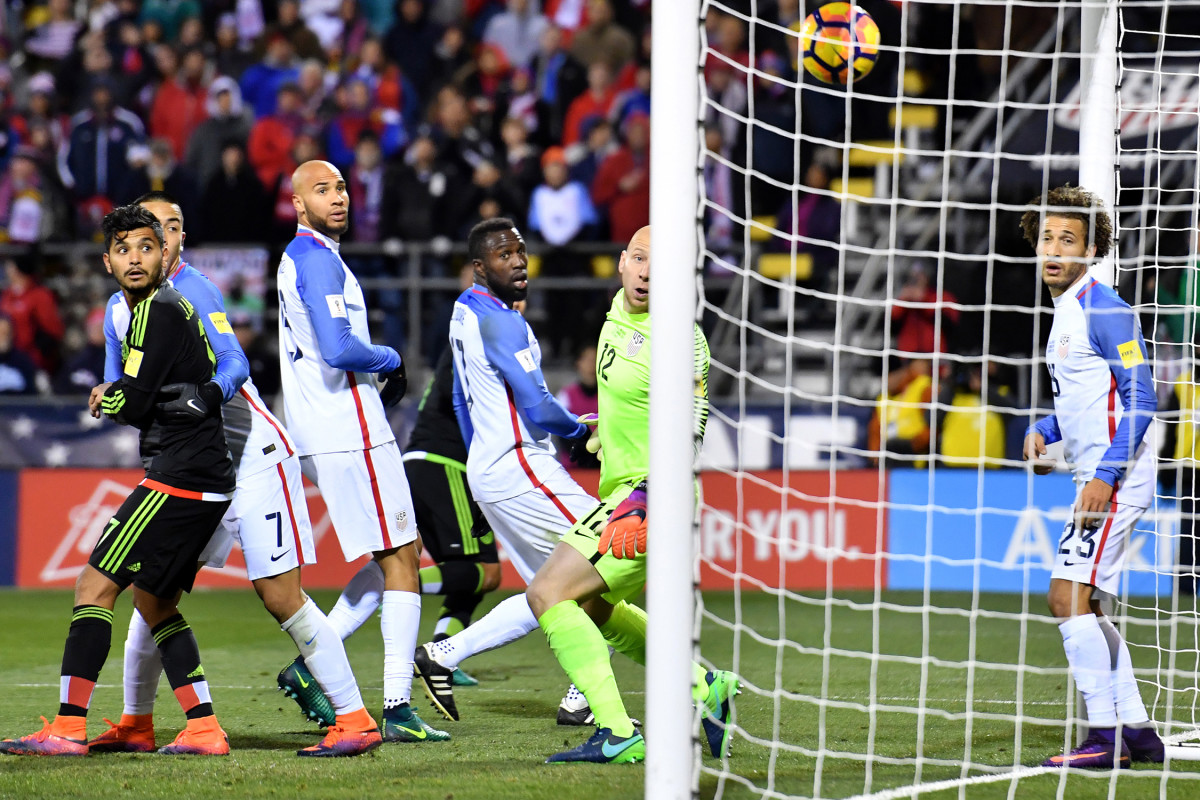
USA and Mexico players watch Rafa Marquez's 89th-minute header find the net in a famous World Cup qualifying win in Columbus for El Tri.
October 10, 2015 – Mexico 3, USA 2 (AET)
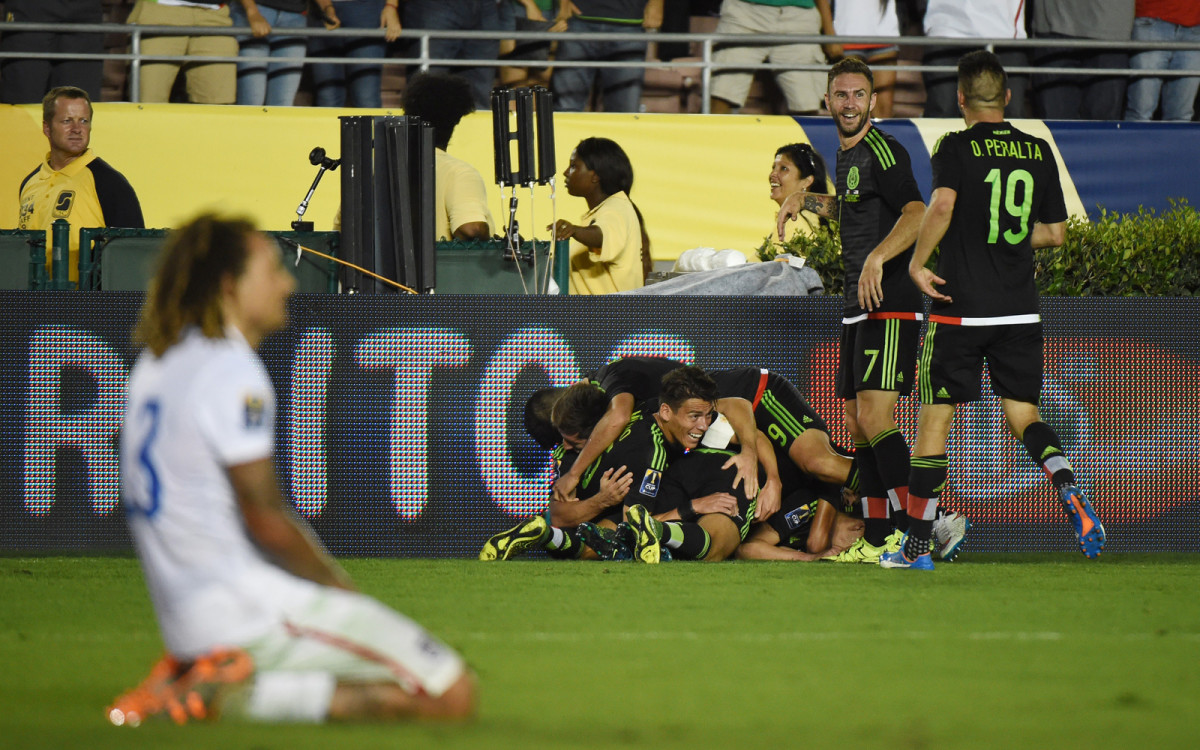
Jermaine Jones falls to his knees in disappointment as Mexico celebrates after Paul Aguilar's sensational volley in extra time captured the CONCACAF Cup for El Tri and sends the U.S. rival to the 2017 FIFA Confederations Cup.
April 15, 2015 — USA 2, Mexico 0
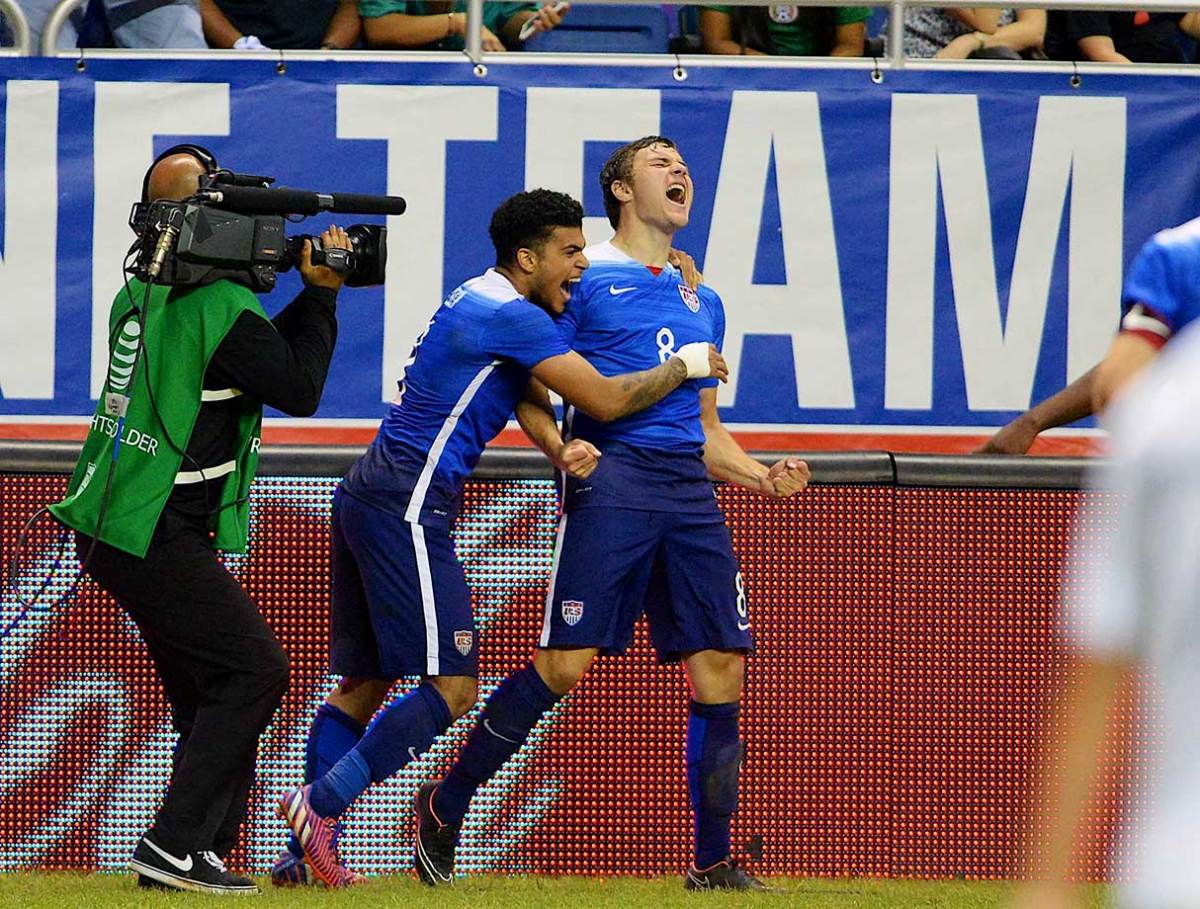
Stanford University's Jordan Morris marked his first senior national team start with his first international goal, sparking the USA in another 2-0 triumph over Mexico, this one at the Alamodome in San Antonio.
September 10, 2013 — USA 2, Mexico 0
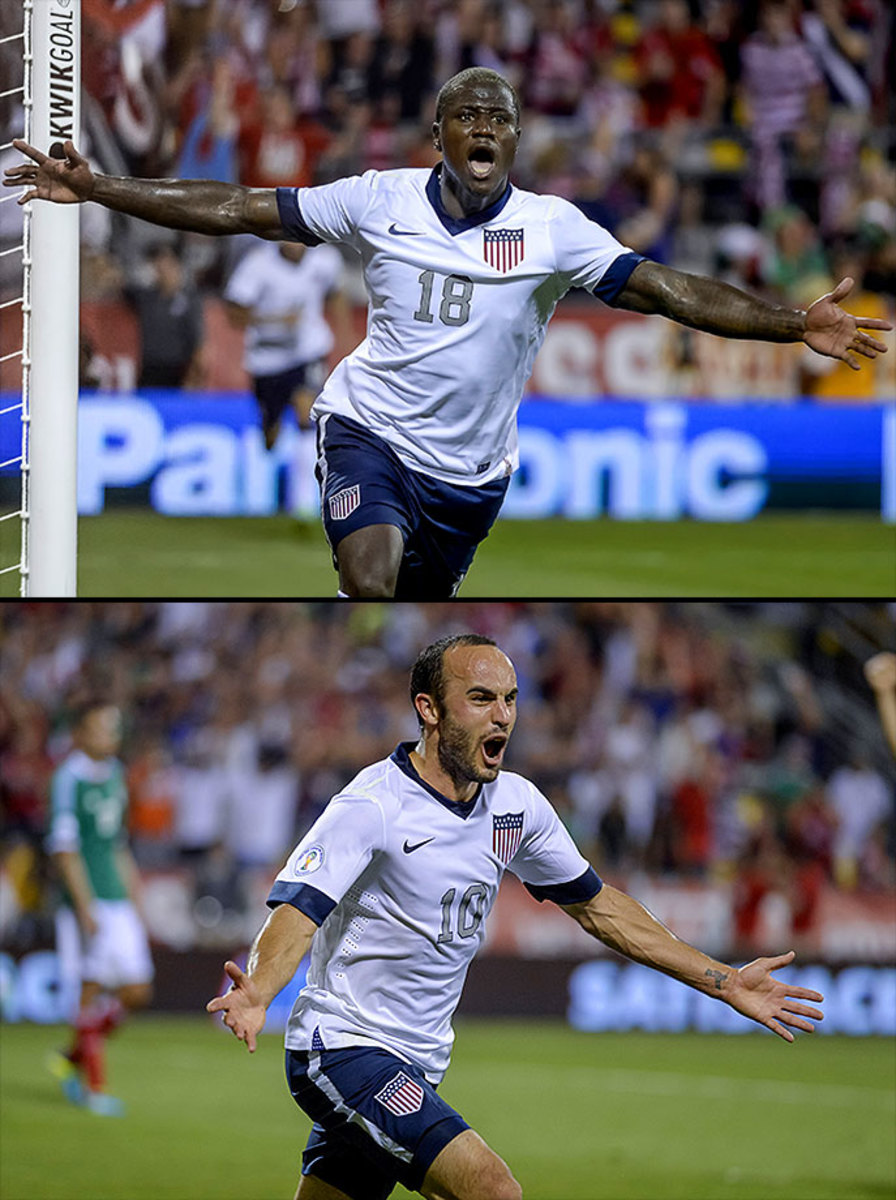
Eddie Johnson and Landon Donovan scored second-half goals to beat El Tri by the same score for the fourth consecutive qualifier in Columbus, Ohio.
March 26, 2013 — USA 0, Mexico 0
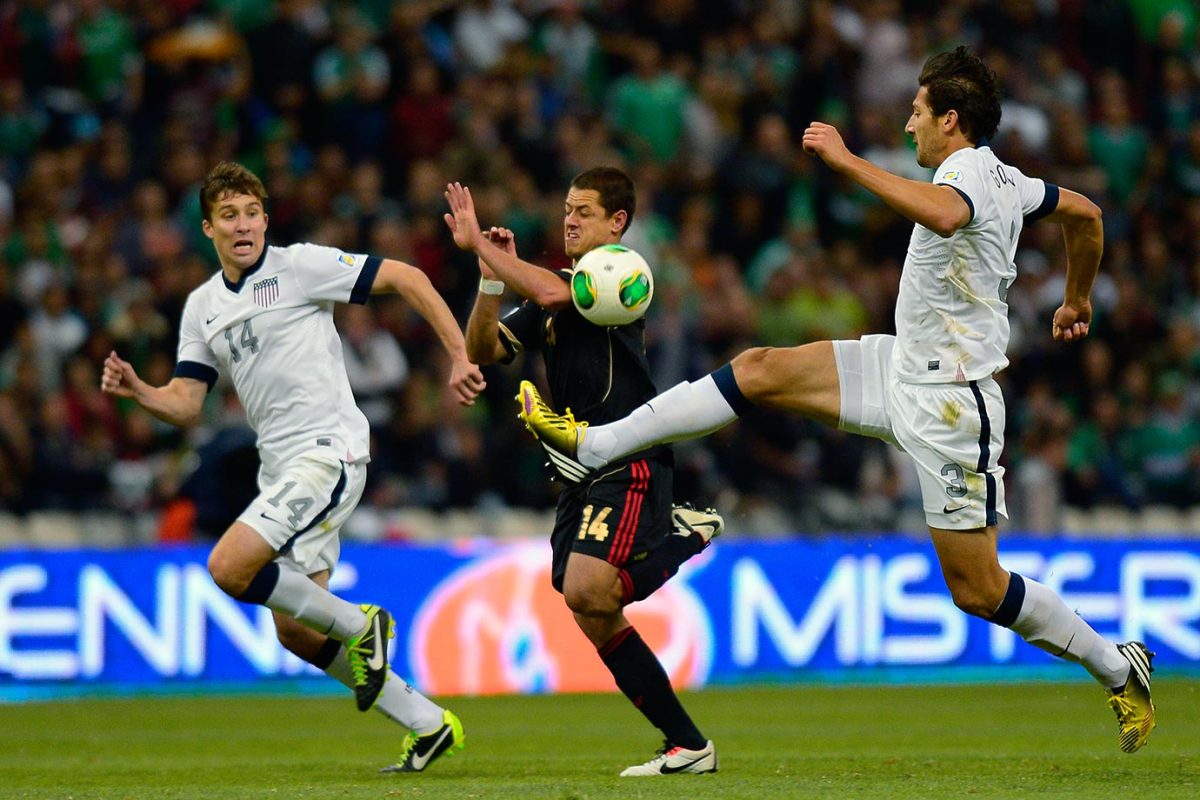
Clint Dempsey captained the U.S. to a 0-0 draw at Estadio Azteca, the second time ever the Americans registered a point in World Cup qualifying in Mexico (the other a 1997 tie). Defenders Omar Gonzalez and Matt Besler were the stars as Mexico couldn't cash in on several opportunities. The U.S. escaped to remain in second place in CONCACAF qualifying.
August 15, 2012 — USA 1, Mexico 0
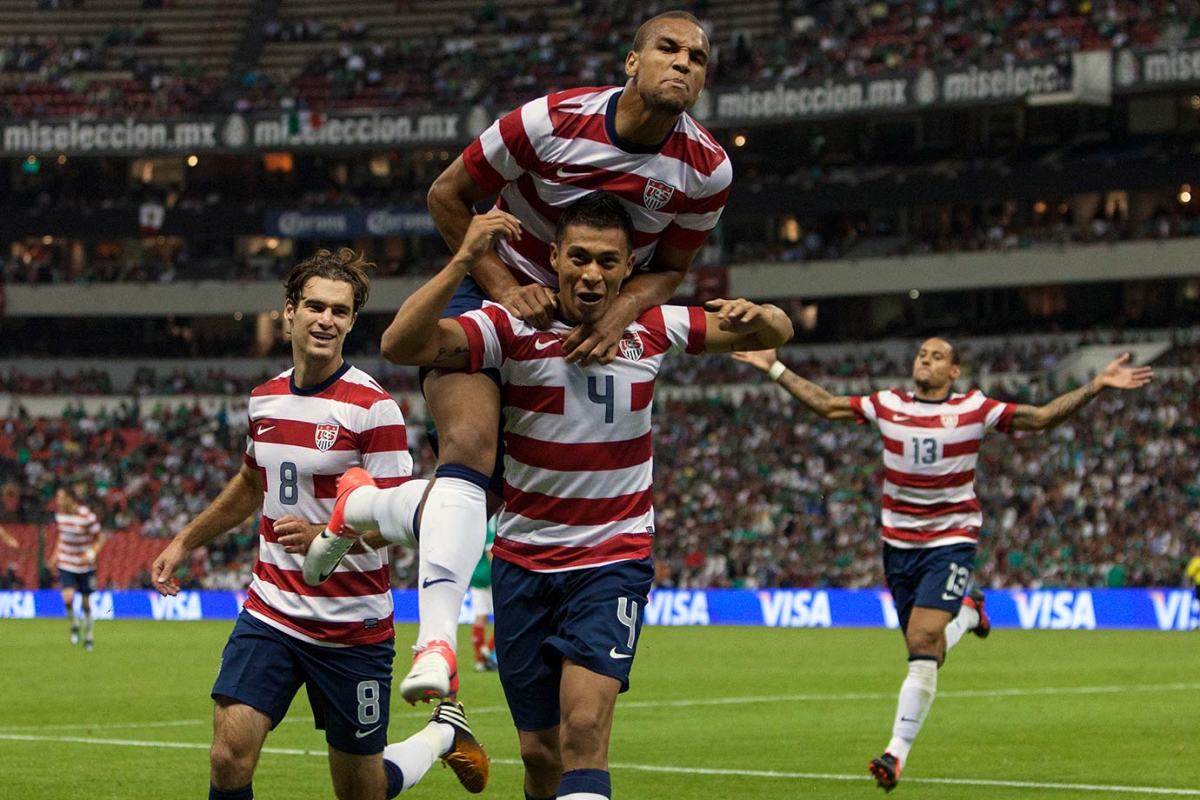
It took 25 attempts, but after this friendly, the United States could finally say that it had won at Mexico City's Azteca Stadium. Despite being outplayed for most of the match, the U.S. won thanks to an 80th-minute goal from Michael Orozco Fiscal — the first international goal of his career.
August 10, 2011 — USA 1, Mexico 1
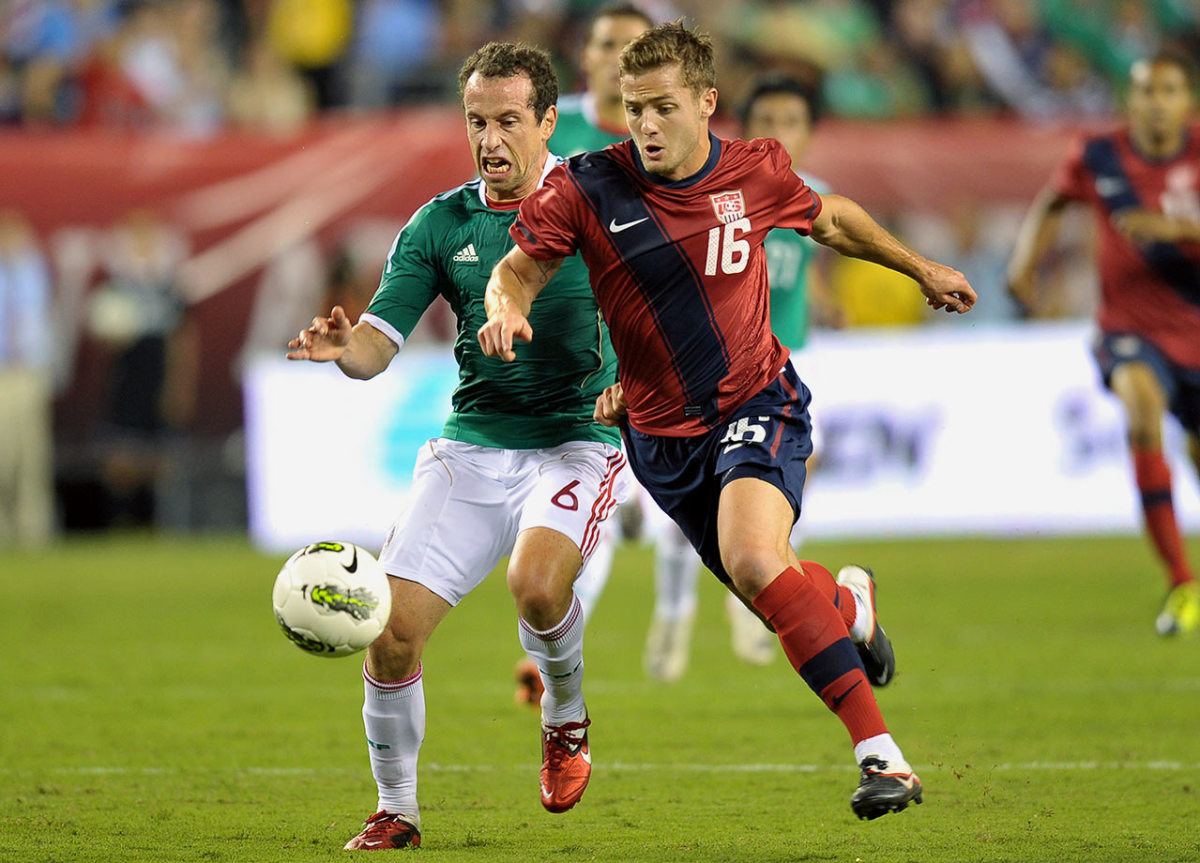
Head coach Jurgen Klinsmann's U.S. debut got off to a rough start, as the Americans trailed Mexico, 1-0 after an uninspired first half in Philadelphia. The U.S. showed more verve after halftime, though, and an impressive display from Brek Shea and a 73rd-minute goal from Robbie Rogers led to a 1-1 draw.
June 25, 2011 — Mexico 4, USA 2
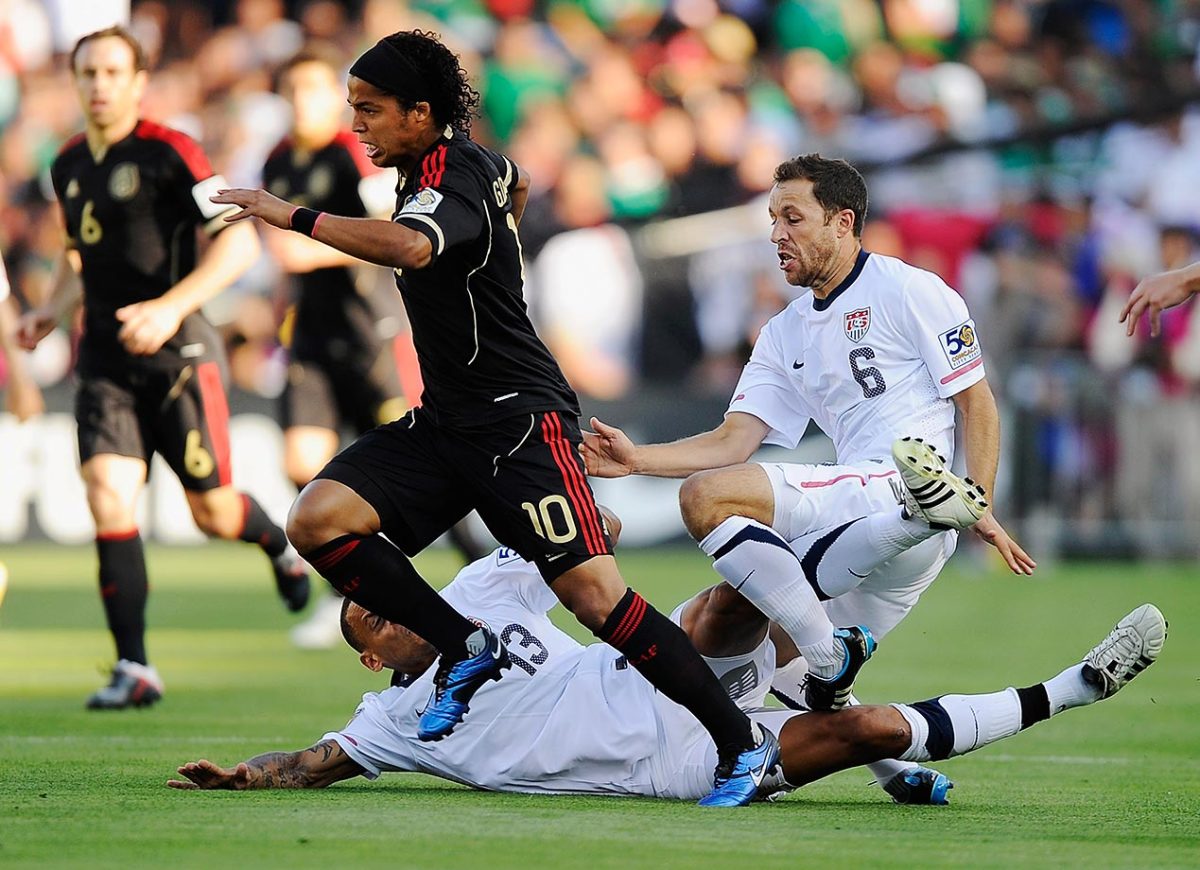
In the Gold Cup final, Mexico captured its second straight title in the battle for CONCACAF bragging rights and secured a berth in the 2013 Confederations Cup. Pablo Barrera scored twice; Giovani Dos Santos and Andres Guardado also had goals. The U.S. was up 2-0 early on Michael Bradley and Landon Donovan goals, but poor defending (partially due to the loss of Steve Cherundolo by injury) doomed the Americans.
August 12, 2009 — Mexico 2, USA 1
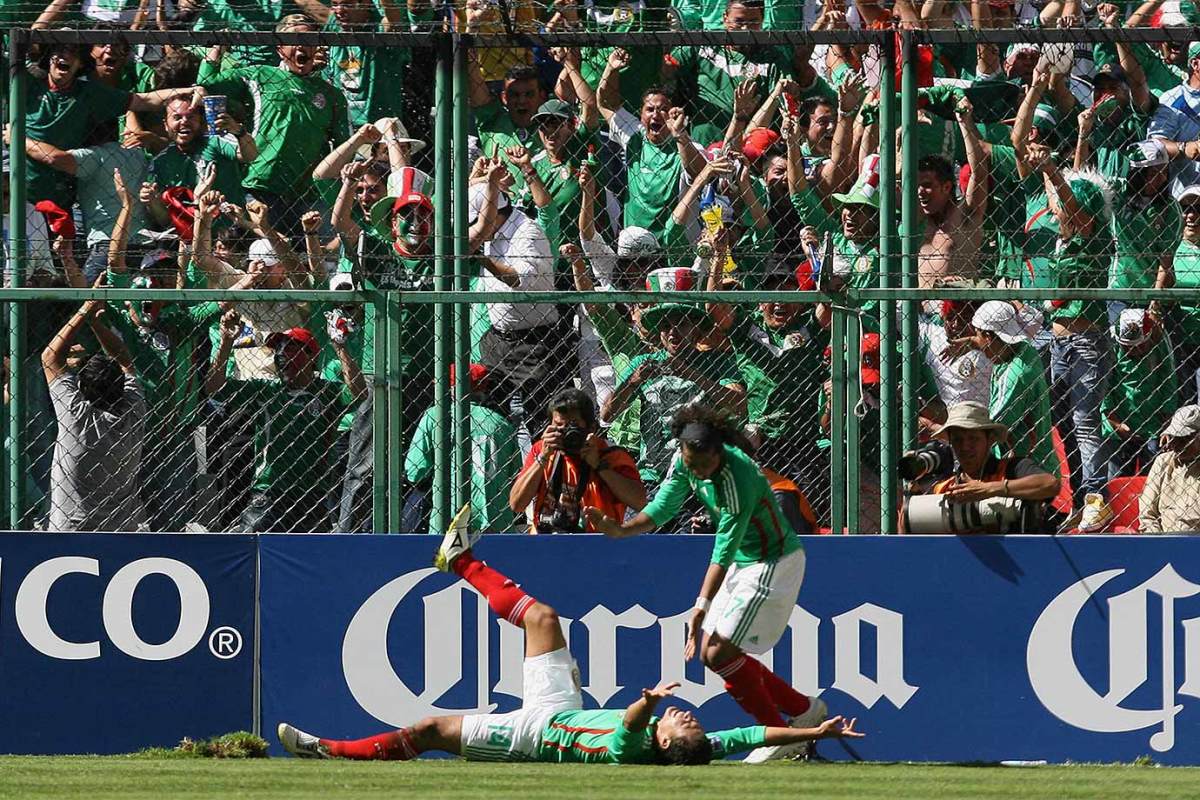
The U.S. took its first-ever lead at Azteca Stadium, but went on to lose 2-1 in what was a critical World Cup qualifier for Mexico. The win changed the tide for the then-struggling Mexican squad, as it went on to go 3-0-1 in its next four matches to earn a trip to South Africa. The U.S. still went on to finish first in CONCACAF qualification.
July 26, 2009 — Mexico 5, USA 0
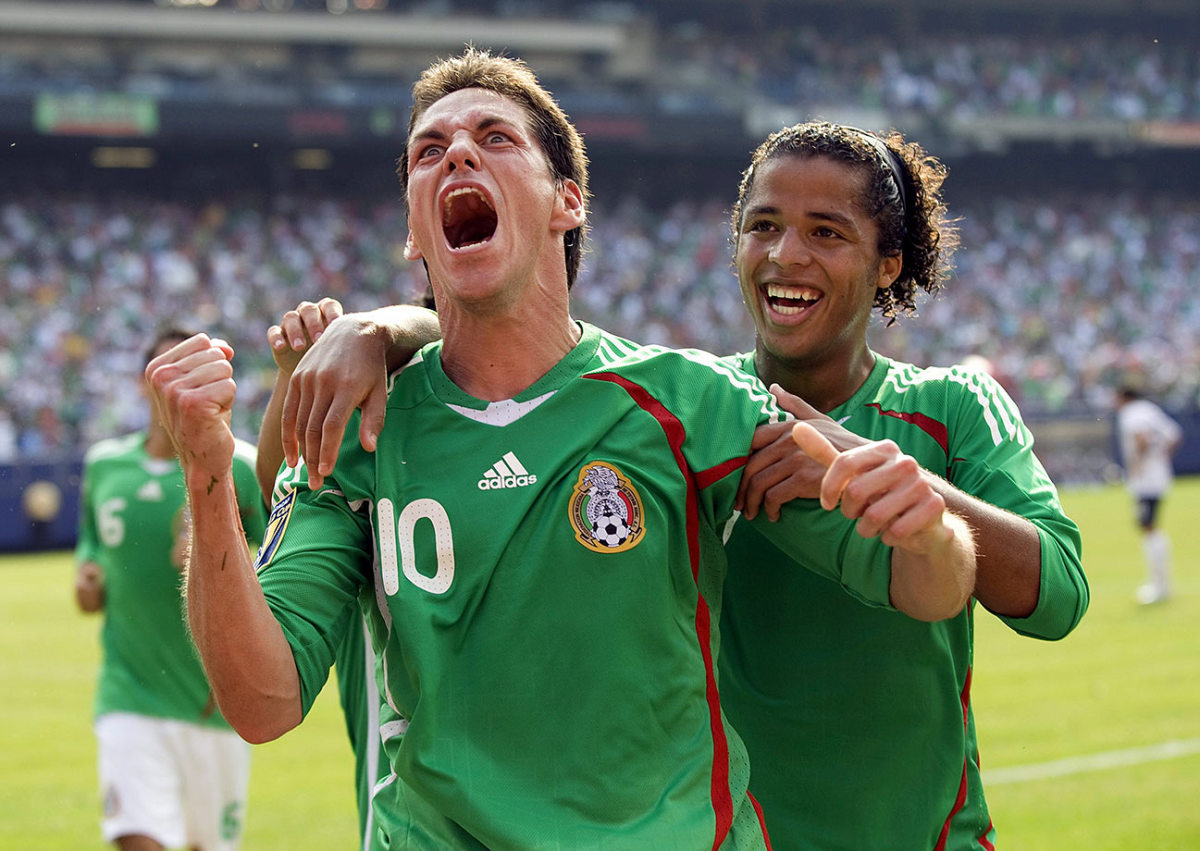
Mexico put an emphatic end to the Americans' 9-0-2 home streak against "El Tri." The Mexicans took the Gold Cup from the two-time defending champion, with five different players scoring goals in the second half at Giants Stadium.
February 11, 2009 — USA 2, Mexico 0
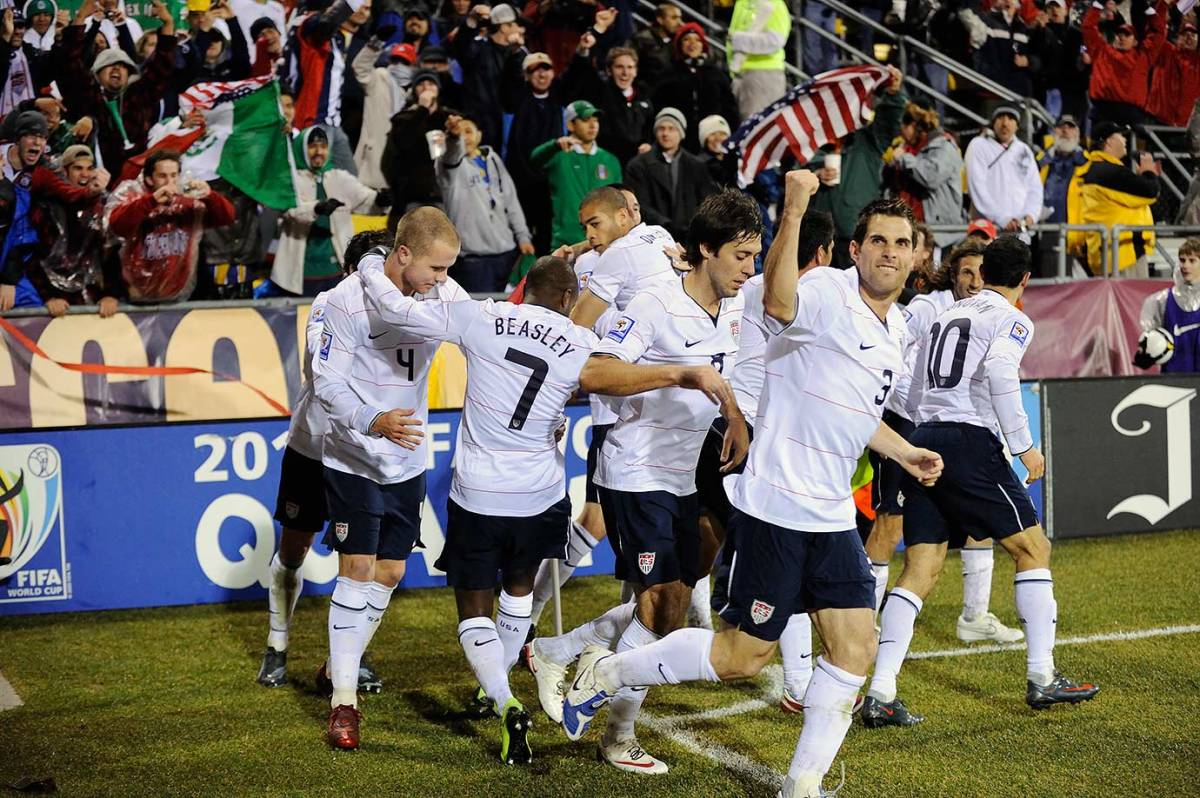
Two goals from Michael Bradley gave the U.S. another home victory over Mexico. It marked the eleventh consecutive time that the Americans had gone unbeaten against Mexico when playing on U.S. soil.
June 24, 2007 — USA 2, Mexico 1
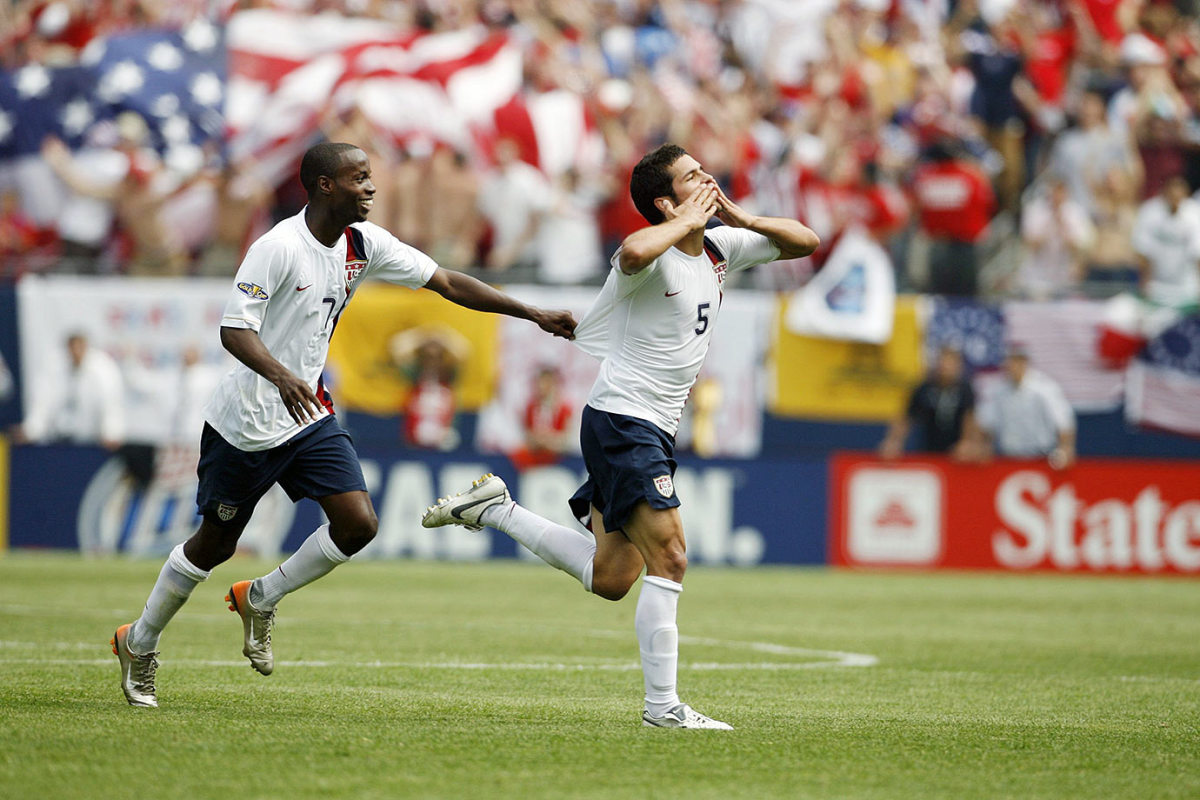
Down 1-0, second-half goals from Landon Donovan and Benny Feilhaber gave the U.S. the victory in the 2007 Gold Cup finals. The win earned the Americans a spot in the 2009 Confederations Cup, where they achieved their famous upset over Spain.
September 3, 2005 — USA 2, Mexico 0
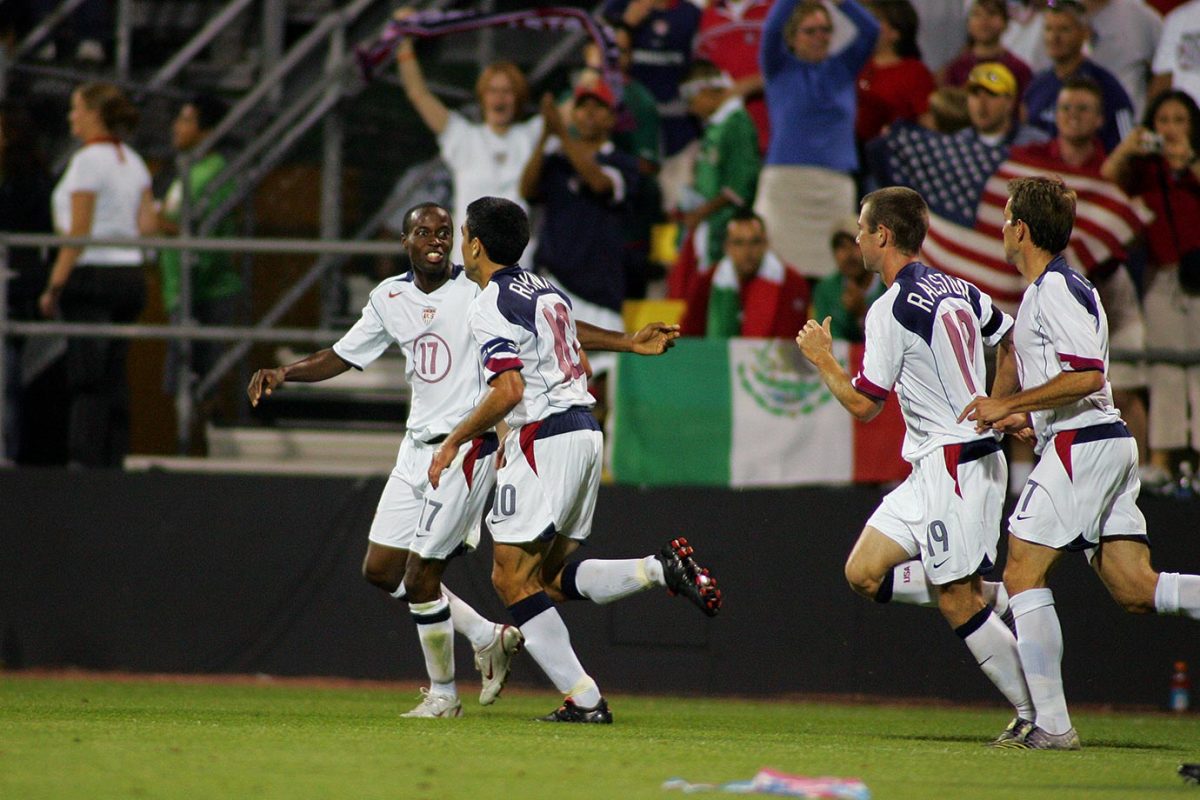
A 2-0 victory over "El Tri" clinched a spot in the 2006 World Cup, with goals coming from Steve Ralston and DaMarcus Beasley.
May 8, 2003 — USA 0, Mexico 0
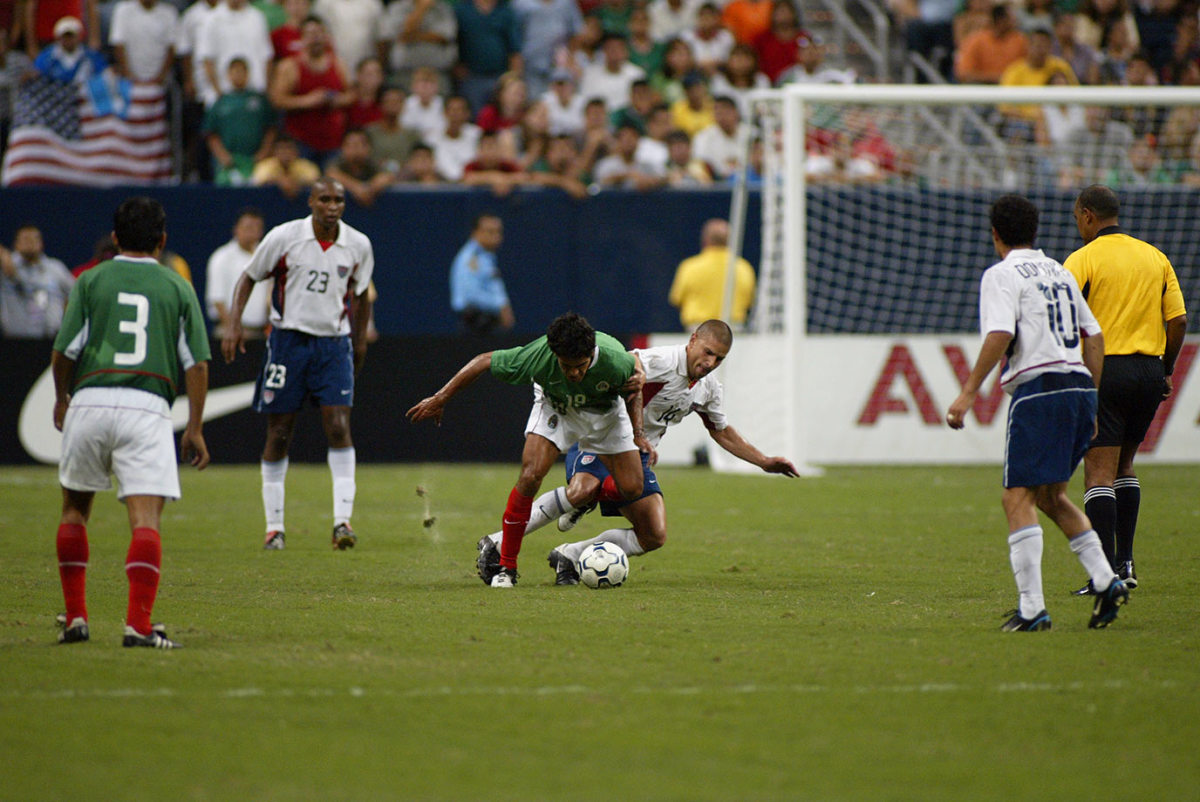
In their first meeting since the 2002 World Cup, an all-MLS squad of Americans played Mexico to a 0-0 draw in front of more than 69,000 people in Houston.
June 17, 2002 — USA 2, Mexico 0
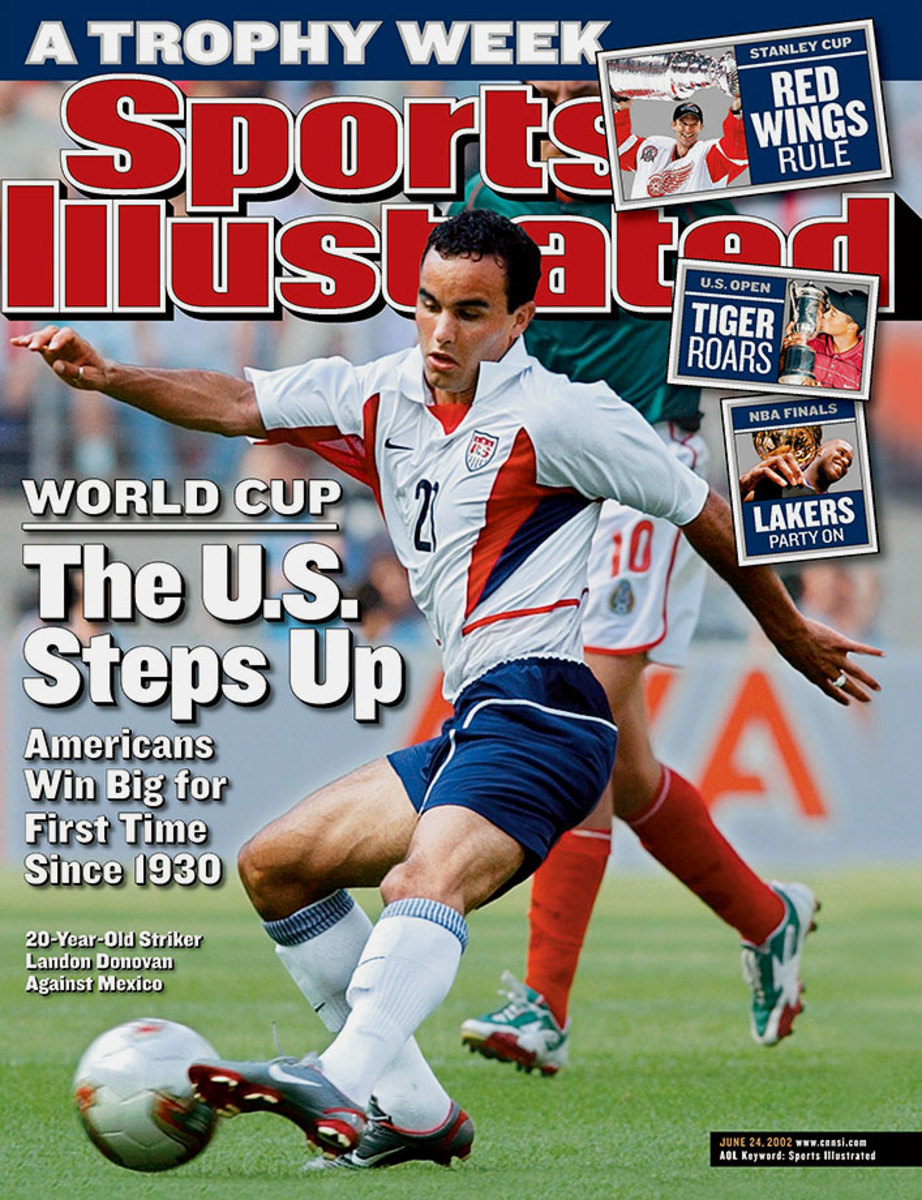
Arguably the biggest win in U.S. soccer team history came against its archrivals at the 2002 World Cup. Brian McBride and Landon Donovan gave the Americans a 2-0 victory in South Korea to send their team to the quarterfinals. It is the furthest stage the team has reached in the World Cup since 1930.
July 1, 2001 — Mexico 1, USA 0
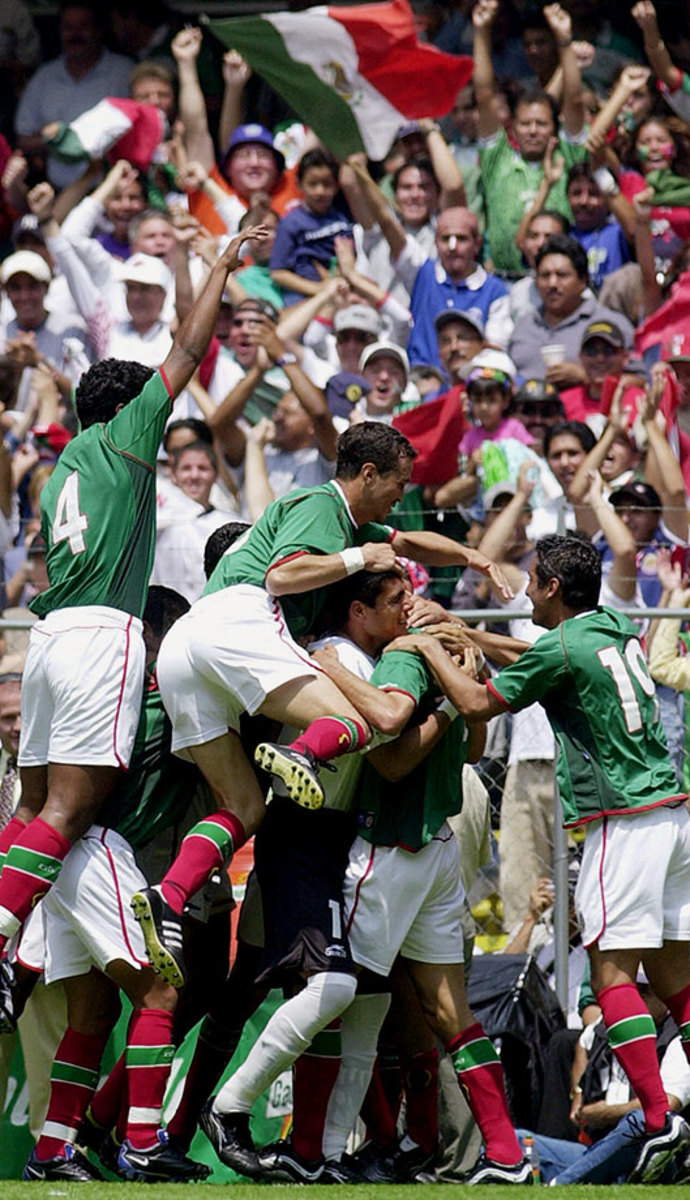
Needing a win to stay in contention for the 2002 World Cup, the Mexicans won 1-0 at Azteca Stadium, making their record 21-0-1 when hosting the Americans.
February 28, 2001 — USA 2, Mexico 0
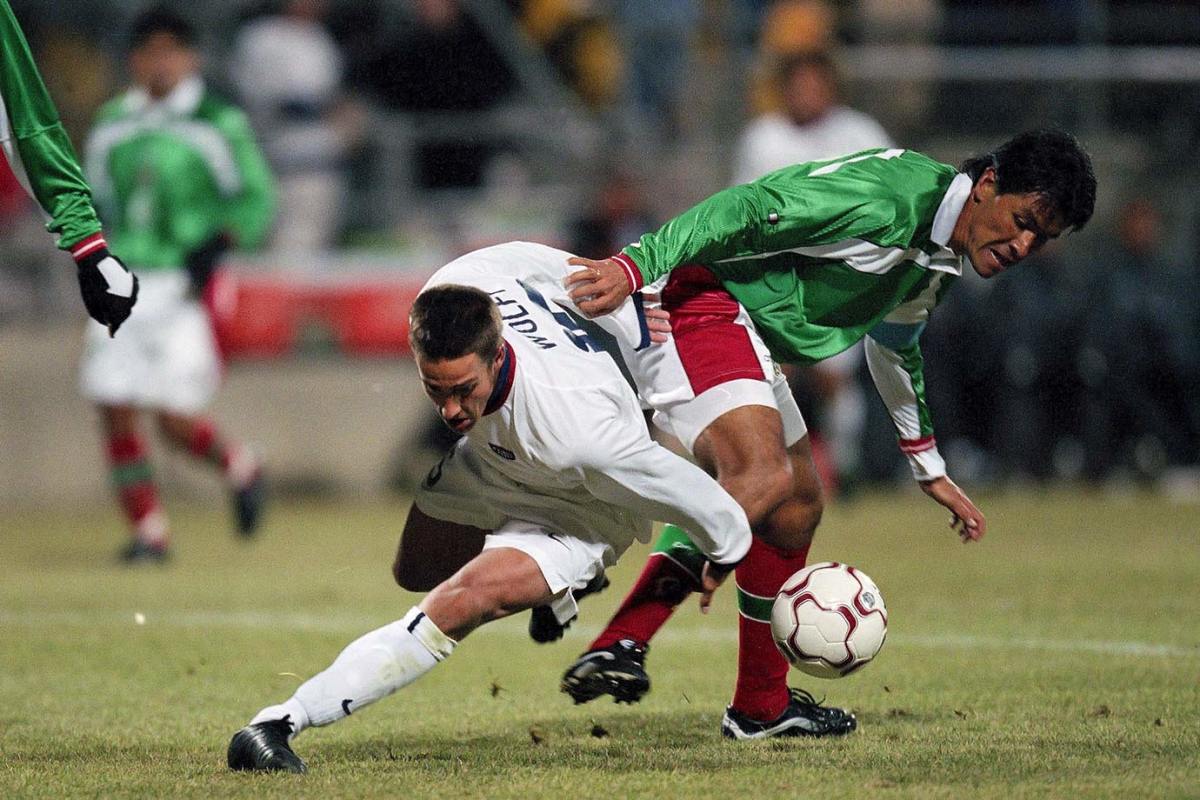
For the first time ever, the Americans won their third consecutive game against Mexico. The victory came in the World Cup qualifying finals and was held in Columbus, Ohio.
August 1, 1999 — Mexico 1, USA 0
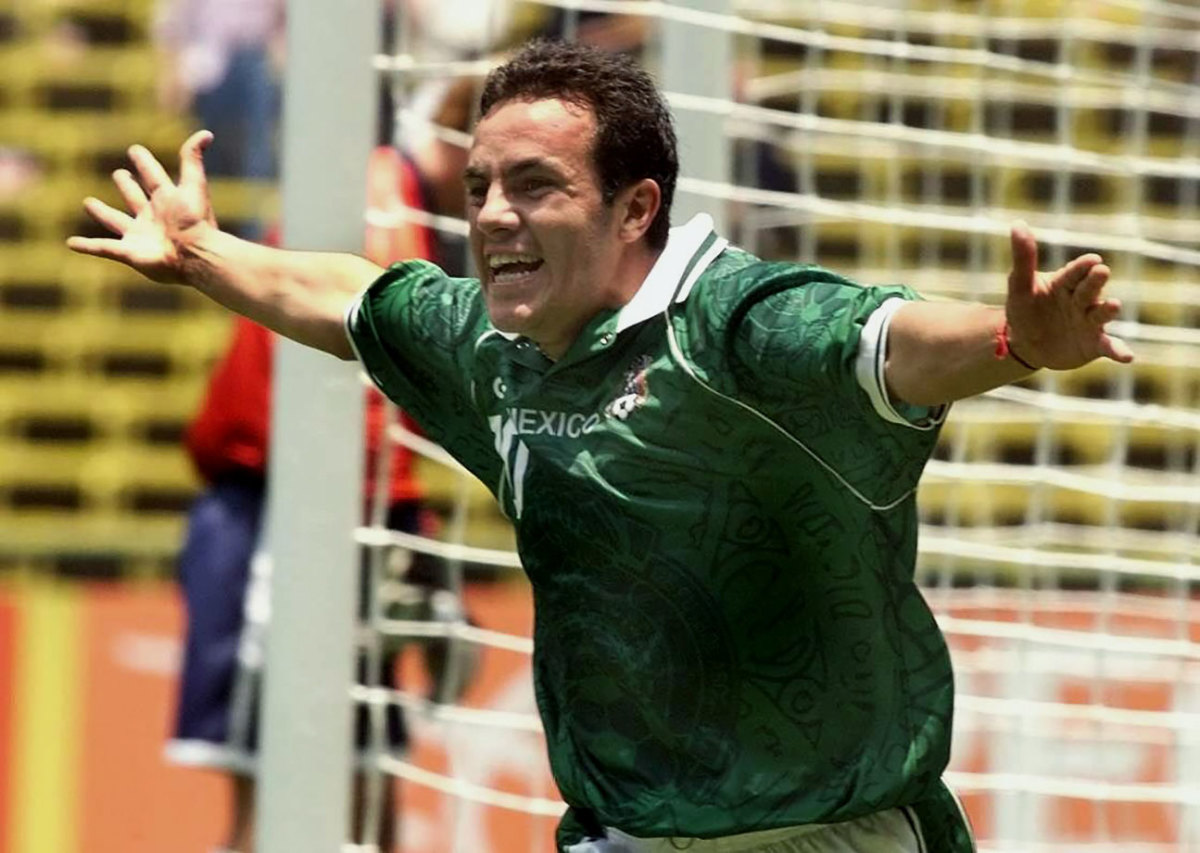
Cuauhtemoc Blanco's goal in extra time eliminated the U.S. in the semifinals of the 1999 Mexico City Confederations Cup. The win capped off a long tradition of Mexican dominance over the American side, a streak that shortly thereafter ended, as the Americans won the next three matches against their rivals.
July 17, 1995 — USA 0, Mexico 0
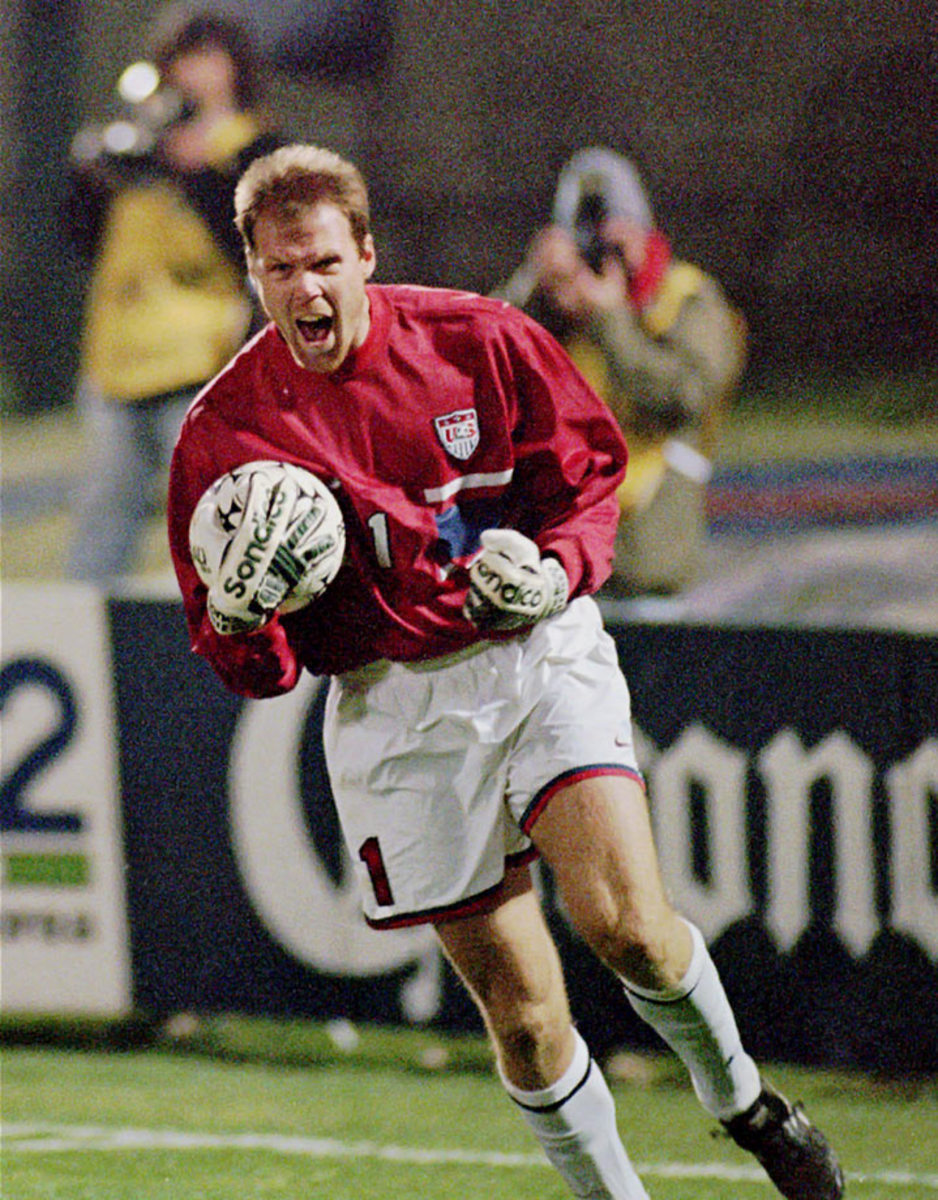
The USA outlasted Mexico in a penalty shootout to reach the semifinals of the 1995 Copa America. After a 0-0 draw, goalkeeper Brad Friedel was the hero in PKs, making two saves. The U.S. made all four of its attempts and advanced.
 Add us as a preferred source on Google
A lifelong soccer player, coach and fan, Brian Straus joined SI in 2013 after covering the sport for The Washington Post, AOL and Sporting News.