%20%20--%3E%0A%3Csvg%20version%3D%221.1%22%20id%3D%22Layer_1%22%20xmlns%3D%22http%3A%2F%2Fwww.w3.org%2F2000%2Fsvg%22%20xmlns%3Axlink%3D%22http%3A%2F%2Fwww.w3.org%2F1999%2Fxlink%22%20x%3D%220px%22%20y%3D%220px%22%0A%09%20width%3D%2239px%22%20height%3D%2240px%22%20viewBox%3D%220%200%2039%2040%22%20enable-background%3D%22new%200%200%2039%2040%22%20xml%3Aspace%3D%22preserve%22%3E%0A%3Cpath%20fill%3D%22%23FFFFFF%22%20d%3D%22M38.5%2C7H28.2v26h10.3V7z%22%2F%3E%0A%3Cpath%20fill-rule%3D%22evenodd%22%20clip-rule%3D%22evenodd%22%20fill%3D%22%23FFFFFF%22%20d%3D%22M26.1%2C25.5c0%2C5.8-4.1%2C7.5-12.9%2C7.5C3.9%2C33%2C0%2C31.2%2C0%2C25.2v-1.1h11.6%0A%09v2.4c0%2C0.7%2C0.1%2C1.4%2C1.2%2C1.4c1%2C0%2C1.2-0.4%2C1.2-1.3v-0.9c0-1.6-0.9-1.6-3.5-2.2C2.2%2C21.7%2C0%2C19.7%2C0%2C15.3v-0.9C0%2C9.3%2C5.5%2C7%2C12.9%2C7%0A%09c10.2%2C0%2C12.8%2C2.6%2C12.8%2C7.4v1.8h-11v-2.9c0-0.6-0.4-1.1-1.2-1.1c-0.6%2C0-1.2%2C0.4-1.2%2C1.1v0.9c0%2C1.5%2C0.9%2C2%2C3.3%2C2.5%0A%09c8%2C1.6%2C10.5%2C3.3%2C10.5%2C7.5V25.5z%22%2F%3E%0A%3C%2Fsvg%3E%0A)
USA, Mexico vie for Confederations Cup ticket, but how important is it?
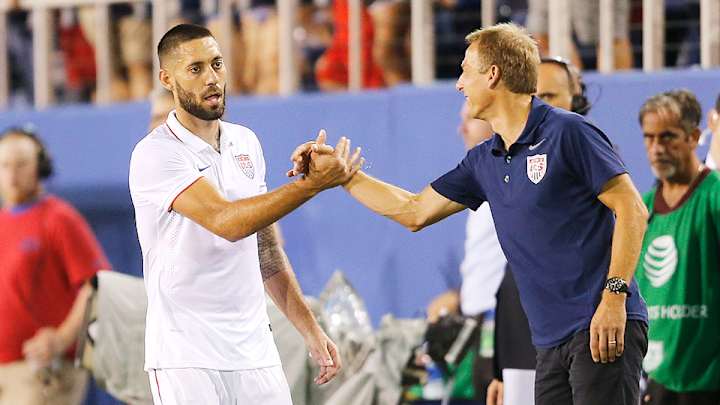
IRVINE, Calif. — While the U.S. national team was feeling pretty good about itself following a thrilling 2–1 win over Germany in June, Die Mannschaft captain Bastian Schweinsteiger offered a world champion’s perspective.
“I believe that, if we had been up for it and on a normal fitness level, we’d have won the match today,” he told ARD.
With all due respect to the Americans’ performance that day in Cologne, it’s tough not to take Schweinsteiger at his word. Germany is a powerhouse — a four-time world champion that wins big games by the bushel. Its World Cup typically starts in the quarterfinals, which is a stage the U.S. has reached just once in the past 70 years. When Germany faces a must-win situation, it typically wins.
• All of Sports Illustrated’s coverage for USA’s playoff against Mexico
U.S. coach Jurgen Klinsmann, a product of that German powerhouse, is trying to lay the foundation for a similarly successful program in his adopted home. One significant hurdle the 1990 World Cup winner faces is the dearth of games against the teams he’s chasing. Klinsmann hasn’t been shy about scheduling tough friendlies in forbidding places. He’s taken the U.S. to Italy, France, Germany, the Netherlands, Chile and elsewhere. But in the end, those were friendlies — matches the opponent didn’t have to win. Desperation is hard to fake. There is no crucible like official competition.
Klinsmann has coached 75 games with the U.S. Only four came in official competition against teams from outside CONCACAF (Ghana, Portugal, Germany and Belgium at last summer’s World Cup). His 76th game in charge, Saturday against Mexico in nearby Pasadena, Calif., is critical because a win would guarantee at least three more of those vital, meaningful matches, plus a sneak peak at life and logistics inside Russia, the 2018 World Cup host.
Jurgen Klinsmann's history vs. Mexico: Undefeated as player, coach
A lot of the focus this week in Southern California has been on the heated and increasingly storied rivalry between the Americans and El Tri, the 90,000 fans who will fill the Rose Bowl and the state of two ambitious national teams in flux. But bragging rights come and go, and the trophy accompanying this contrived, one-day competition featuring the past two Gold Cup champions is a mere token. For the Americans, the real prize is a ticket to the 2017 Confederations Cup in Russia.
From the team’s perspective, those three games (or more) in 2017, not to mention the opportunity to get the lay of the land a year before the World Cup, represent fundamental building blocks.
The quadrennial, eight-team Confederations Cup won’t mean as much to European and South American powers that regularly face top teams. They’re on a different trajectory. It may not be anticipated or celebrated by casual fans. And there’s no hard statistical evidence proving that playing in it makes a difference the following summer. World Cup results have varied widely for Confederations Cup alumni. The U.S. beat Spain in that famous semifinal in 2009 and then advanced to the round of 16 in the ensuing World Cup. The Americans missed out on the 2013 edition yet still made the round of 16 last summer in Brazil. Mexico has been a round of 16 team regardless of Confederations Cup participation.
But for the Americans, perception is reality. The coach, players and federation officials believe the Confederations Cup provides a critical boost, so therefore it does. Even absent the on-field competition, getting a first-hand sense of the host country is so important that Klinsmann took 26 U.S. players to Brazil for a 12-day camp in January 2014. It was a complex, exhausting and expensive trip. And he called it “a huge opportunity to get to know our environment for the World Cup." If the U.S. loses to Mexico on Saturday, he may choose to winter in Russia in 2018.
“To be in the host country a year before the World Cup is a huge opportunity to get to know the stadiums and the training sites, get used to the travel and the food and the hotels, and most importantly to make connections,” Klinsmann told FIFA.com in a recent interview. “We went to São Paulo in January of 2014 six months before the World Cup in Brazil, and when we came back in May it felt like we already knew everyone and they knew us. Organizationally you can solve problems before you get there, so it gives you a leg up. And of course you get to play against some of the best teams in the world [at the Confederations Cup], which we don’t get to do consistently. That’s critical.”
In the summer of 2009 and January 2014, the Americans stayed at their eventual World Cup hotel and trained at their future facility. In Brazil, they were able to work with São Paulo FC on the particulars at their Barra Funda training ground while figuring out how to navigate the dense, sprawling city. In South Africa, coach Bob Bradley and the U.S. played at each of the stadiums they’d visit the following summer while working out transportation and communications issues. Everything that was taken care of ahead of time was something that didn’t have to be dealt with once they arrived for the World Cup.
“Getting used to the travel, getting used to what you’re going to see the next year, I thought it was really beneficial to us in South Africa,” forward Jozy Altidore said prior to Thursday’s practice at UC Irvine. “I think it’s something that can help and definitely not hurt.”
Tactical choices in the center key to USA-Mexico CONCACAF Cup playoff
Clint Dempsey, a veteran of three World Cups and one Confederations Cup, said, “To get used to the facilities and what it’s like, the atmosphere, a year before going into a World Cup — I think it helped us in South Africa.”
Perhaps more important for the players is the opportunity to meet big, experienced teams in games both sides are eager to win. Germany and Copa América champion Chile will be at the upcoming Confederations Cup, along with the 2016 European Championship and 2017 Africa Cup of Nations winners. Ninety minutes on a field in Russia against one of those sides mean more than just about anything a player might encounter in a friendly.
“The biggest thing is the competition you get to play against [at the Confederations Cup]. Those teams that you play against usually are the ones that end up in the World Cup,” Altidore said.
“It gives us confidence,” Dempsey said. “Initially, we didn’t start out well in [the 2009 Confederations Cup]. But being able to get the result against Egypt, get the result against Spain and go up 2-0 against Brazil [in the final] — unfortunately, we couldn’t keep the lead in that but I think it gives you confidence.”
The win over Spain in 2009 was especially historic, coming during a magnificent run of success for La Furia Roja that featured two European titles and the 2010 World Cup championship. Back home, it thrust the Americans into a spotlight that’s rare in a pre-World Cup year. It whet the appetite for what was to come.
• WAHL: From SI mag: USMNT vs. Mexico is a complex, changing rivalry
Speaking to SI.com last year, Landon Donovan called the 2009 Confederations Cup, “such a huge moment for us as a national team.”
He continued, “Spain had been on that 35-game unbeaten streak and to win a game like that was pretty special and not only that, but having the opportunity to go to South Africa the year before the World Cup, there were so many benefits from it.”
Those benefits may not be measurable — confidence certainly isn’t. But it’s real, and means something to U.S. players still trying to prove themselves against the sport’s elite. They rarely get the chance to do so. Amid the rivalry and pageantry on Saturday, the opportunity to give themselves an extra chance likely is what matters most.
GALLERY: USA vs. Mexico through the years
USA vs. Mexico Soccer
November 11, 2016 – Mexico 2, USA 1
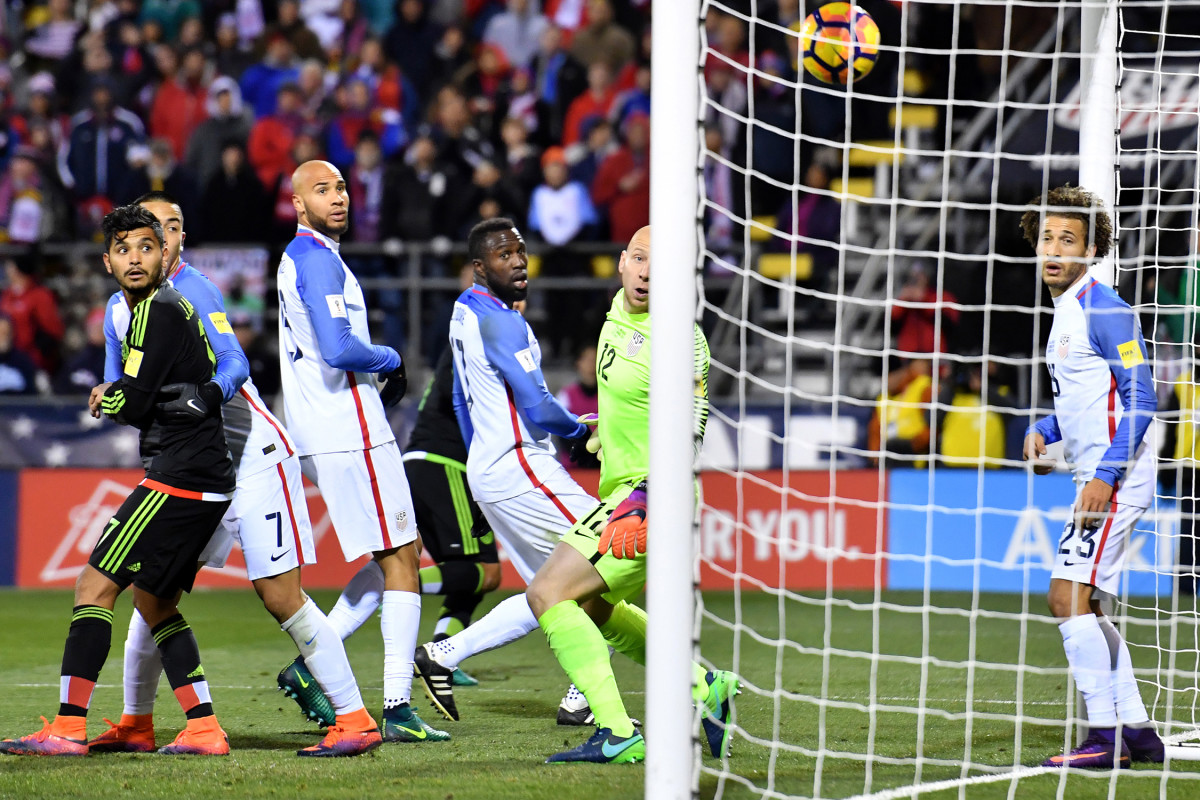
USA and Mexico players watch Rafa Marquez's 89th-minute header find the net in a famous World Cup qualifying win in Columbus for El Tri.
October 10, 2015 – Mexico 3, USA 2 (AET)
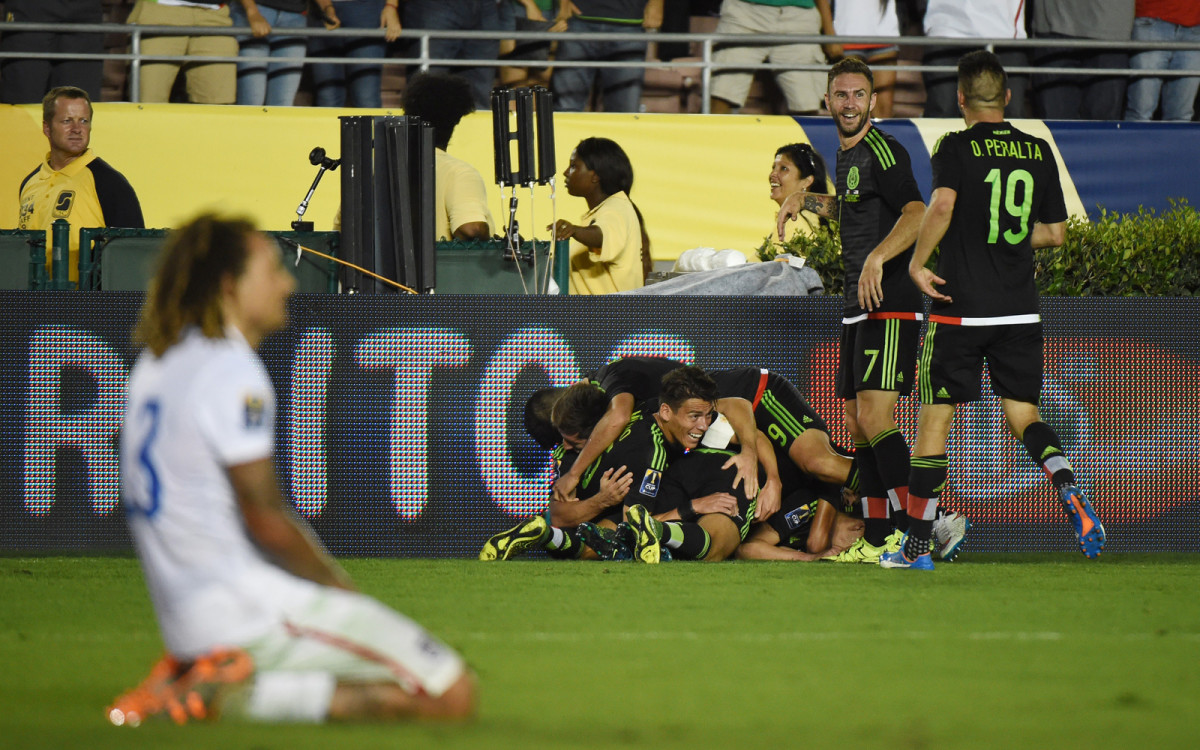
Jermaine Jones falls to his knees in disappointment as Mexico celebrates after Paul Aguilar's sensational volley in extra time captured the CONCACAF Cup for El Tri and sends the U.S. rival to the 2017 FIFA Confederations Cup.
April 15, 2015 — USA 2, Mexico 0
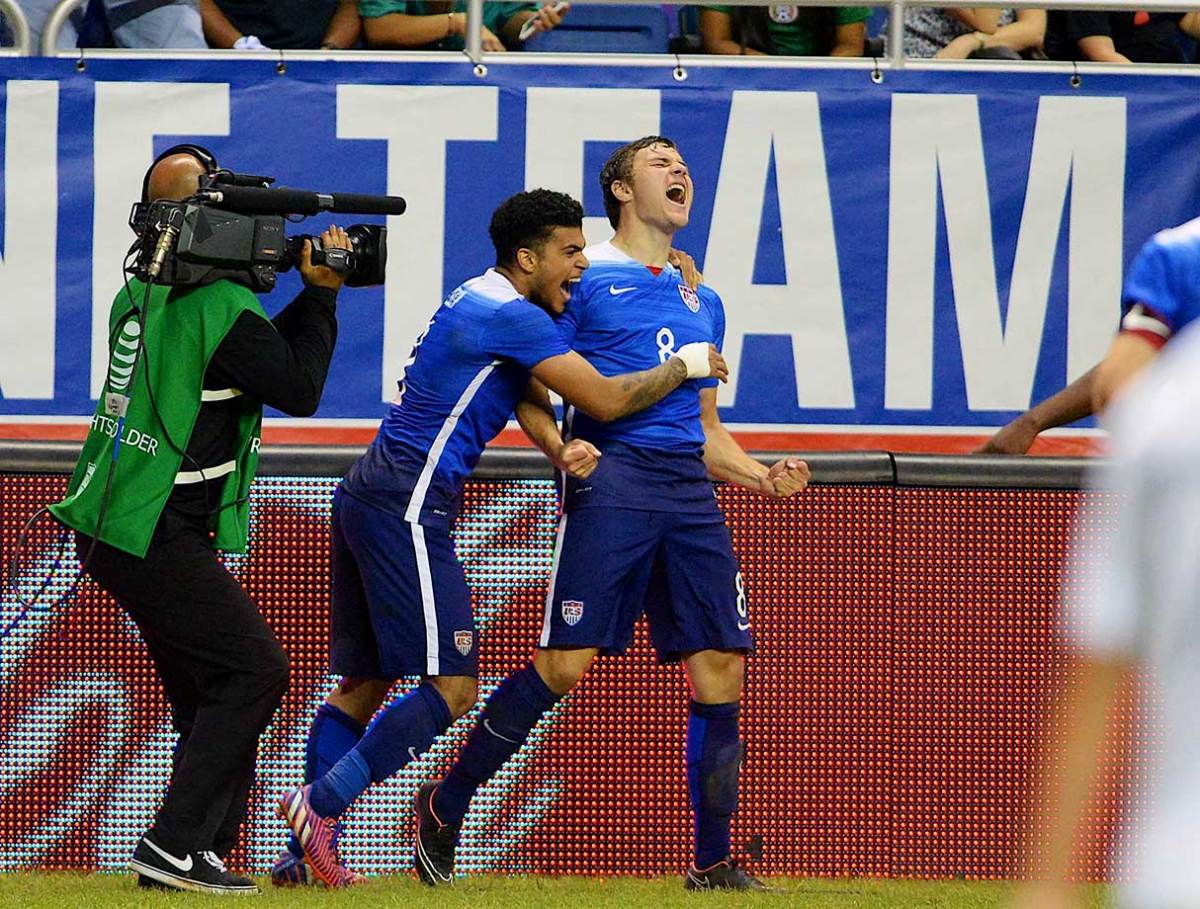
Stanford University's Jordan Morris marked his first senior national team start with his first international goal, sparking the USA in another 2-0 triumph over Mexico, this one at the Alamodome in San Antonio.
September 10, 2013 — USA 2, Mexico 0
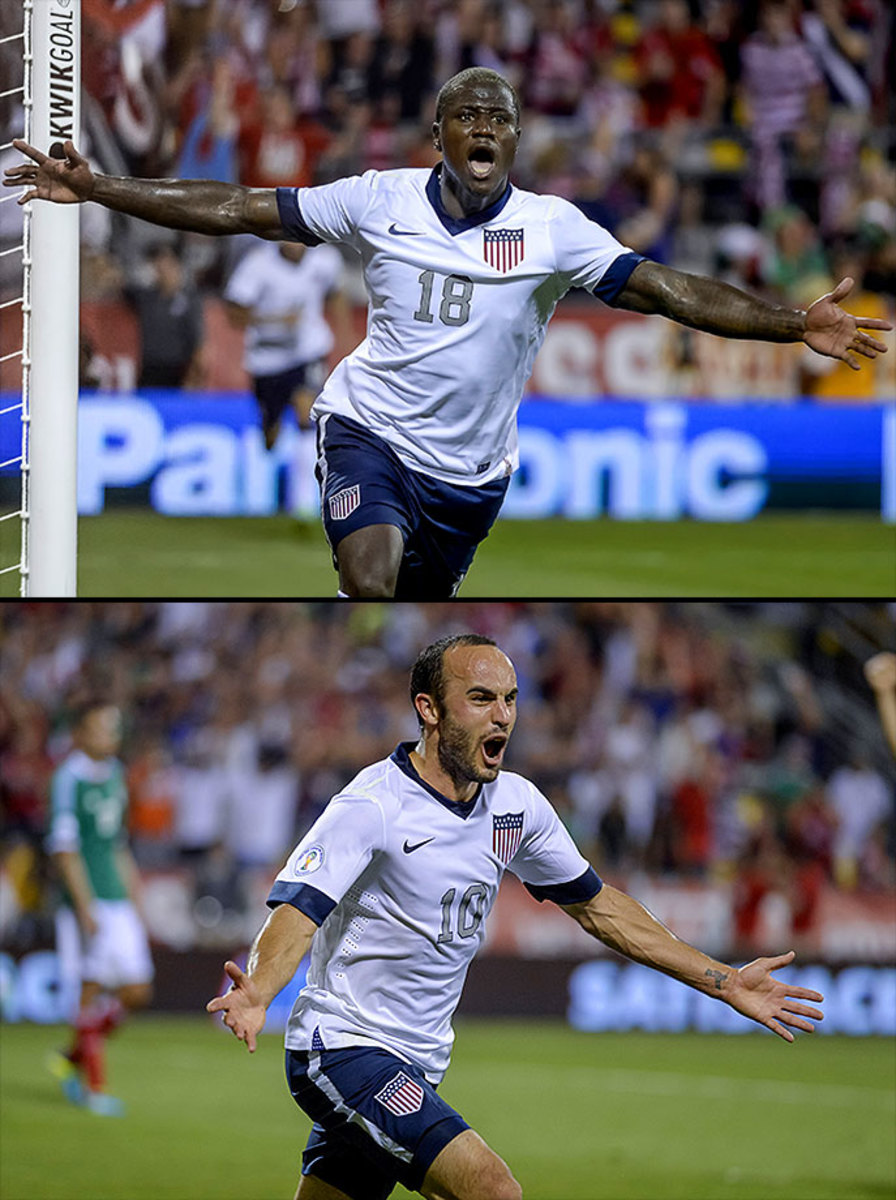
Eddie Johnson and Landon Donovan scored second-half goals to beat El Tri by the same score for the fourth consecutive qualifier in Columbus, Ohio.
March 26, 2013 — USA 0, Mexico 0
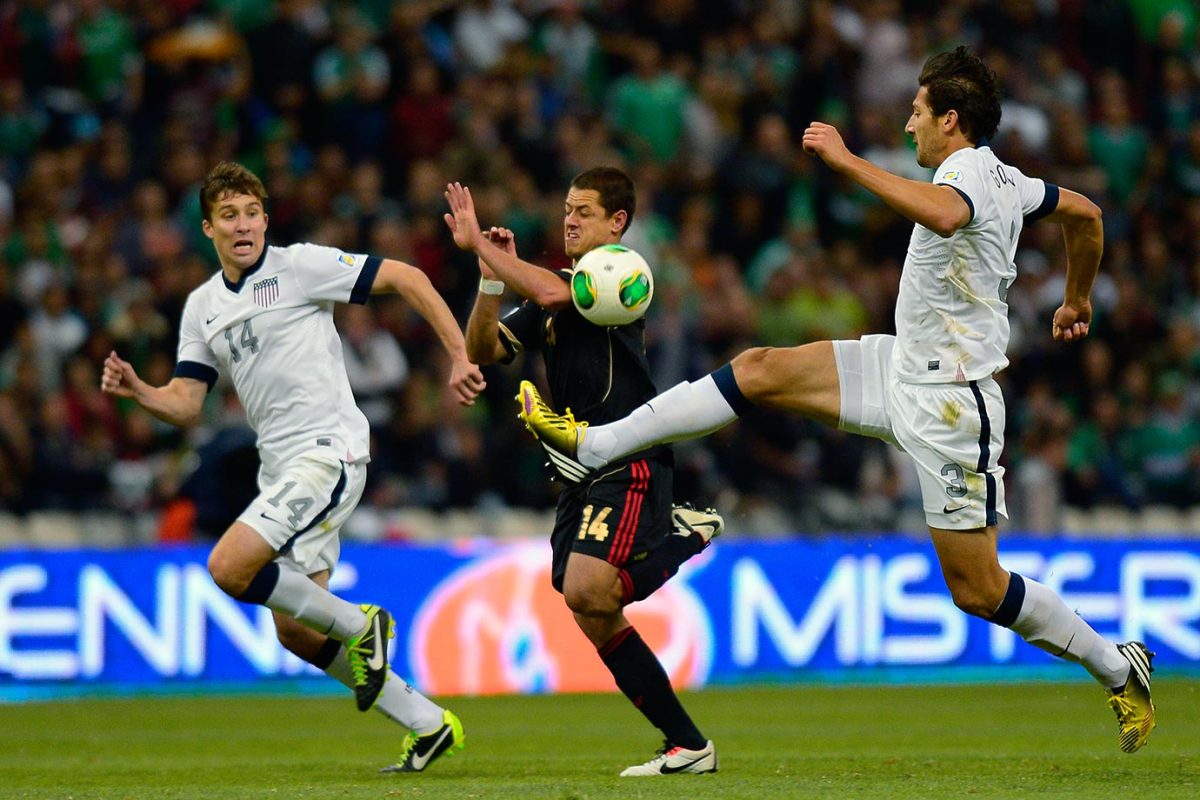
Clint Dempsey captained the U.S. to a 0-0 draw at Estadio Azteca, the second time ever the Americans registered a point in World Cup qualifying in Mexico (the other a 1997 tie). Defenders Omar Gonzalez and Matt Besler were the stars as Mexico couldn't cash in on several opportunities. The U.S. escaped to remain in second place in CONCACAF qualifying.
August 15, 2012 — USA 1, Mexico 0
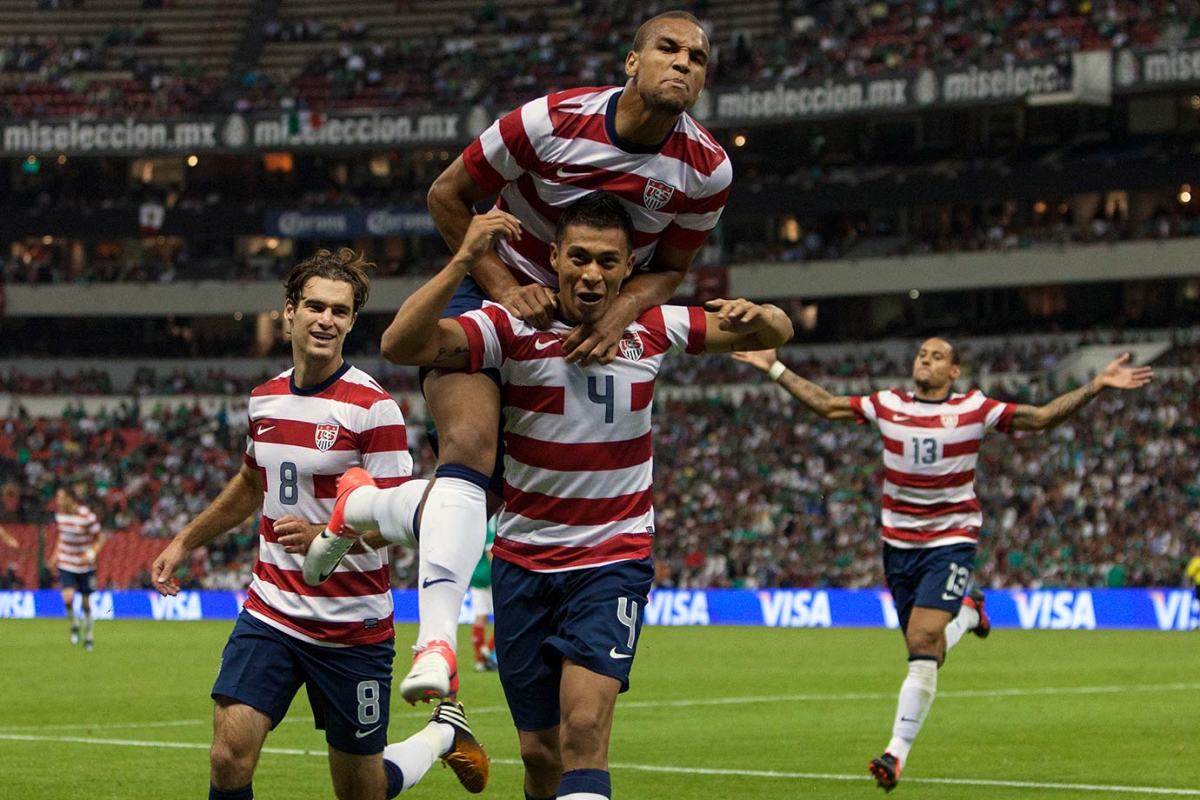
It took 25 attempts, but after this friendly, the United States could finally say that it had won at Mexico City's Azteca Stadium. Despite being outplayed for most of the match, the U.S. won thanks to an 80th-minute goal from Michael Orozco Fiscal — the first international goal of his career.
August 10, 2011 — USA 1, Mexico 1
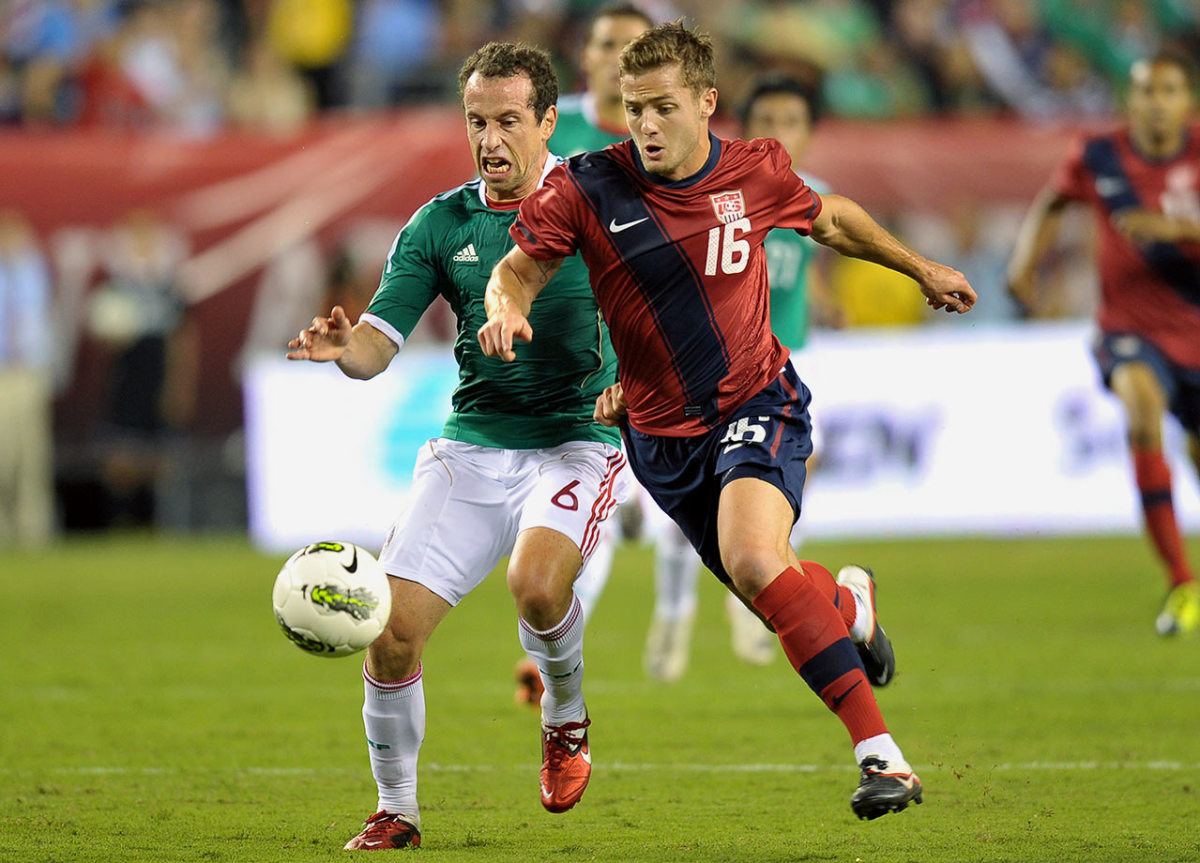
Head coach Jurgen Klinsmann's U.S. debut got off to a rough start, as the Americans trailed Mexico, 1-0 after an uninspired first half in Philadelphia. The U.S. showed more verve after halftime, though, and an impressive display from Brek Shea and a 73rd-minute goal from Robbie Rogers led to a 1-1 draw.
June 25, 2011 — Mexico 4, USA 2
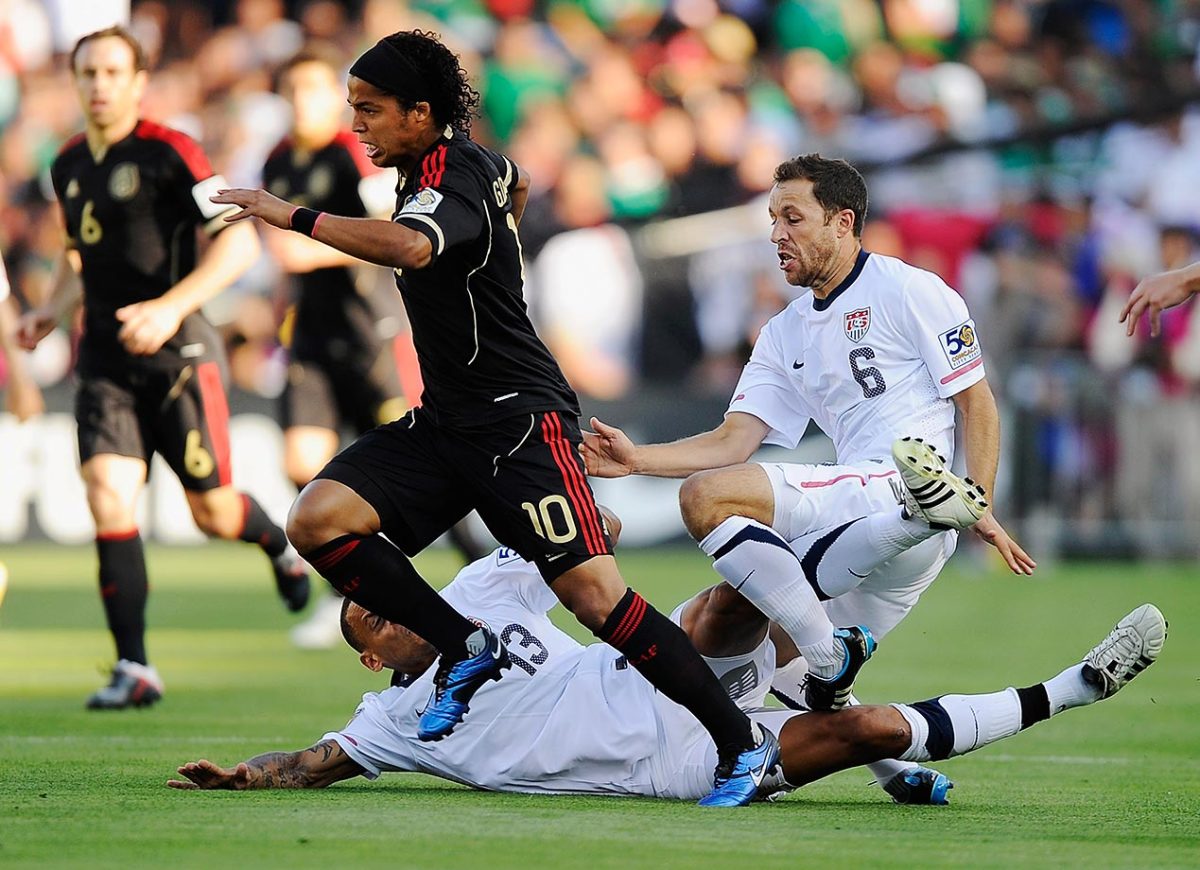
In the Gold Cup final, Mexico captured its second straight title in the battle for CONCACAF bragging rights and secured a berth in the 2013 Confederations Cup. Pablo Barrera scored twice; Giovani Dos Santos and Andres Guardado also had goals. The U.S. was up 2-0 early on Michael Bradley and Landon Donovan goals, but poor defending (partially due to the loss of Steve Cherundolo by injury) doomed the Americans.
August 12, 2009 — Mexico 2, USA 1
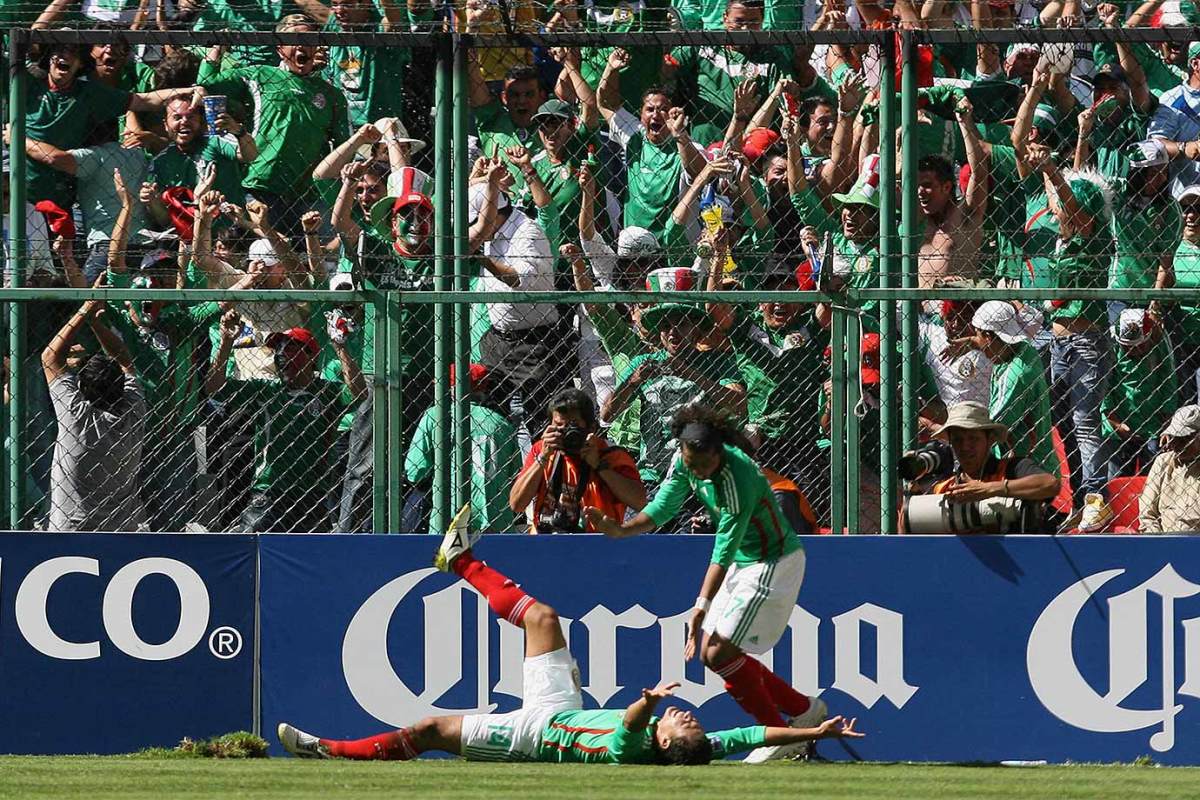
The U.S. took its first-ever lead at Azteca Stadium, but went on to lose 2-1 in what was a critical World Cup qualifier for Mexico. The win changed the tide for the then-struggling Mexican squad, as it went on to go 3-0-1 in its next four matches to earn a trip to South Africa. The U.S. still went on to finish first in CONCACAF qualification.
July 26, 2009 — Mexico 5, USA 0
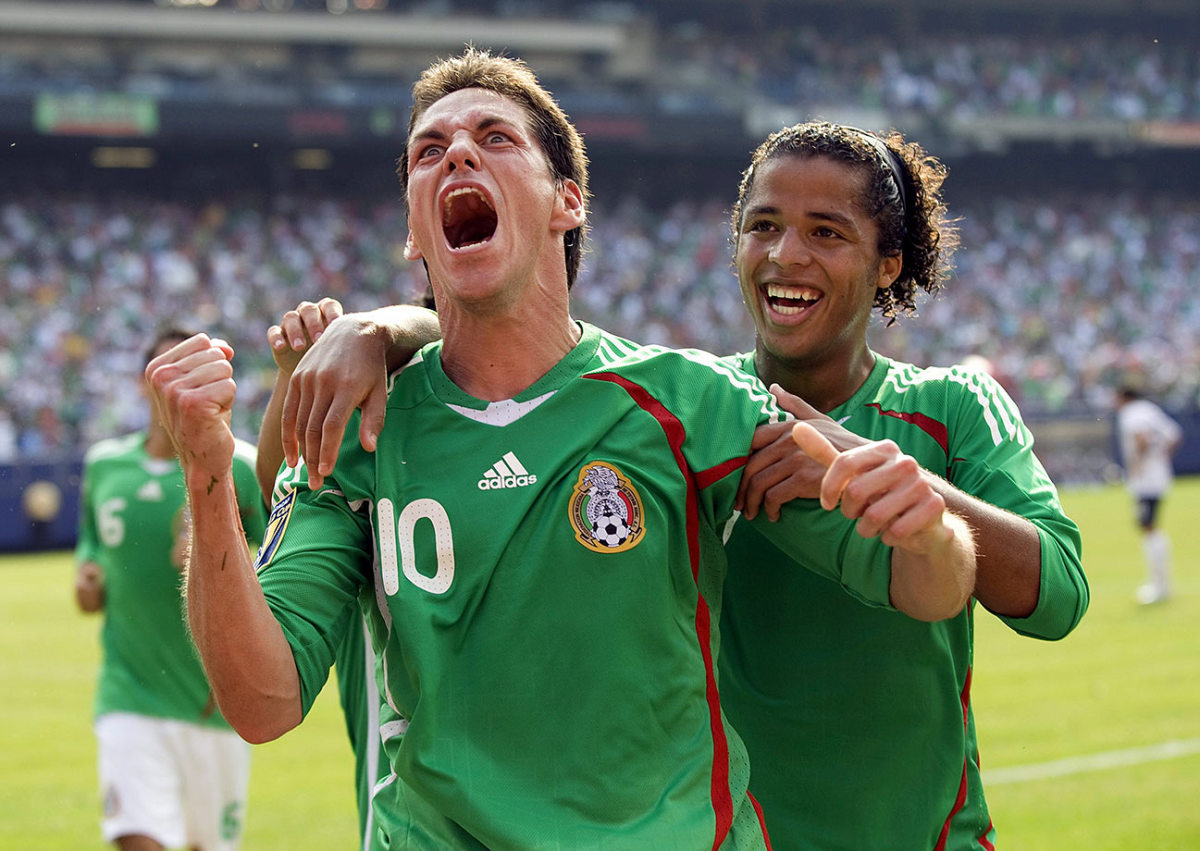
Mexico put an emphatic end to the Americans' 9-0-2 home streak against "El Tri." The Mexicans took the Gold Cup from the two-time defending champion, with five different players scoring goals in the second half at Giants Stadium.
February 11, 2009 — USA 2, Mexico 0
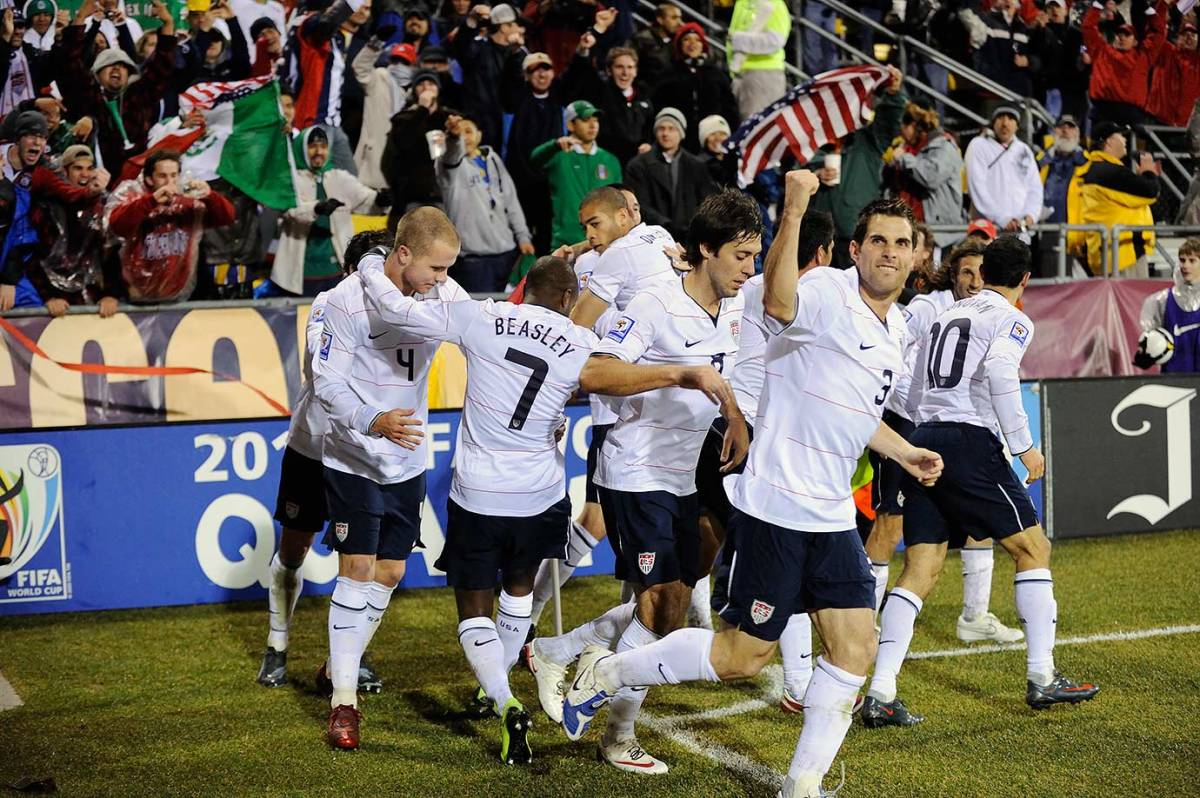
Two goals from Michael Bradley gave the U.S. another home victory over Mexico. It marked the eleventh consecutive time that the Americans had gone unbeaten against Mexico when playing on U.S. soil.
June 24, 2007 — USA 2, Mexico 1
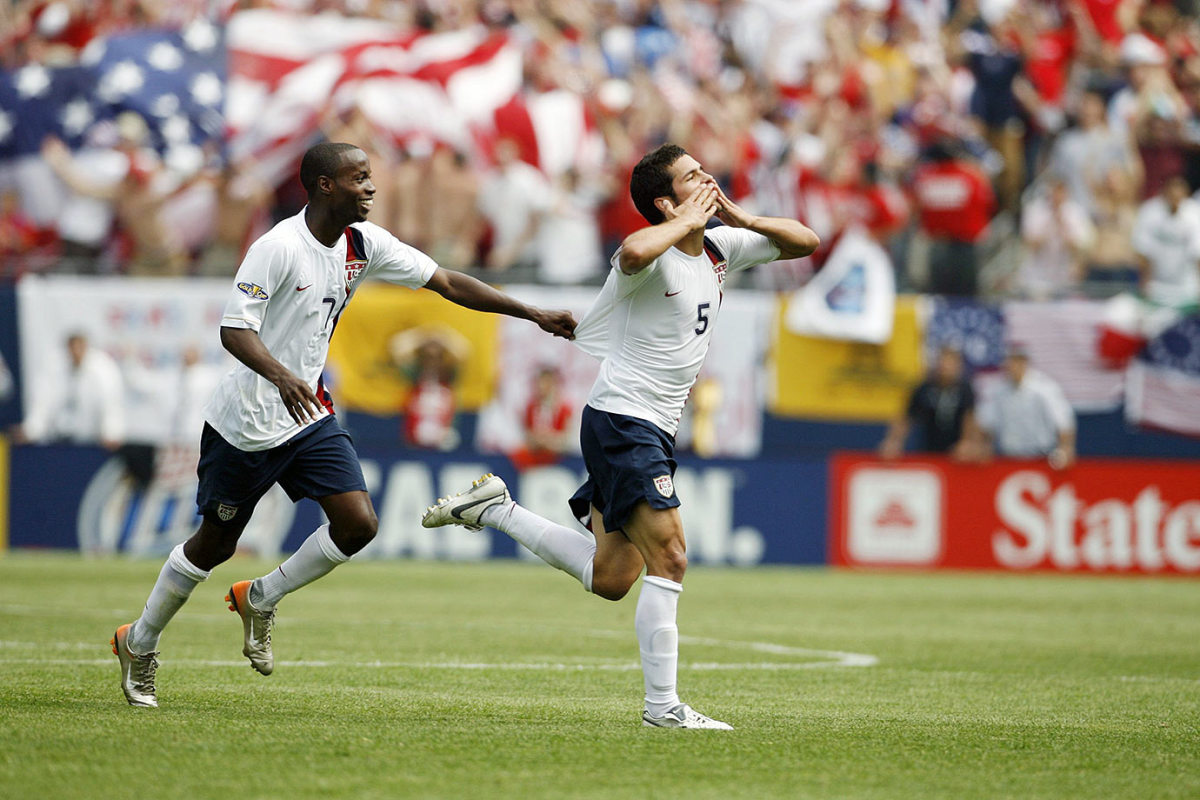
Down 1-0, second-half goals from Landon Donovan and Benny Feilhaber gave the U.S. the victory in the 2007 Gold Cup finals. The win earned the Americans a spot in the 2009 Confederations Cup, where they achieved their famous upset over Spain.
September 3, 2005 — USA 2, Mexico 0
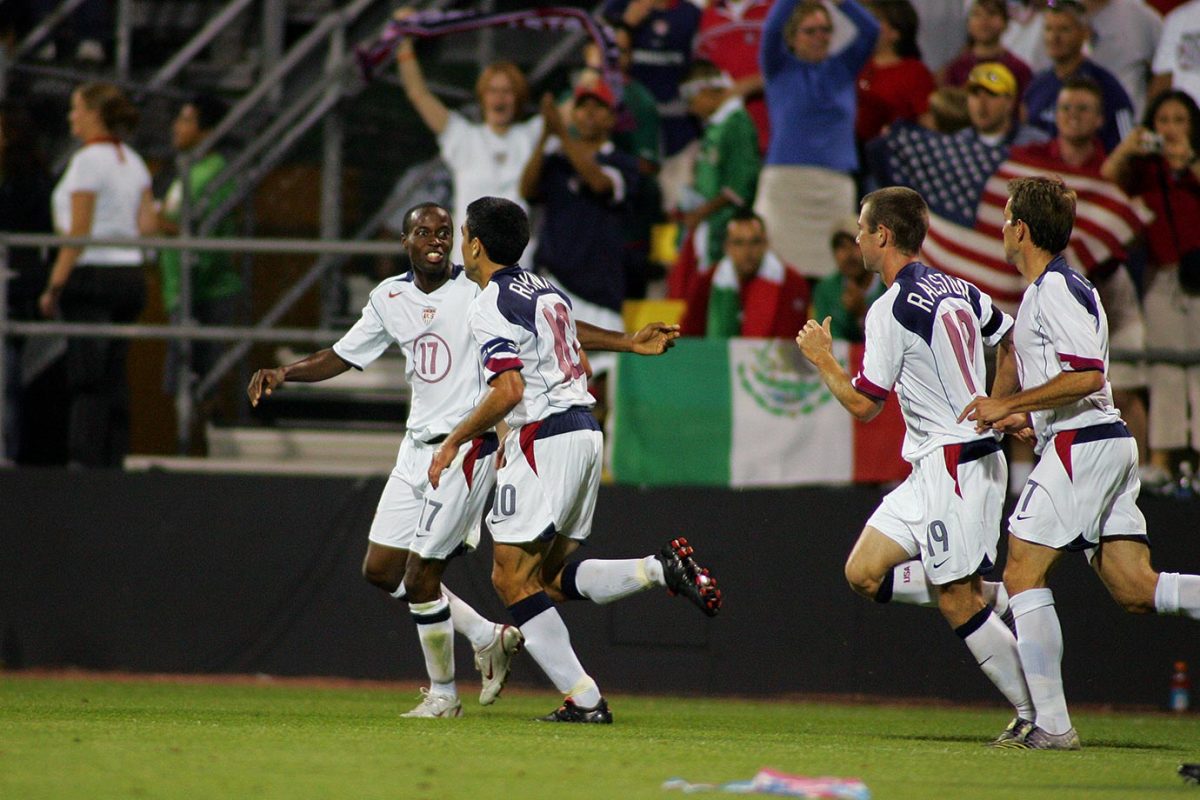
A 2-0 victory over "El Tri" clinched a spot in the 2006 World Cup, with goals coming from Steve Ralston and DaMarcus Beasley.
May 8, 2003 — USA 0, Mexico 0
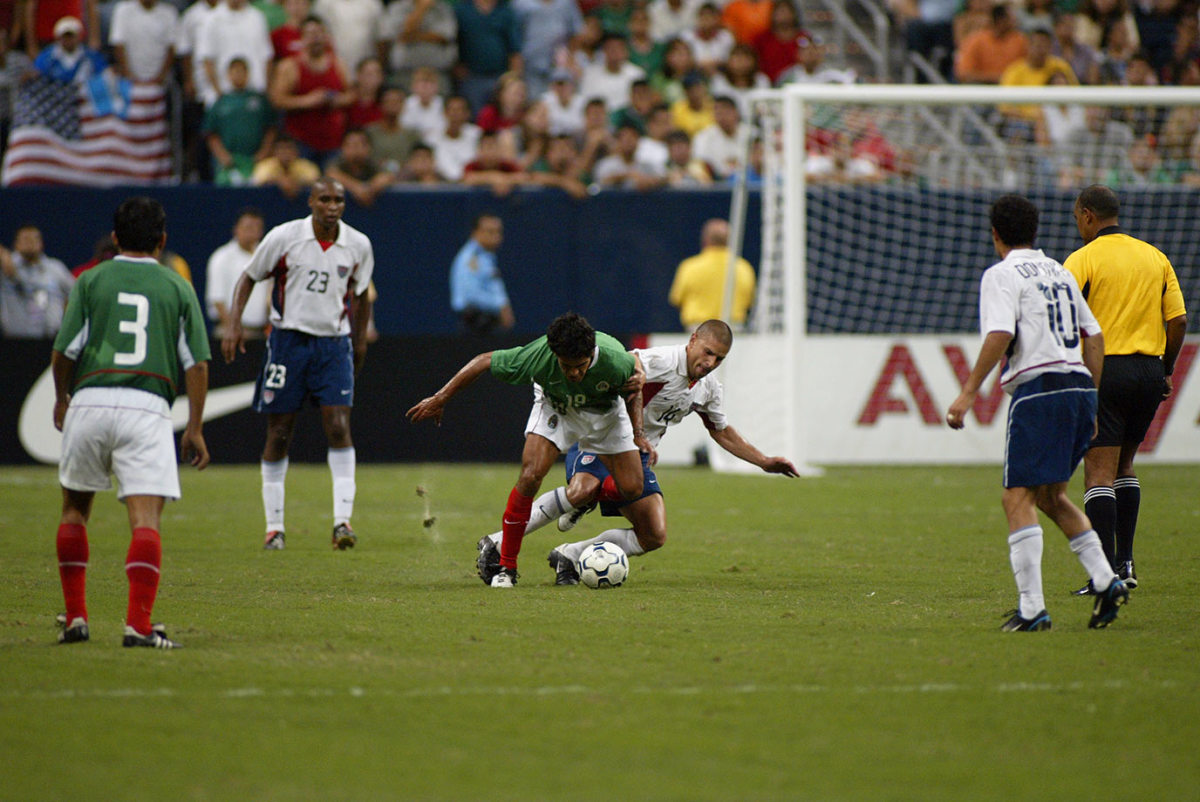
In their first meeting since the 2002 World Cup, an all-MLS squad of Americans played Mexico to a 0-0 draw in front of more than 69,000 people in Houston.
June 17, 2002 — USA 2, Mexico 0
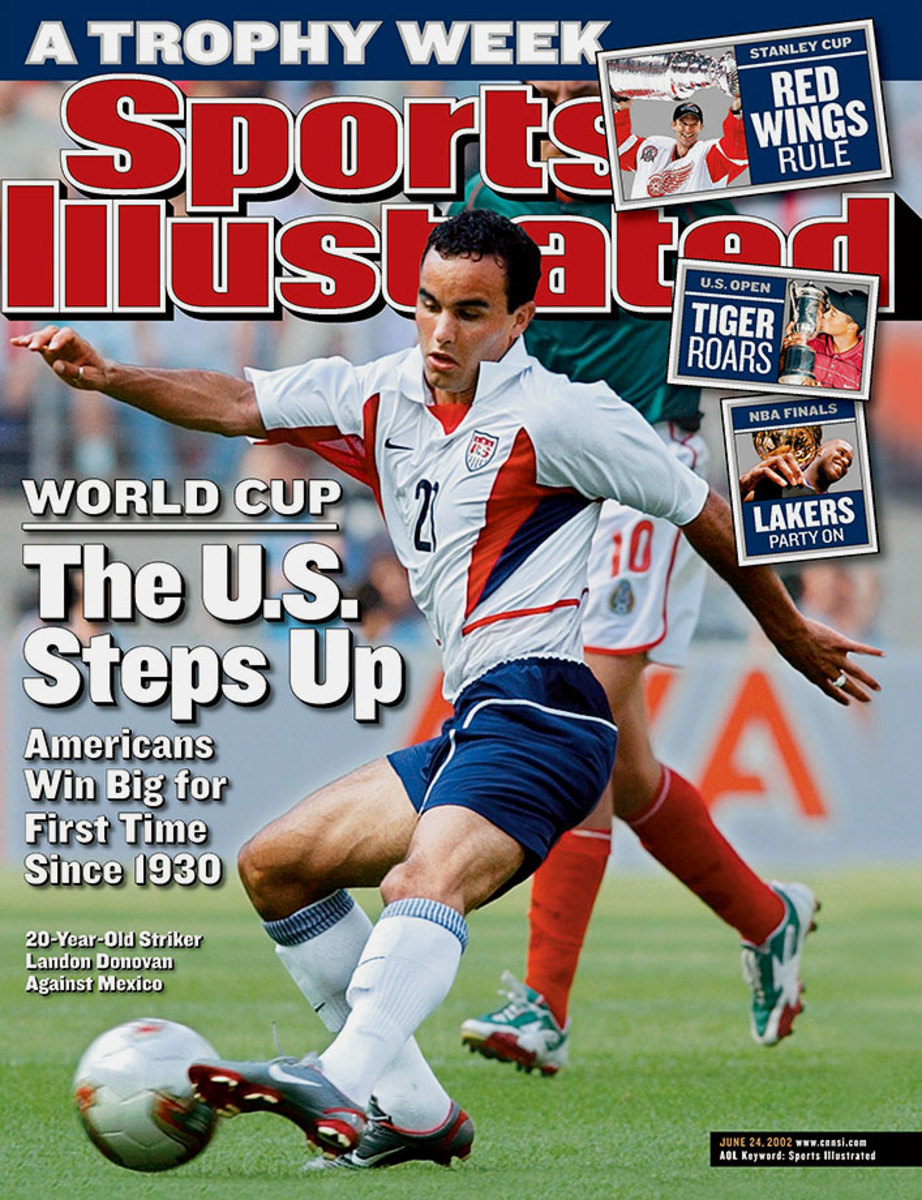
Arguably the biggest win in U.S. soccer team history came against its archrivals at the 2002 World Cup. Brian McBride and Landon Donovan gave the Americans a 2-0 victory in South Korea to send their team to the quarterfinals. It is the furthest stage the team has reached in the World Cup since 1930.
July 1, 2001 — Mexico 1, USA 0
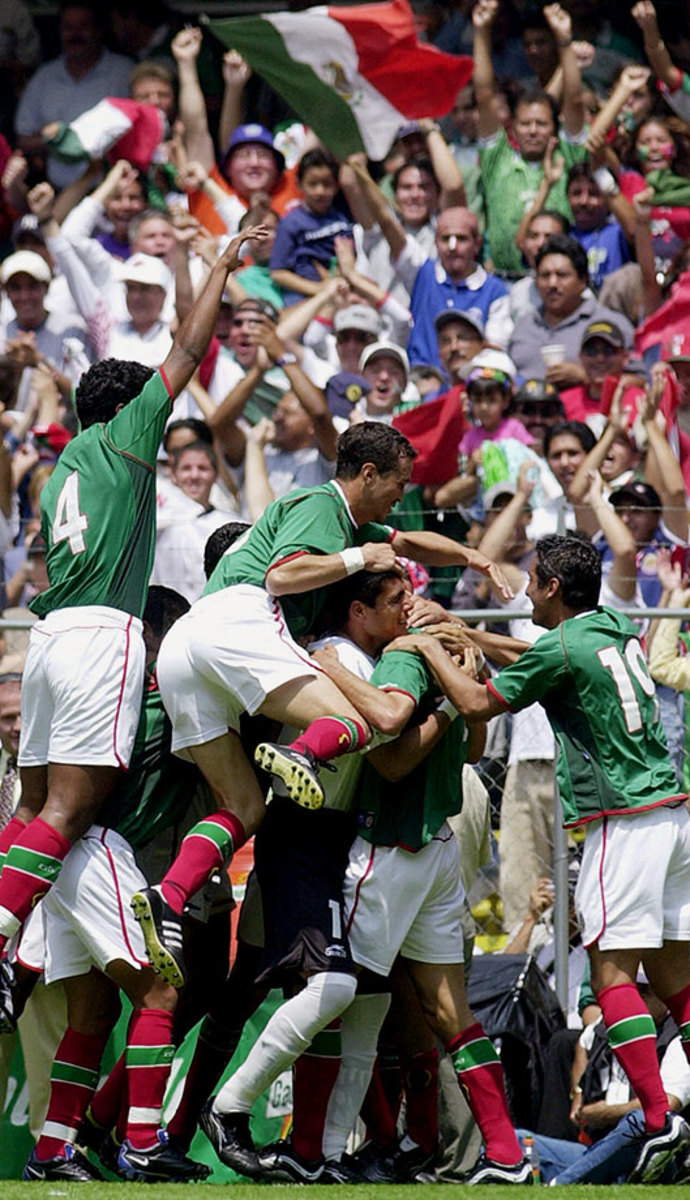
Needing a win to stay in contention for the 2002 World Cup, the Mexicans won 1-0 at Azteca Stadium, making their record 21-0-1 when hosting the Americans.
February 28, 2001 — USA 2, Mexico 0
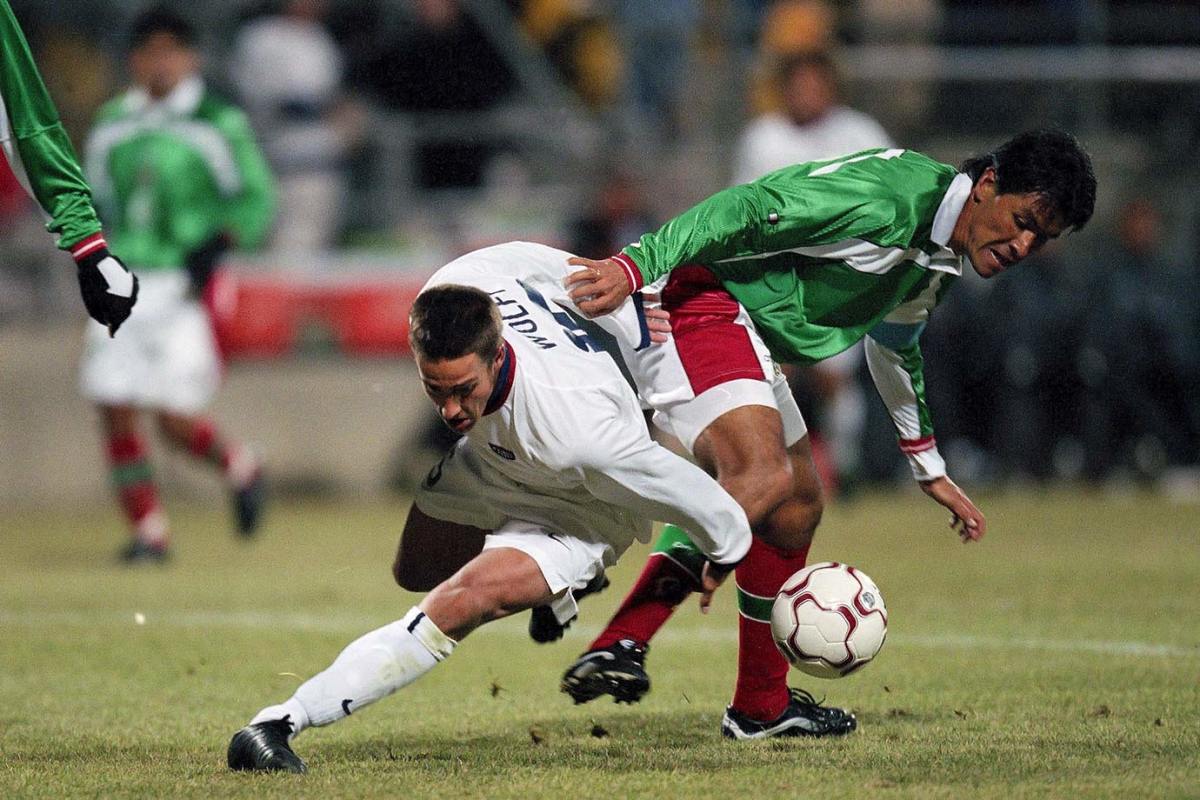
For the first time ever, the Americans won their third consecutive game against Mexico. The victory came in the World Cup qualifying finals and was held in Columbus, Ohio.
August 1, 1999 — Mexico 1, USA 0
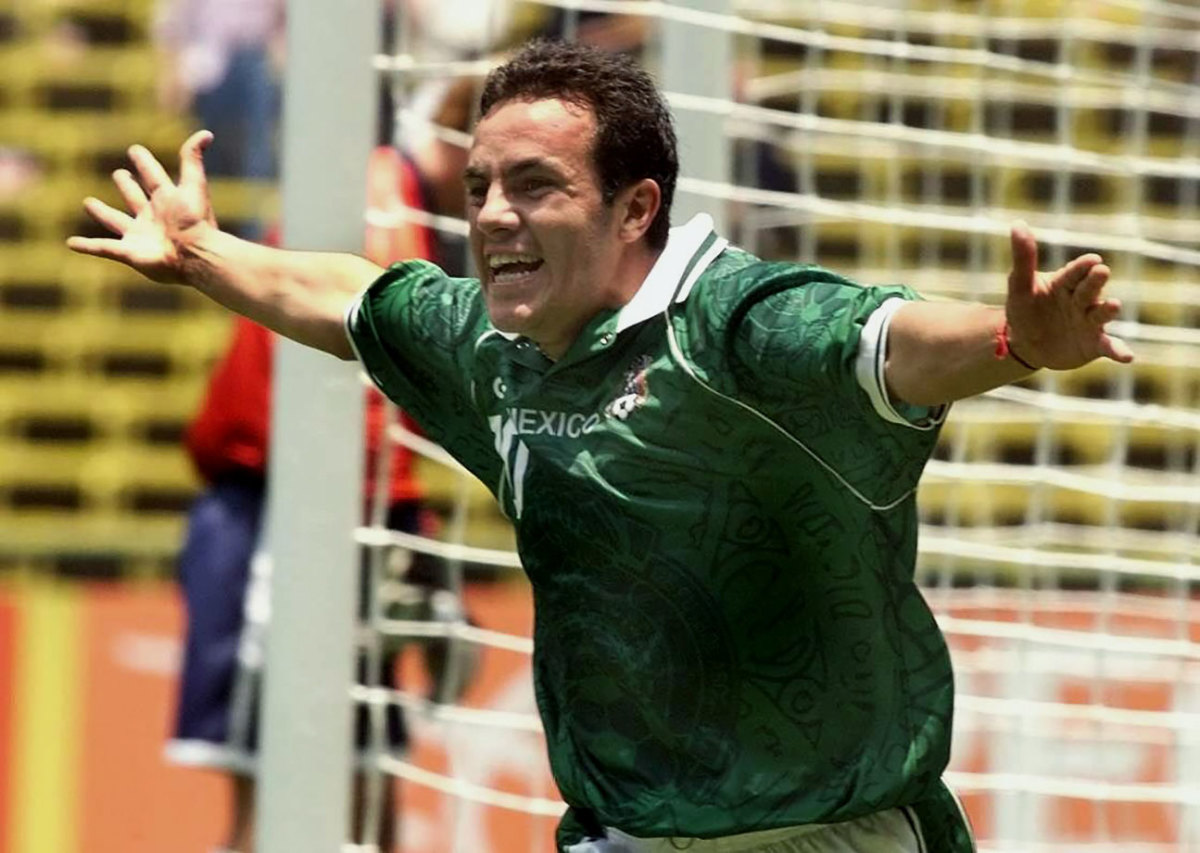
Cuauhtemoc Blanco's goal in extra time eliminated the U.S. in the semifinals of the 1999 Mexico City Confederations Cup. The win capped off a long tradition of Mexican dominance over the American side, a streak that shortly thereafter ended, as the Americans won the next three matches against their rivals.
July 17, 1995 — USA 0, Mexico 0
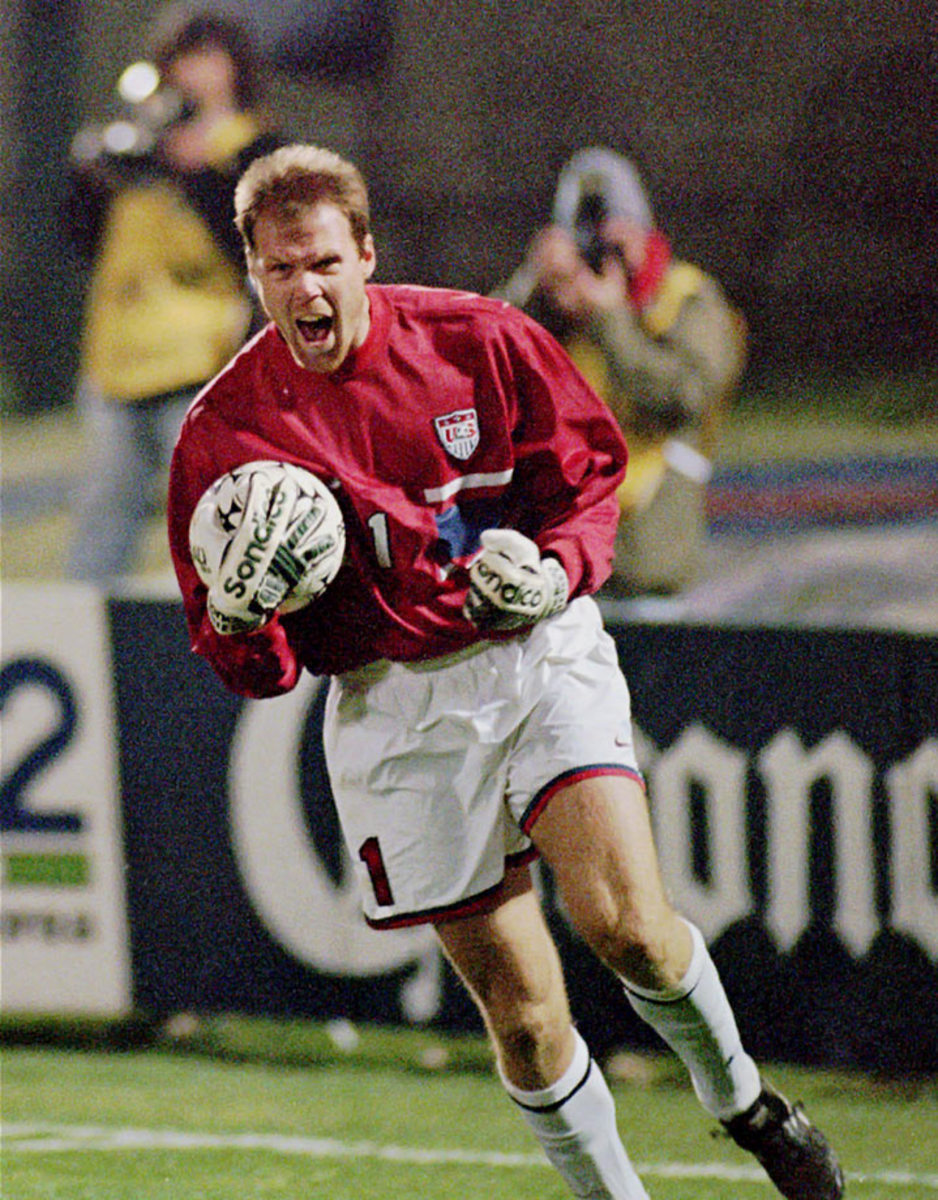
The USA outlasted Mexico in a penalty shootout to reach the semifinals of the 1995 Copa America. After a 0-0 draw, goalkeeper Brad Friedel was the hero in PKs, making two saves. The U.S. made all four of its attempts and advanced.
 Add us as a preferred source on Google
A lifelong soccer player, coach and fan, Brian Straus joined SI in 2013 after covering the sport for The Washington Post, AOL and Sporting News.