%20%20--%3E%0A%3Csvg%20version%3D%221.1%22%20id%3D%22Layer_1%22%20xmlns%3D%22http%3A%2F%2Fwww.w3.org%2F2000%2Fsvg%22%20xmlns%3Axlink%3D%22http%3A%2F%2Fwww.w3.org%2F1999%2Fxlink%22%20x%3D%220px%22%20y%3D%220px%22%0A%09%20width%3D%2239px%22%20height%3D%2240px%22%20viewBox%3D%220%200%2039%2040%22%20enable-background%3D%22new%200%200%2039%2040%22%20xml%3Aspace%3D%22preserve%22%3E%0A%3Cpath%20fill%3D%22%23FFFFFF%22%20d%3D%22M38.5%2C7H28.2v26h10.3V7z%22%2F%3E%0A%3Cpath%20fill-rule%3D%22evenodd%22%20clip-rule%3D%22evenodd%22%20fill%3D%22%23FFFFFF%22%20d%3D%22M26.1%2C25.5c0%2C5.8-4.1%2C7.5-12.9%2C7.5C3.9%2C33%2C0%2C31.2%2C0%2C25.2v-1.1h11.6%0A%09v2.4c0%2C0.7%2C0.1%2C1.4%2C1.2%2C1.4c1%2C0%2C1.2-0.4%2C1.2-1.3v-0.9c0-1.6-0.9-1.6-3.5-2.2C2.2%2C21.7%2C0%2C19.7%2C0%2C15.3v-0.9C0%2C9.3%2C5.5%2C7%2C12.9%2C7%0A%09c10.2%2C0%2C12.8%2C2.6%2C12.8%2C7.4v1.8h-11v-2.9c0-0.6-0.4-1.1-1.2-1.1c-0.6%2C0-1.2%2C0.4-1.2%2C1.1v0.9c0%2C1.5%2C0.9%2C2%2C3.3%2C2.5%0A%09c8%2C1.6%2C10.5%2C3.3%2C10.5%2C7.5V25.5z%22%2F%3E%0A%3C%2Fsvg%3E%0A)
USMNT January Camp wrap: Winners, looking forward

Reasonable people can disagree about whether Jurgen Klinsmann has made sufficient progress in his four-plus years in charge of the U.S. national team, but the recently concluded winter camp illustrated one of the uniquely American factors that are beyond the manager’s control.
The MLS season is long. The offseason is as well. Take, for example, Michael Bradley and Jozy Altidore, two of Klinsmann’s most important players. When Toronto FC kicks off its regular season campaign on March 6, the veteran pair will have gone 129 days without playing for their clubs (they did appear in a couple of World Cup qualifiers in mid-November). That’s more than a third of a calendar year, and it makes the national team’s annual January camp as much or more about maintenance as it is about tactical or technical progress.
In the past, Klinsmann has been frustrated by the fitness level of MLS players in the middle of a lengthy offseason. This year, instead of fighting it, he adjusted his expectations and the day-to-day intensity of the month-long gathering in Southern California. Rather than a referendum on his MLS-based player pool, he said camp would be about “get[ting] them back on track and try to get them going and step-by-step give them a head start to 2016.”
Late Altidore goal rescues wasteful U.S. in friendly win over Canada
Friendlies against under-strength Iceland and Canada would give the players something to look forward to after nearly a month of training, but the games wouldn’t reveal much about where the U.S. is headed. Neither opponent presented much of a challenge, and roster changes—there were early departures and late arrivals—impacted Klinsmann’s tactical options even further. In fact, the coach called both games “scrimmages.”
Altidore, who scored in the 3-2 win over Iceland and Friday’s 1-0 defeat of Canada, indicated that Klinsmann got the focus and message right.
“I thought it was a bit more relaxed, in terms of, he let each player kind of be the driver of their own camp, to kind of do what they thought best to prepare them for the season, which I thought was cool,” the forward told Fox. “I thought it’s a huge plus. I thought I took advantage of it. I think a lot of guys did.”
All of which, Klinsmann will hope, will put his players on firmer footing heading into a critical week in late March. The senior team will face Guatemala home and away in the middle two of six World Cup qualifying semifinal round games. Meanwhile, the U-23s, managed by assistant Andi Herzog, will face Colombia in a two-game playoff for the final spot in this summer’s Olympic tournament.
USA's Jerome Kiesewetter makes strong impression to start crucial year
“Hopefully the benefit comes at the end of March,” Klinsmann said. “This is really the bigger picture, that we are well prepared for Guatemala, obviously with the Europeans and the Mexican players coming in and same for the Olympic team—that everyone who is eligible for the Olympic team takes this as a head start, got four weeks under his belt. They all worked really well. The whole spirit of the camp was great.”
Even if the real dividends aren’t evident for another six weeks, and even if the two friendlies didn’t replicate the grind of a CONCACAF World Cup qualifier or the talent the U.S. will face in this summer’s Copa América, Altidore’s comments and performance indicate that this camp did create storylines and trajectories. Some players benefitted, others may not have and trends and questions emerged.
Here’s a closer look at a few:
The winners
Veteran-laden side, rejuvenated Altidore lift USMNT past Iceland
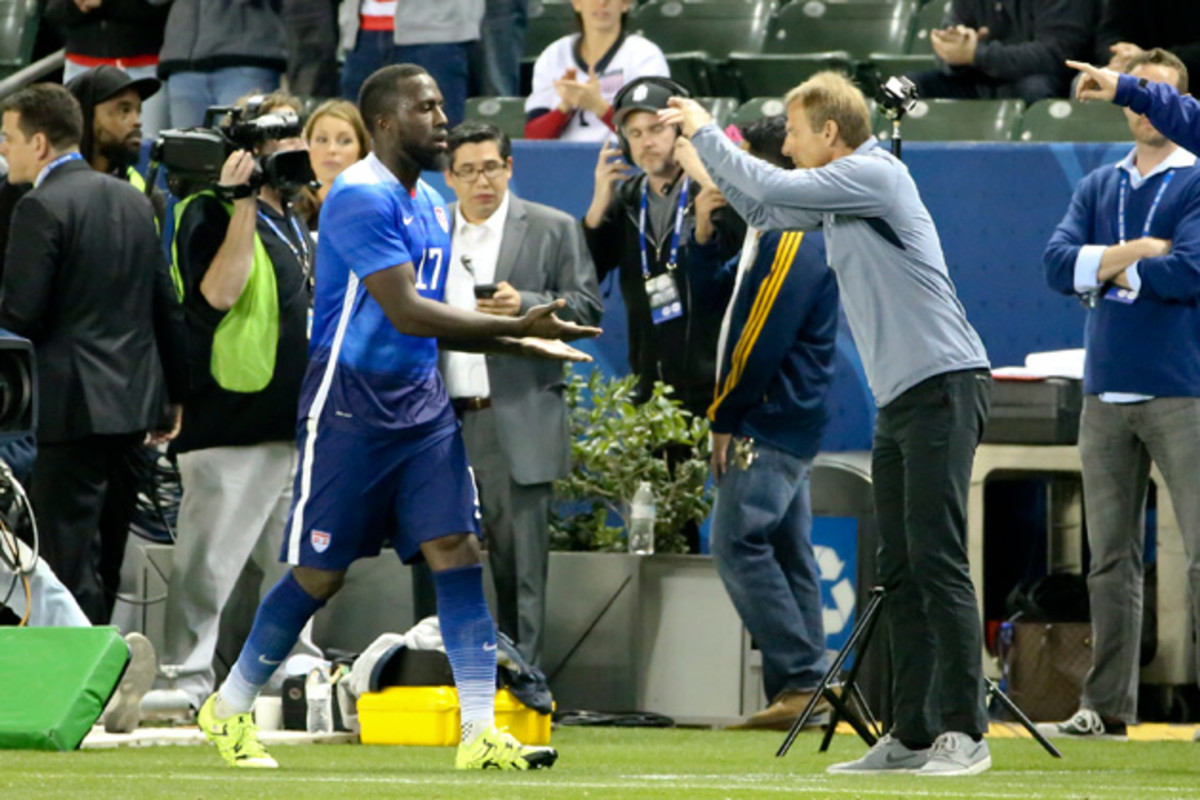
No camper will hit the 2016 season with more momentum than Altidore, who not only scored twice last week, but who put together a pair of energetic and engaged performances. Again, the opposition wasn’t the toughest. But for a player dogged by health issues who occasionally has had difficulty finding the game or connecting with teammates, it was a good sign that he was a consistent, 90-minute threat.
The agony of recent hamstring injuries prompted a shift in Altidore’s approach.
“The past two years we really rough for me,” he told Fox after netting the 90th-minute winner against Canada. “Two big competitions that I was really looking forward to and the fact that I wasn’t able to play through injury was for me really ridiculous. So I tried sit home and think what I could do better to try to minimize that and one of the things I thought was my diet … We came to the conclusion that if I cut some muscle, cut some weight and make myself a bit leaner, maybe it would help me … I feel better. I feel lighter and I feel more mobile.”
Klinsmann took notice.
“He's hungry. He wants to prove himself, that this is 2016, ‘This is my year,’” the coach said. “He knows there's a huge tournament coming up in June, so he started really on the right foot this year. And he deserved that goal. He deserved it.”
Elsewhere, don’t expect to wait another year to see Steve Birnbaum in a U.S. jersey. He was part of the 2015 winter camp and made his debut against Chile, but didn’t get another shot until Klinsmann sent out this year’s invitations. The D.C. United defender was dominant in the air, tallying a goal and assist against Iceland and creating some havoc versus Canada, and showed some versatility by shifting to right back on Friday evening. There’s a ton of competition in back, but also plenty of uncertainty. Add Birnbaum’s name to the depth chart.
Improved approach makes Lee Nguyen a U.S. January Camp winner
Mix Diskerud and Lee Nguyen demonstrated welcome flashes of composure and comfort.
The former had a rough debut season in MLS and didn’t make much of an impact for the U.S., but Klinsmann stuck with the New York City FC midfielder and started him alongside Michael Bradley against Canada. Diskerud responded with a smart and effective two-way showing.
“We all know that there is such a talent potential, such qualities, but he got into kind of a very difficult situation last season with [NYCFC] because of the incoming players, Pirlo and Lampard, and then they push him wide,” Klinsmann said. “He knows he has to fight through that … ‘You’ve got to bring out your elbows.’ That’s what he needs to learn and that’s what he did also in a couple situations. He got physical. This is what he needs to add to his game … [Against Canada] he did really well.”
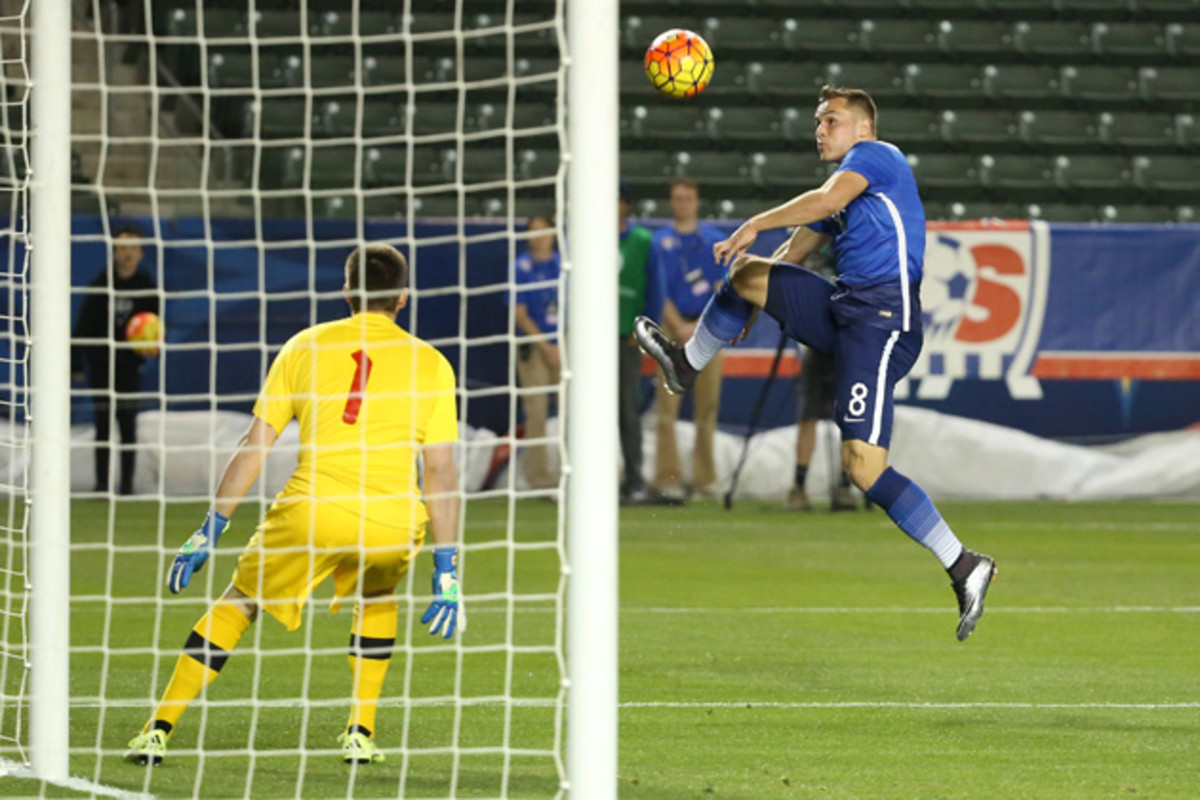
Nguyen was effective as a playmaker, especially against Iceland, and warrants another look at a position where the U.S. remains somewhat thin. Columbus Crew winger Ethan Finlay, who set up Altidore’s winner, and U-23 forward Jerome Kiesewetter, whose strength and ability to find space behind behind the back four unsettled both opponents, also demonstrated obvious promise, as did U-23 teammate Kellyn Acosta, who was far from overawed at left back and right back despite neither being his preferred position.
Wish we’d seen more from...
Darlington Nagbe, who was so outstanding as a central playmaker during the Portland Timbers’ run to the MLS championship, missed the start of camp because of the birth of his second child and played only 58 minutes as a reserve. His potential as a future partner for Bradley remains tantalizing, but there probably wasn’t enough time to establish the sort of chemistry and consistency that might make the difference in March.
“Fitness wise he’s not there yet,” Klinsmann said. “But we know Darlington, two weeks from now, is up to speed.”
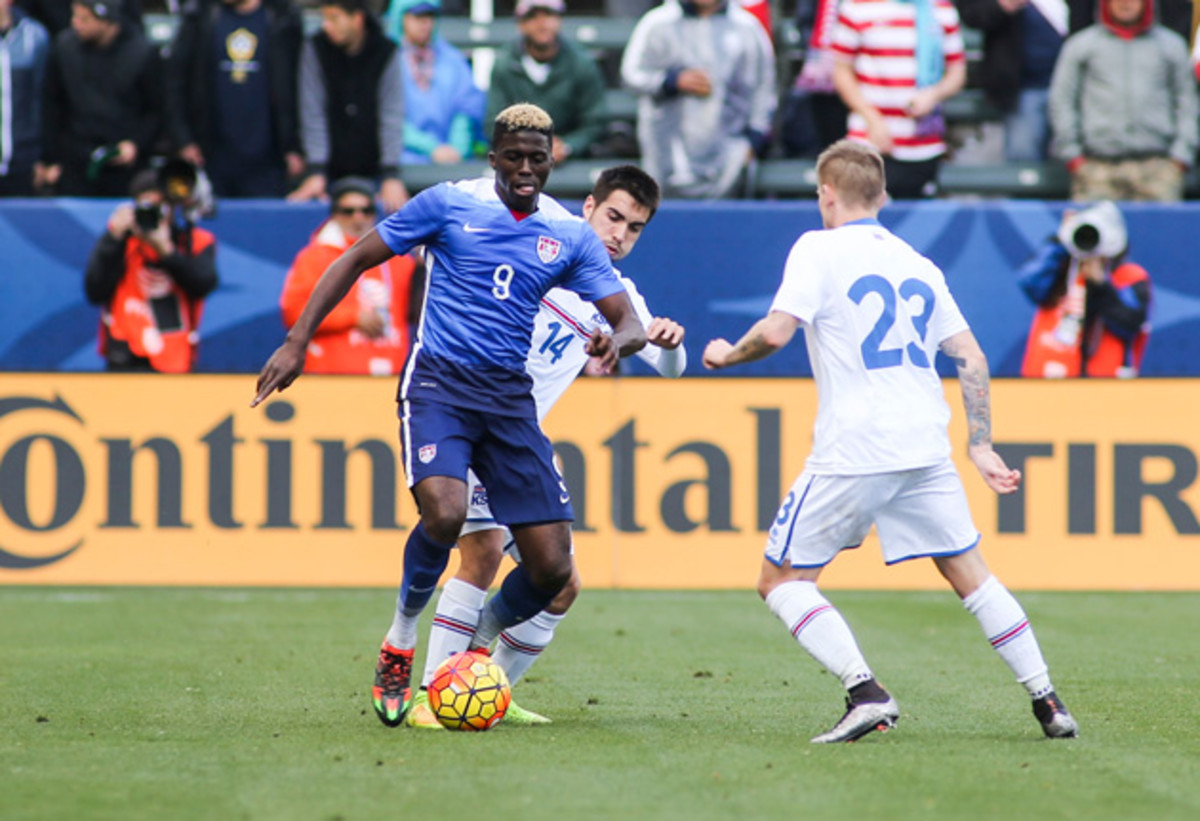
Gyasi Zardes emerged as a favorite of Klinsmann in last year’s camp and showed flashes of why last week. He works hard and has decent vision. But his touch still betrays him a bit too frequently, and his finishing needs to improve if he’s going to make a stronger case to start when the games matter most.
Considering big-picture insignificance of the Iceland and Canada games and the do-or-die nature of the U-23 team’s Olympic playoff, it was a bit surprising that players like Perry Kitchen, Wil Trapp, Matt Polster, Khiry Shelton and Tim Parker didn’t get more of a look. Klinsmann learned nothing by deploying Jermaine Jones at center back against Colombia or by fielding Michael Orozco and Brad Evans against Iceland, for example. Bradley didn't need to play 180 minutes. The wins are nice, but it seems like there were a couple of missed opportunities to get younger players some valuable experience.
And we saw too much of Jones, who faces a six-game suspension that likely will force him out of next month’s qualifiers. Keeping Jones fit shouldn’t have come at the expense of testing out a partnership or two that might take the field in March.
Three things to watch moving forward
1. Seattle's strikers
Jordan Morris will be the most scrutinized MLS rookie since 14-year-old Freddy Adu signed with his hometown club in 2004. The new Seattle Sounder came late to camp following a training stint with German suitor Werder Bremen and did reasonably well partnering with Altidore against Canada. He’ll be vital for the U-23s, and his start with the Sounders will indicate whether he’s in frame for the Copa América.
Meanwhile, club teammate Clint Dempsey was given the month off by Klinsmann. Dempsey, 32, led the U.S. with nine goals last year and very much wants to play in the Copa and chase down Landon Donovan’s scoring record. Was skipping camp the right move for an aging player? Will Dempsey and Morris be competing against each other for minutes with both club and country? The immediate future of both the U-23 and senior sides may depend heavily on the form of the two Sounders strikers.
2. Defensive questions remain
Klinsmann hasn’t the same back four in consecutive games since the 2014 World Cup, and nothing emerged from the recent camp that might clarify things heading into March. Matt Besler played well apart from an early error against Iceland but wasn’t under too much pressure, and Acosta showed well at left back—a very thin position for the U.S.—but several other younger defenders didn’t get much of a look while leading veterans remained with their clubs. John Brooks struggled at last year’s CONCACAF Gold Cup but is back in form with Hertha Berlin, Omar Gonzalez is doing well at Pachuca and Geoff Cameron is battling an ankle injury but may be back by the time the U.S. reconvenes.
From hybrids such as Fabian Johnson, DeAndre Yedlin and Brek Shea to players closer to the fringe like Tim Ream, Ventura Alvarado, Jonathan Spector, Matt Miazga and Greg Garza, the potential defensive pool is as large as ever as the World Cup cycle approaches its midway point.
3. The Olympic hurdle
Regarding the U-23 team’s quest for an Olympic berth, Klinsmann said last month that, “We have to do everything possible to give them all the help in the world to make it happen … For the Olympic team and for that generation, it’s extremely important to have an experience like the Olympics in Rio de Janeiro. This is big for these players.”
To get there, they’ll have to defeat Colombia, which qualified for the playoff by winning the silver medal at last year’s South American U-20 championship, finishing above Uruguay and Brazil. Herzog won’t have a ton of time to work his team before the March 25 opener in Barranquilla, nor the ability to call players’ in against their club’s wishes.
Defeat would be far from shocking.
The question is whether it would be considered a significant black mark against Klinsmann, a coach and technical director who suffered through a difficult 2015 (In addition to the senior team’s defeat at the Gold Cup and ensuing Confederations Cup playoff, the U-23s finished third in CONCACAF Olympic qualifying). At 1-0-1, the U.S. has some cushion in a relatively easy World Cup qualifying group. Points are there for the taking against Guatemala, Trinidad & Tobago and St. Vincent and The Grenadines.
If the U-23s fail, Klinsmann’s long-term plan and his reliance on veterans toward the end of this winter camp likely will fall under the microscope.
 Add us as a preferred source on Google
A lifelong soccer player, coach and fan, Brian Straus joined SI in 2013 after covering the sport for The Washington Post, AOL and Sporting News.