%20%20--%3E%0A%3Csvg%20version%3D%221.1%22%20id%3D%22Layer_1%22%20xmlns%3D%22http%3A%2F%2Fwww.w3.org%2F2000%2Fsvg%22%20xmlns%3Axlink%3D%22http%3A%2F%2Fwww.w3.org%2F1999%2Fxlink%22%20x%3D%220px%22%20y%3D%220px%22%0A%09%20width%3D%2239px%22%20height%3D%2240px%22%20viewBox%3D%220%200%2039%2040%22%20enable-background%3D%22new%200%200%2039%2040%22%20xml%3Aspace%3D%22preserve%22%3E%0A%3Cpath%20fill%3D%22%23FFFFFF%22%20d%3D%22M38.5%2C7H28.2v26h10.3V7z%22%2F%3E%0A%3Cpath%20fill-rule%3D%22evenodd%22%20clip-rule%3D%22evenodd%22%20fill%3D%22%23FFFFFF%22%20d%3D%22M26.1%2C25.5c0%2C5.8-4.1%2C7.5-12.9%2C7.5C3.9%2C33%2C0%2C31.2%2C0%2C25.2v-1.1h11.6%0A%09v2.4c0%2C0.7%2C0.1%2C1.4%2C1.2%2C1.4c1%2C0%2C1.2-0.4%2C1.2-1.3v-0.9c0-1.6-0.9-1.6-3.5-2.2C2.2%2C21.7%2C0%2C19.7%2C0%2C15.3v-0.9C0%2C9.3%2C5.5%2C7%2C12.9%2C7%0A%09c10.2%2C0%2C12.8%2C2.6%2C12.8%2C7.4v1.8h-11v-2.9c0-0.6-0.4-1.1-1.2-1.1c-0.6%2C0-1.2%2C0.4-1.2%2C1.1v0.9c0%2C1.5%2C0.9%2C2%2C3.3%2C2.5%0A%09c8%2C1.6%2C10.5%2C3.3%2C10.5%2C7.5V25.5z%22%2F%3E%0A%3C%2Fsvg%3E%0A)
Sunil Gulati's Klinsmann decision will teach us plenty about U.S. Soccer's president

To quote John Oliver, “Look up into the sky right now. Higher. No, higher still. Do you see that? Way up there. Way up above the clouds. That’s rock bottom. And we are currently way down here.”
It’s been a rough week.
Jurgen Klinsmann has claimed repeatedly that setbacks are a natural consequence of ambition. They’re part of the “learning curve.” And he’s right. When you’re hired to influence culture from the ground up—when you’re expected to set new, more ambitious standards—there has to be some leeway. This project launched in the summer of 2011, in effect a partnership between Klinsmann and U.S. Soccer president Sunil Gulati, always was going to swerve into a road block or two.
But after five years, four major tournaments and several crises and false starts, Klinsmann careened off the cliff this week. It wasn’t simply that the U.S. lost a pair of World Cup qualifiers. The road to Russia is wide and long, and hosting Mexico and playing at Costa Rica were, as both Gulati and Klinsmann have pointed out, two of the toughest matches on the 10-game schedule. Rather, it was the clear capitulation and troubling regression evident in the defeats.
USA's dire start to the Hex shows it's time for Jurgen Klinsmann to go
One year ago, the U.S. was coming off a fourth-place finish at the CONCACAF Gold Cup—pretty much every other coach on the planet would have been fired or resigned following an equivalent result—and a loss to Mexico in the ensuing Confederations Cup playoff. It was clear a recalibration was needed. While trying to catch up to soccer’s elite and while trying to build a team of fitter, more focused players, Klinsmann lost track of his own backyard.
Here’s an excerpt of a column written in November 2015 as World Cup qualification kicked off:
Individual improvement has come at the expense of collective consistency. This remains a team without an obvious tactical identity, which makes it more difficult to adjust to the revolving rosters national team coaches have to handle. Camps are short and games come fast. Without an immediate or preliminary understanding of the plan or approach, a player probably is less likely to succeed. Add to that the fact that Klinsmann desires tactical flexibility and often deploys players in new positions, and the result is a team that’s still, after four years, trying to find itself….
Now is Klinsmann’s chance to show his coaching chops. He’s famous for his big ideas, limitless ambition and comfort in speaking truth to power. Those are all qualities from which U.S. soccer can benefit. But questions remain concerning his ability to fashion a team that can gel and win on the day. He’s asked the tough questions. He’s challenged his players and the establishment and shown us the ideal. Now, with 2018 on the horizon, he has to aim closer to home. He must build a consistent and repeatable tactical foundation that makes the most of his players’ strengths and permits the group to approach given games with more certainty. He must figure out who and what works, stick with it and then make it better. Give the players a short-term plan to believe in. Put the U.S. back on the road to regional dominance.
For a time, Klinsmann showed signs of doing just that. There was a more humane January camp. The outcry that followed the March loss to Guatemala, which was the lowest-ranked team to ever defeat the U.S, was quieted by a 4-0 win a few days later in Columbus.
The worst losses of Jurgen Klinsmann's USMNT tenure
Klinsmann had been feeling a bit of heat and said, “I’ve never put anybody out of his position and I want to make that clear … Every time we get then our FIFA fixture dates, we got to bring them together and get them in the right direction, get them on the same page and hopefully get positive results. I am cool with that. I let people say what they would like to say. It’s all right with me. Here and there, you wish some comments could be a little bit more respectful. But it is what it is.”
Get them on the same page, indeed. Klinsmann established continuity during the Copa América, starting the same lineup in consecutive games and sticking with a 4-4-2 from the second group-stage match through the bronze-medal game. The 4-0 semifinal loss to Argentina was ugly, but the Americans were crippled by suspensions and the opponent was world-class. It happens.
Klinsmann stressed the importance of that continuity heading toward this fall’s qualifiers—trying to keep his back four reasonably intact, pulling captain Michael Bradley back into a more holding/defensive role and relying on either the 4-4-2 or 4-2-3-1. Meanwhile, he tinkered in the manner a national team coach should, by calling up a deserving player in a position of need—midfielder Sacha Kljestan. Christian Pulisic was brought along smartly.
Then he blew it up.
Deploying a 3-5-2 last week against Mexico—a formation the U.S. hadn’t played since a January 2015 friendly—was coaching malpractice. It returned the squad to the uncomfortable days of late 2012-early 2013, when abrupt tactical and personnel changes left players feeling unprepared and uncertain. On Tuesday in Costa Rica, the men who’d played outside back all summer, Fabian Johnson and DeAndre Yedlin, were elsewhere. Matt Besler, a center back, was on the left. John Brooks, perhaps the squad’s MVP at the Copa, had his worst game in a U.S. shirt. It just so happens that nightmare came four days after Klinsmann publicly blamed the defender for Mexico’s winning goal in Columbus.
The back four was torn to shreds by Costa Rica. Meanwhile, Klinsmann refused to bring out an obviously fatigued and ineffective Jermaine Jones, who went 90 minutes for the second time in five days after not doing it for four months. The manager’s faith in Jones, Johnson and Timmy Chandler was misplaced, and the collective surrender by the U.S. in the second half in San Jose was like nothing we’ve seen from an American side.
Digging deeper into USA's catastrophic defending, Brooks's shocker vs. Costa Rica
The players understand. Klinsmann is going to Klinsmann.
“[We weren’t good enough] in terms of understanding what the game was going to be about, in terms of knowing how we needed to play in a game that had so much on the line,” Bradley told reporters in San Jose. It echoed comments he made in Columbus regarding the Americans’ lack of “clear ideas.”
Bradley and Jones were Klinsmann’s targets following the Mexico loss. Klinsmann’s tendency to single out players following a defeat was getting increasing attention and during the summer, Gulati said it was something he’d speak about with the coach.
Here’s what Bradley had to say Tuesday: “There’s a need to support each other. In moments like this, it does you no good to point fingers, to be looking around trying to figure out who you can throw under the bus. That’s not how it works and that’s not what real teams are all about.”
He didn't mention Klinsmann by name. He didn’t have to.
U.S. Soccer in 2016: USMNT and USWNT year in photos
Klinsmann fired, replaced by Arena
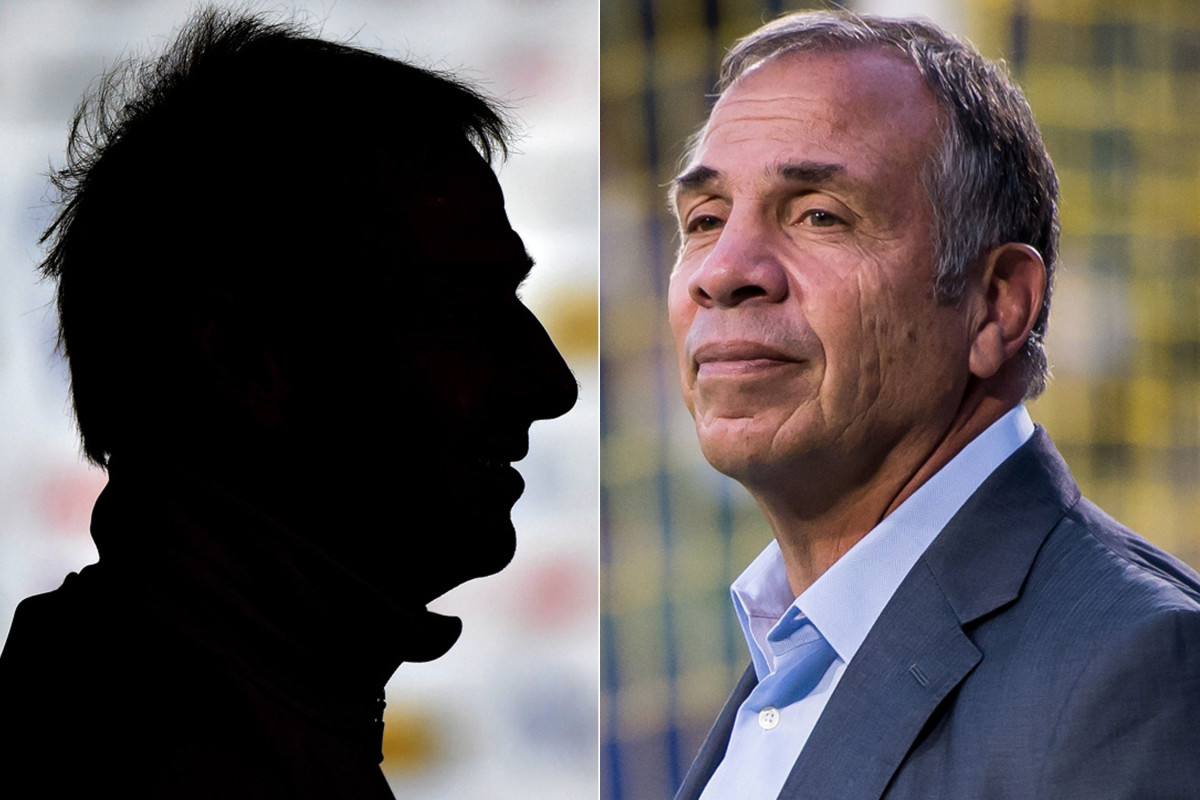
Jurgen Klinsmann was fired after the USA's World Cup qualifying loss in Costa Rica, bringing an end to more than five years in charge. He was replaced by Bruce Arena, who returns to the bench after coaching the USA from 1998-2006.
USMNT vs. Costa Rica, November 15
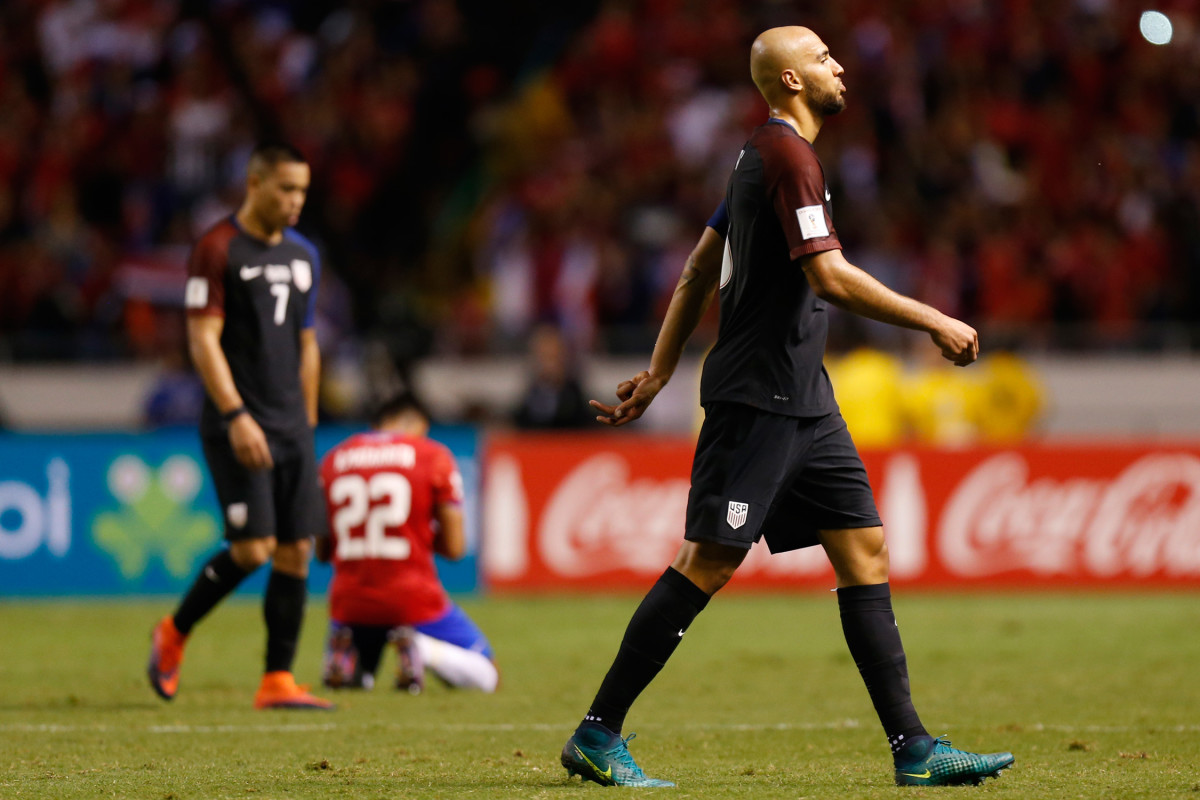
The dejected faces on Bobby Wood, left, and John Brooks say it all, as the U.S. drops to 0-2-0 in the CONCACAF World Cup qualifying Hexagonal following a 4-0 loss and embarrassment at Costa Rica.
USWNT vs. Romania, November 13
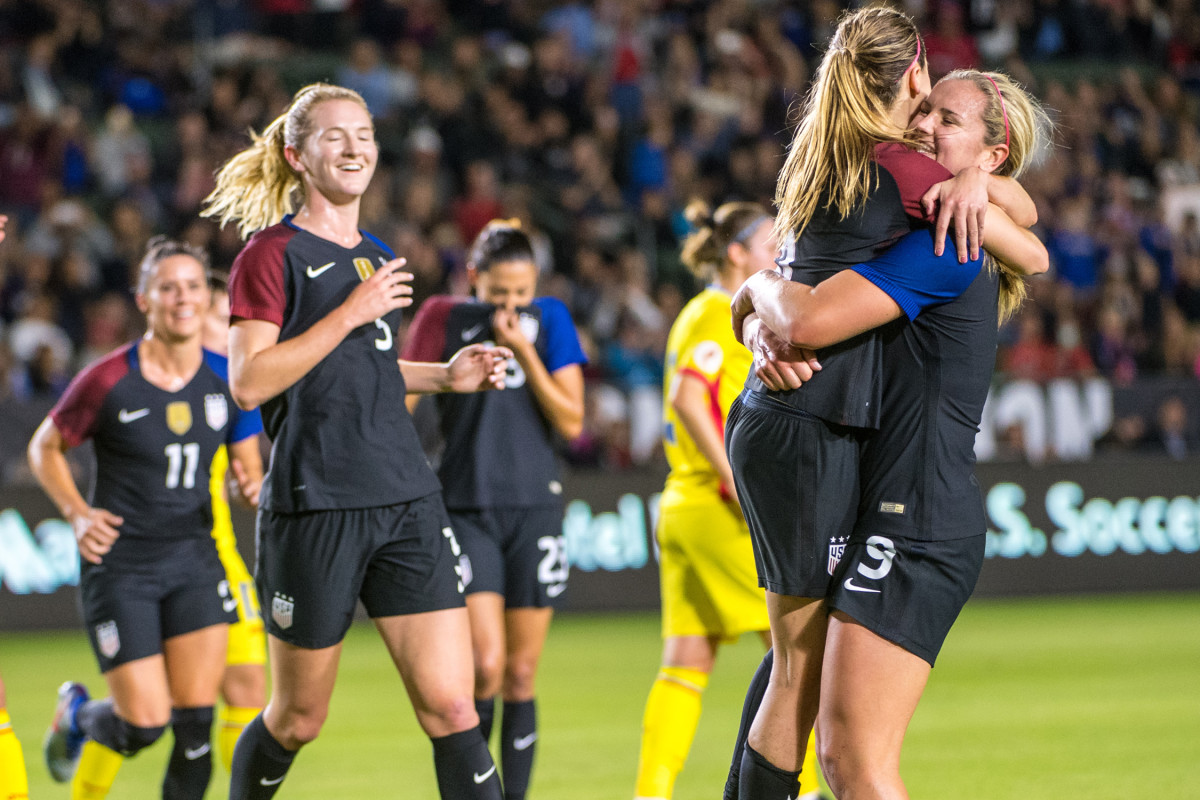
Morgan Brian gets a congratulatory hug after her converted penalty kick, which helped the U.S. women close out 2016 with a 5-0 rout of Romania at StubHub Center in Carson, California.
USMNT vs. Mexico, November 11
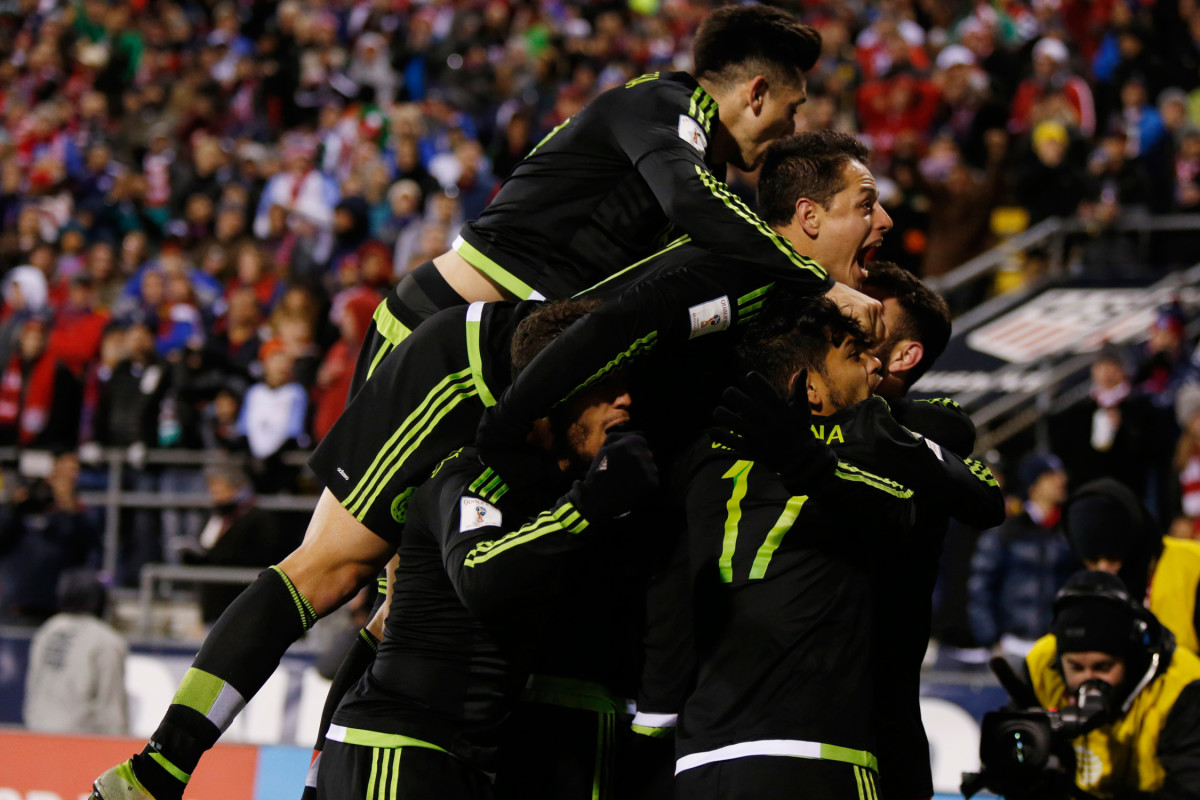
Mexico players celebrate Rafa Marquez's late winner, which delivered a 2-1 triumph for El Tri over the USA to open the CONCACAF Hexagonal. It ended years of U.S. domination over Mexico in Columbus.
USWNT vs. Romania, November 10
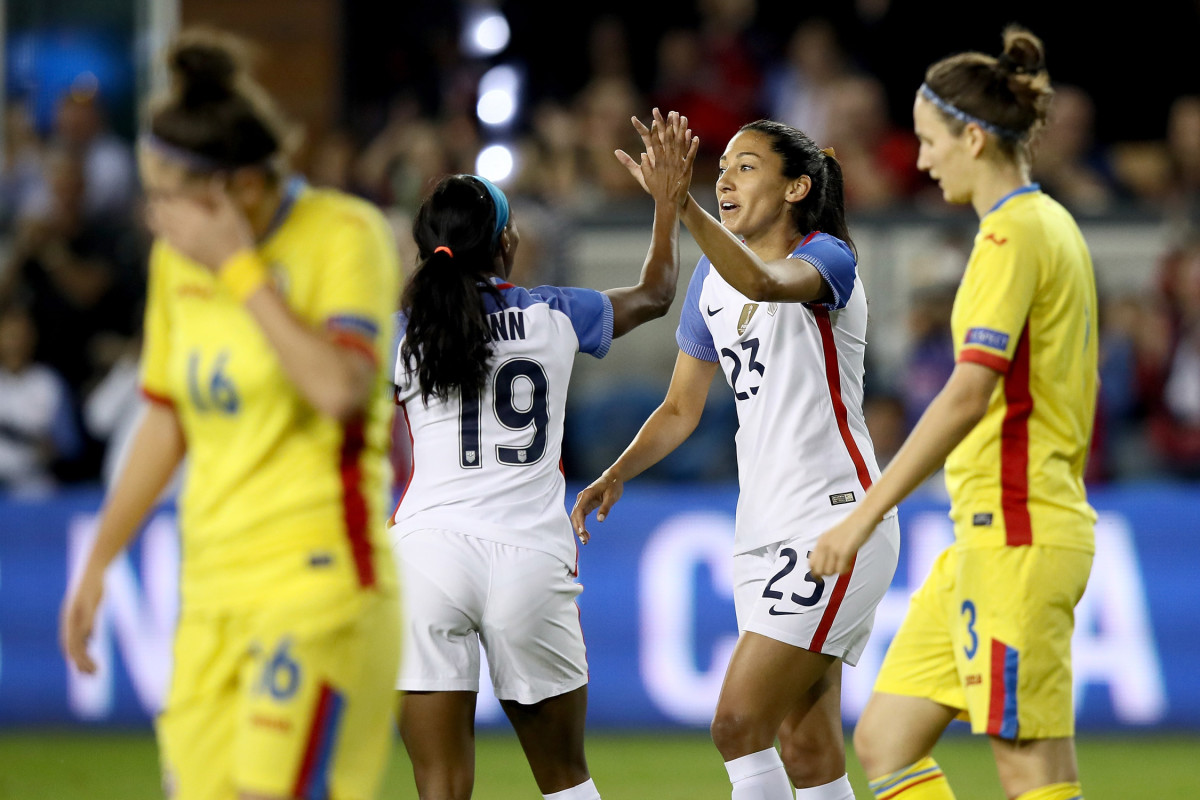
Crystal Dunn congratulates Christen Press on one of her three goals as the USA handled Romania with ease, winning 8-1 at Avaya Stadium in San Jose, California.
USWNT vs. Switzerland, October 23
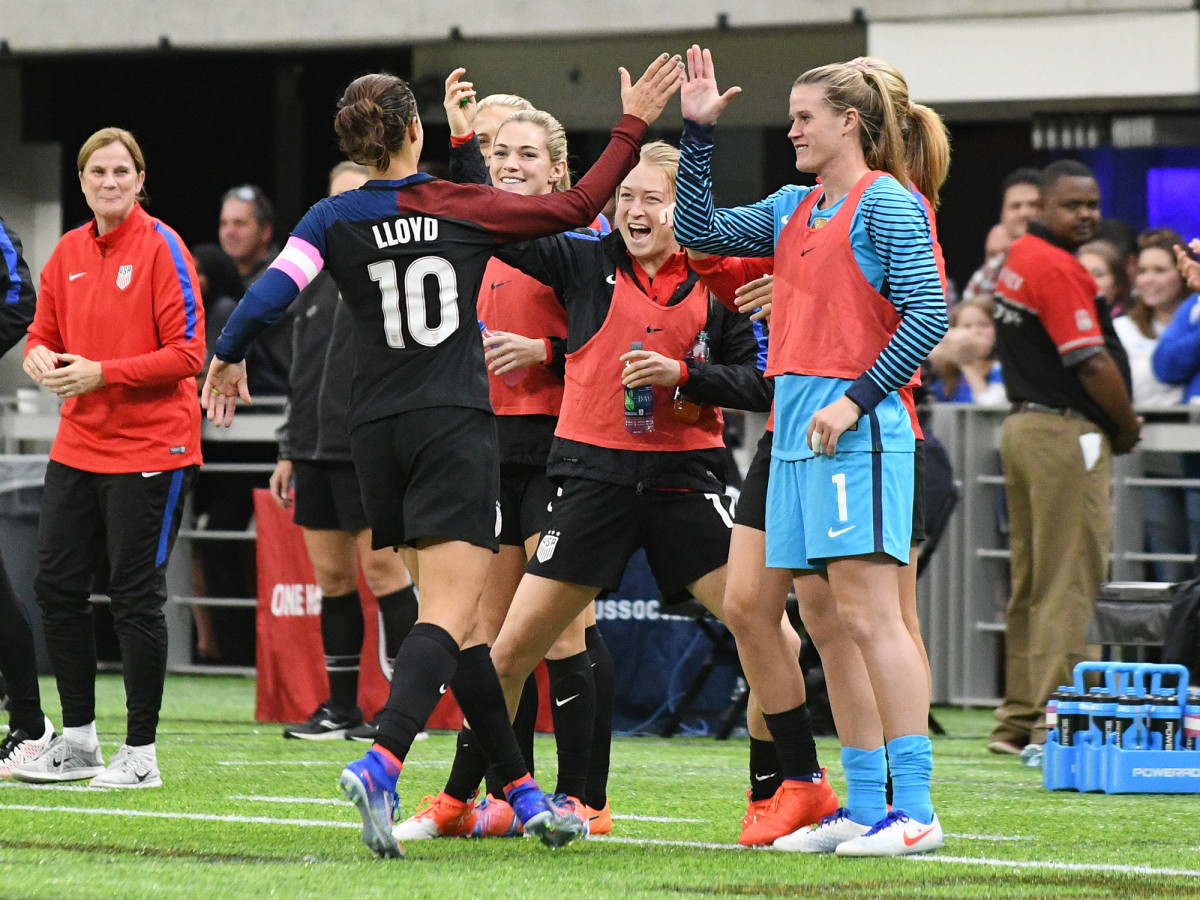
Carli Lloyd gets a hearty welcome after scoring on a long-range blast to kick-start the U.S. in a 5-1 rout of Switzerland in Minneapolis.
USWNT vs. Switzerland, October 19
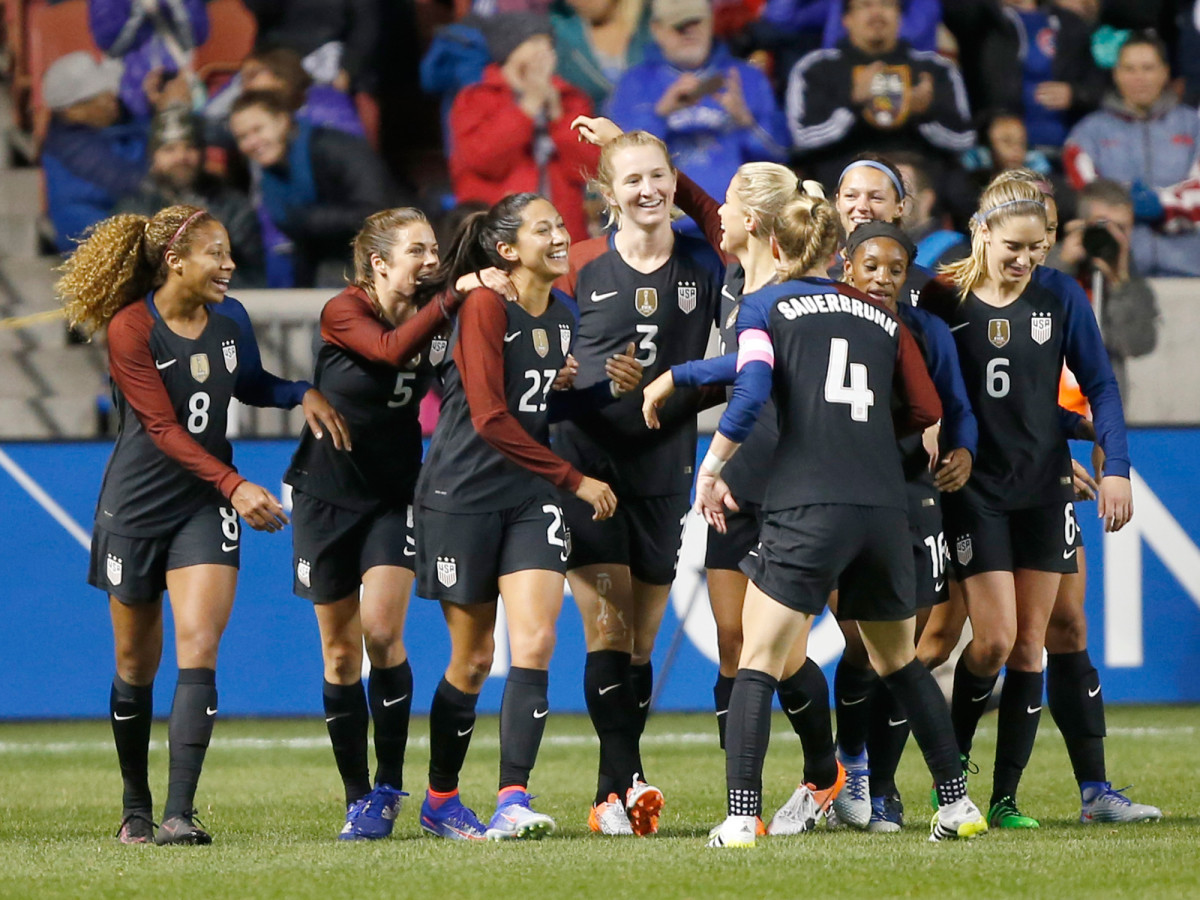
A new-look U.S. women's team routed Switzerland 4-0 at Rio Tinto Stadium in Sandy, Utah, with Samantha Mewis (3) at the center of the celebrations after scoring the final goal of four-goal second half.
USMNT vs. New Zealand, October 11
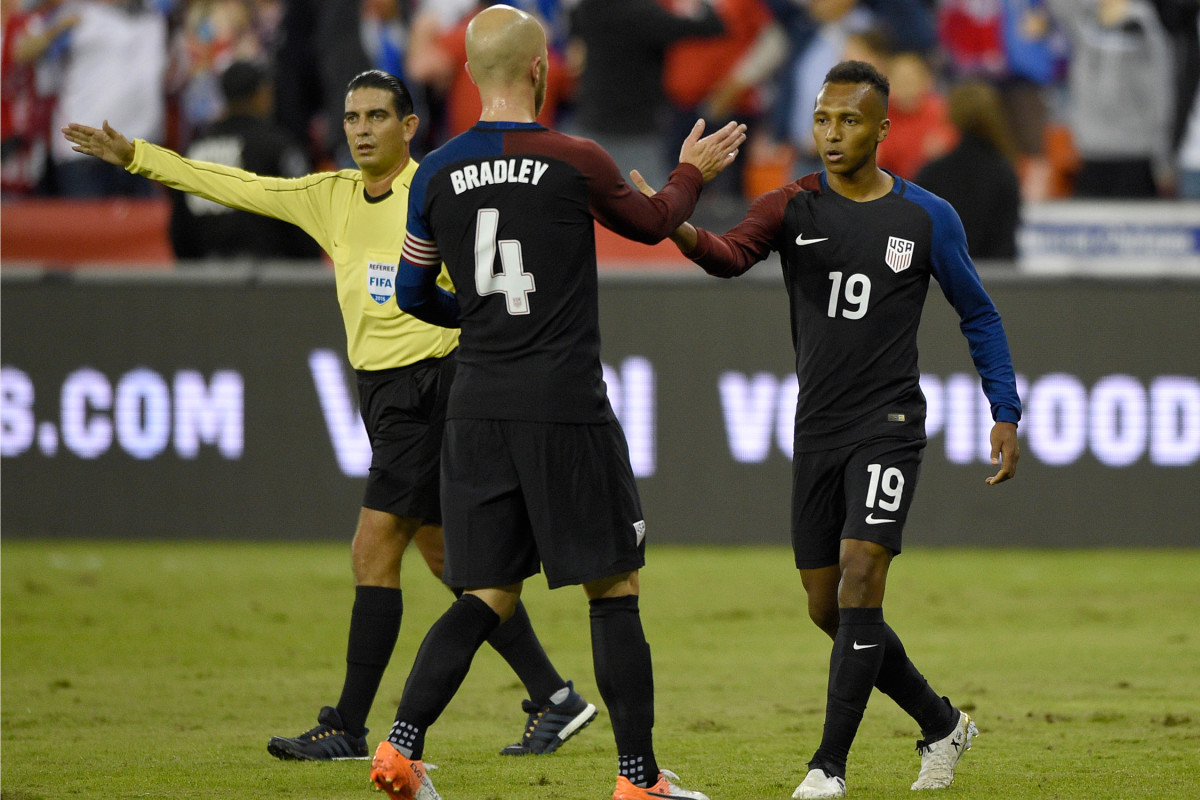
Julian Green is congratulated by captain Michael Bradley after scoring the opener, but the U.S. was forced to settle for a 1-1 draw vs. New Zealand in the last game before the CONCACAF World Cup qualifying Hexagonal kicks off.
USMNT vs. Cuba, October 7
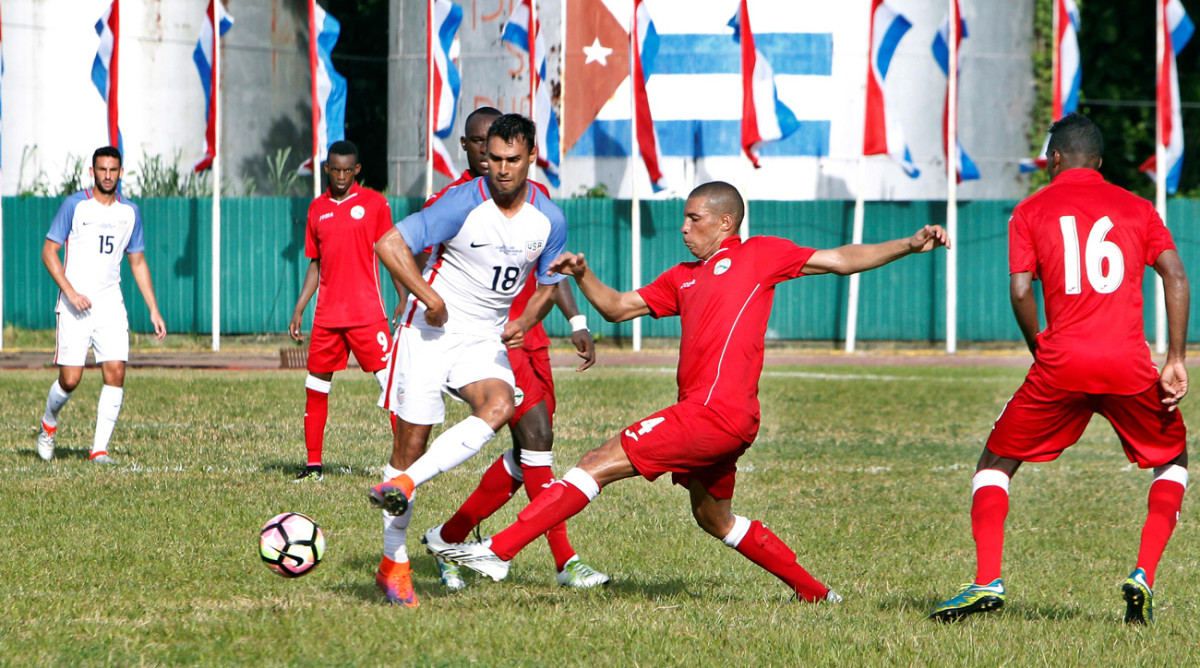
Chris Wondolowski scored a goal and assisted on another, as the USA continued World Cup qualifying preparations by beating Cuba 2-0 in a historic friendly in Havana.
USWNT vs. Netherlands, September 18
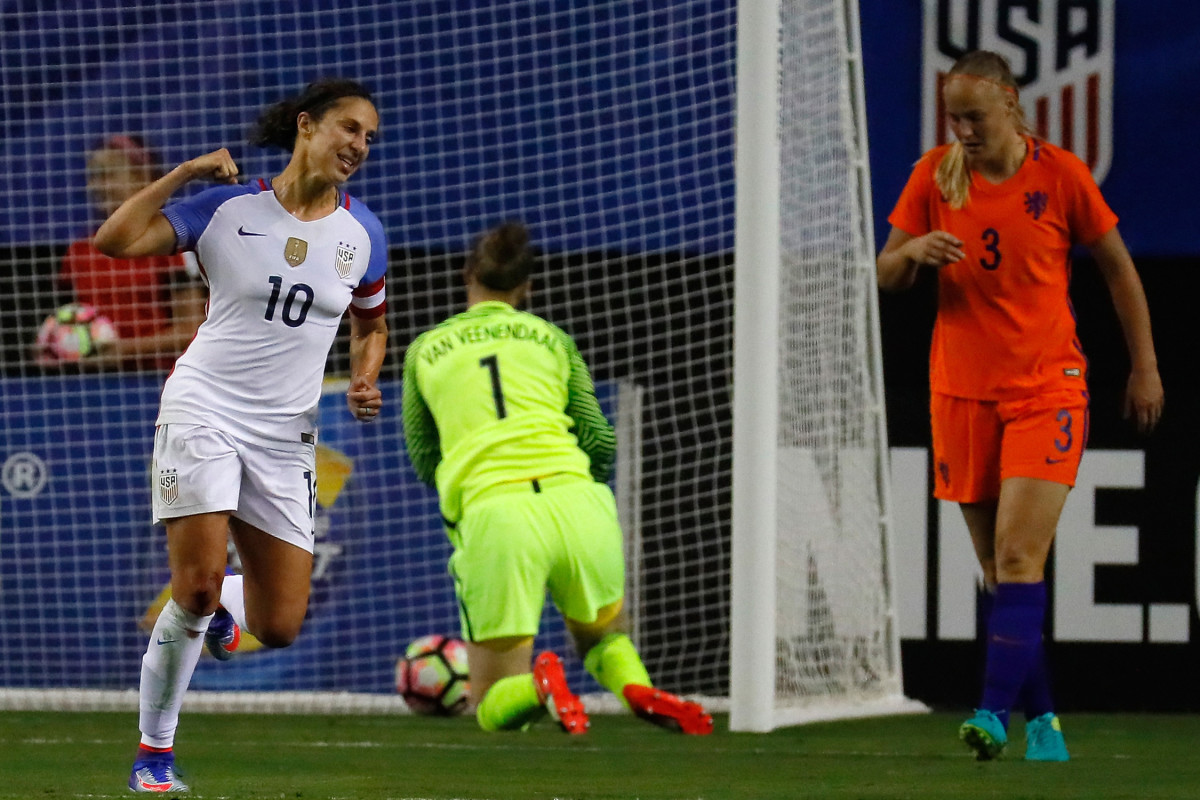
Carli Lloyd celebrates her goal that kicks off the scoring for the USA in a 3-1 win over the Netherlands at the Georgia Dome in Atlanta.
USWNT vs. Thailand, September 15
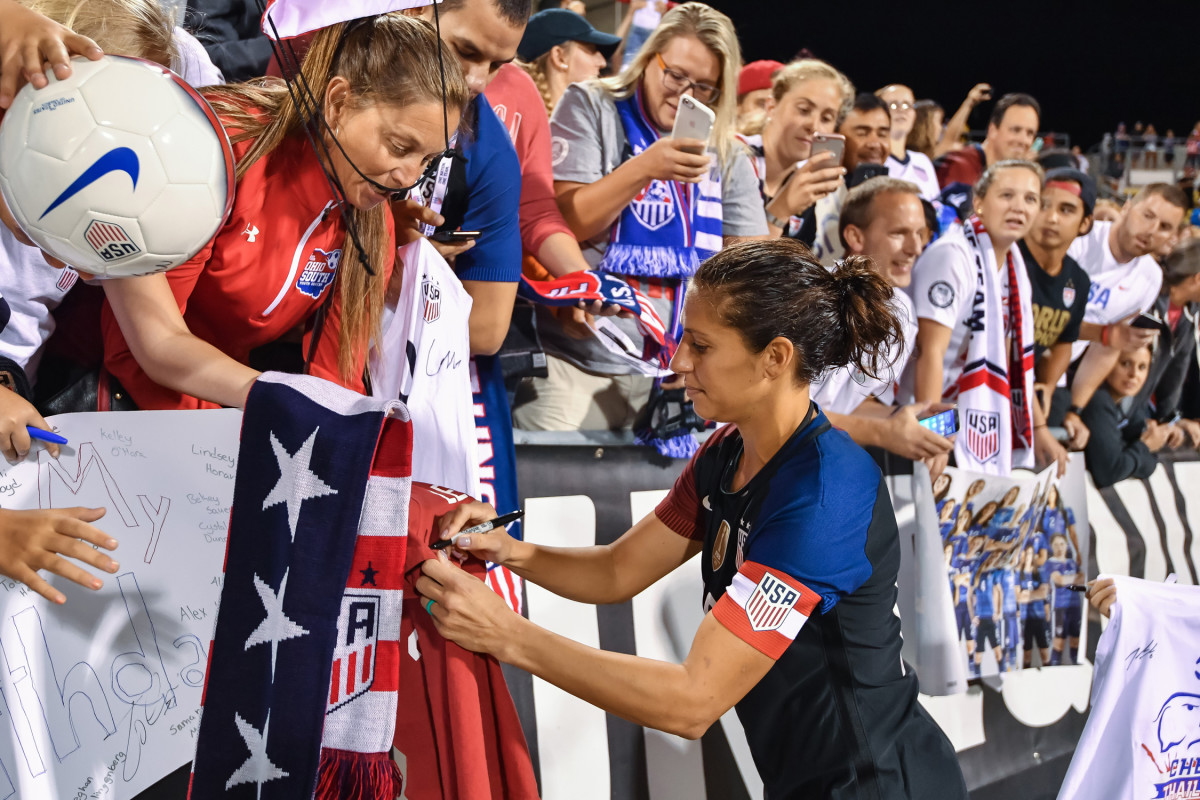
U.S. women's national team co-captain Carli Lloyd happily signs autographs after scoring a hat trick in a 9-0 romp over Thailand in Columbus, Ohio.
USWNT vs. Thailand, September 15
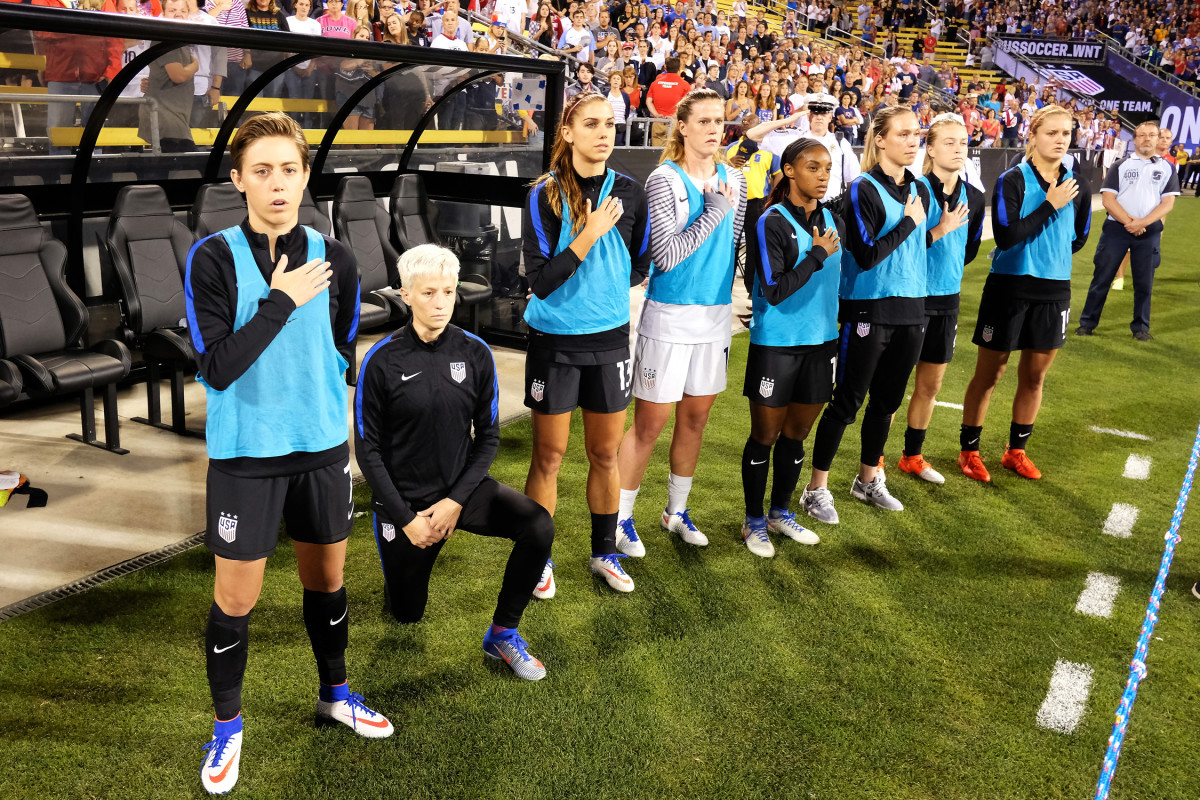
Megan Rapinoe kneels for the national anthem ahead of the U.S. women's national team's match vs. Thailand, continuing her public protest in line with that of San Francisco 49ers quarterback Colin Kaepernick.
USMNT vs. Trinidad & Tobago, September 6
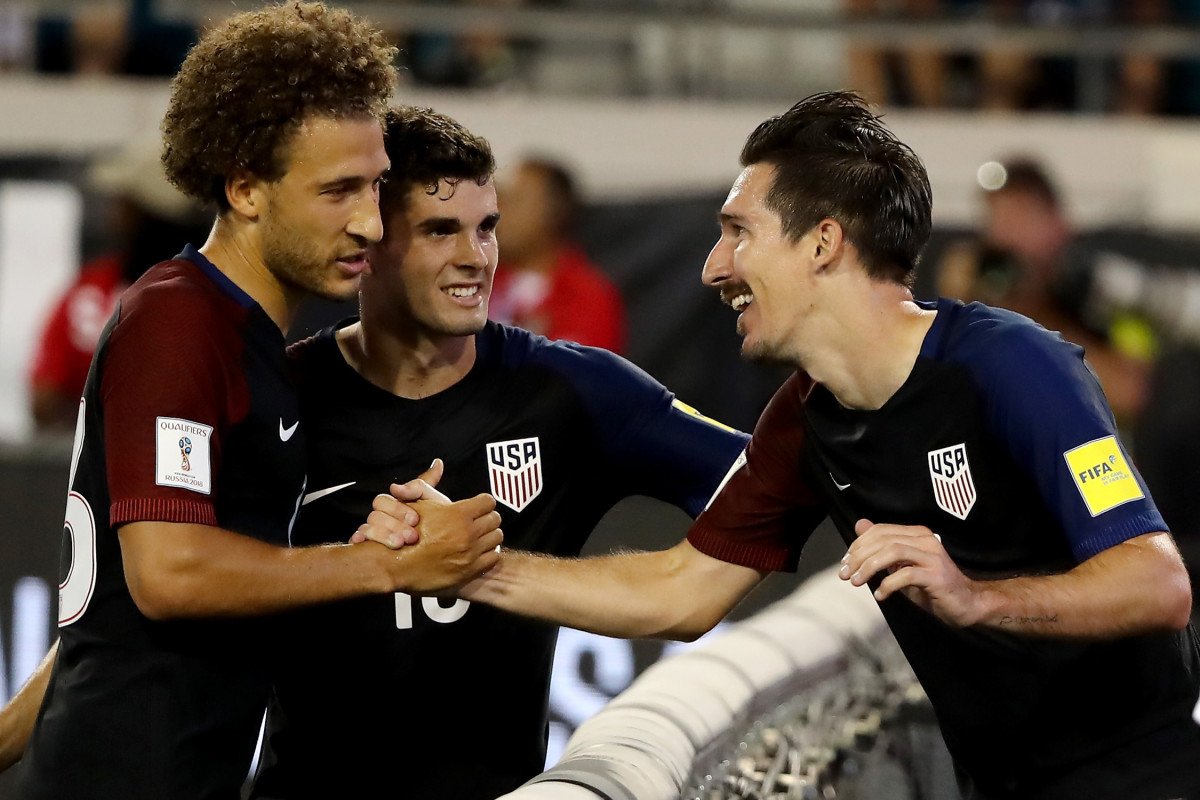
Fabian Johnson, Christian Pulisic and Sacha Kljestan celebrate during a 4-0 win, which cemented the USA's place atop its World Cup qualifying group and a berth in the CONCACAF hexagonal.
Hope Solo's USWNT contract terminated
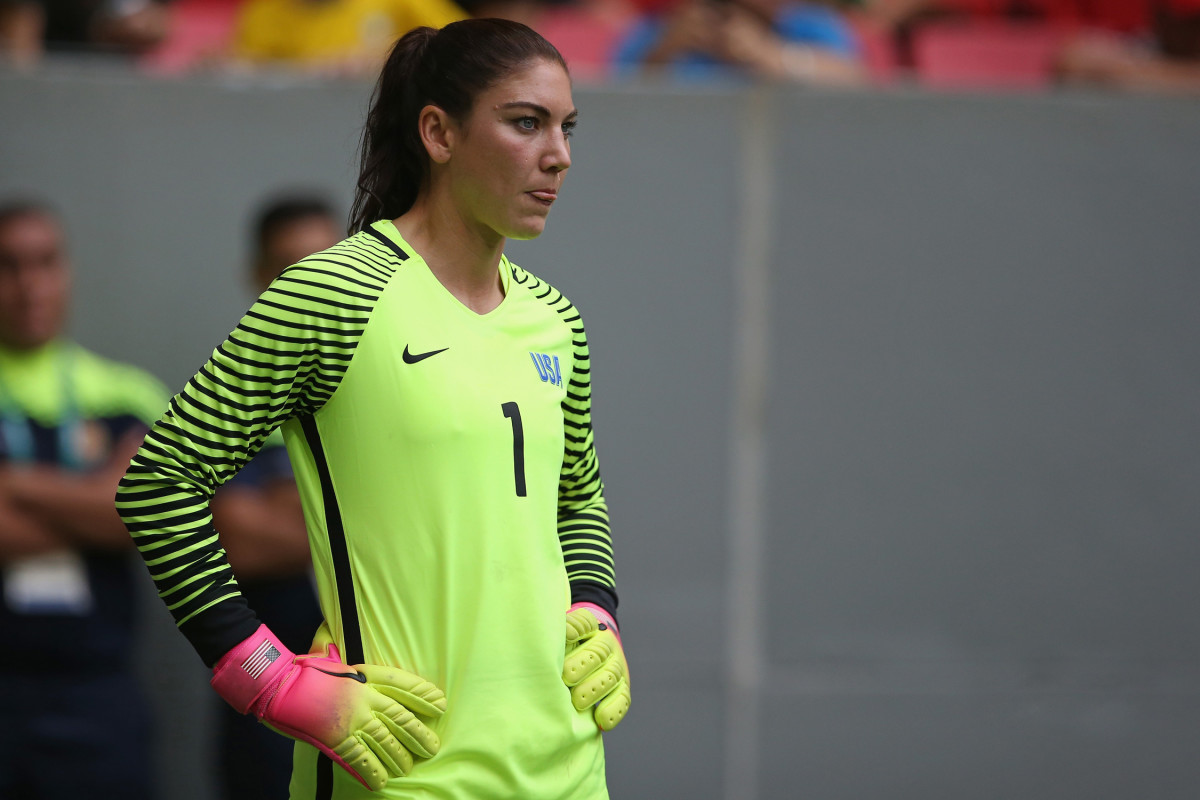
Following the USWNT's Olympic loss to Sweden, Hope Solo lashed out at the opposition, calling them "cowards" and drawing the ire of U.S. Soccer. The incident pushed the federation over the edge, and it terminated the goalkeeper's contract while suspending her six months–meaning any chance at reinstatement won't be possible until February.
USWNT vs. Sweden, August 12
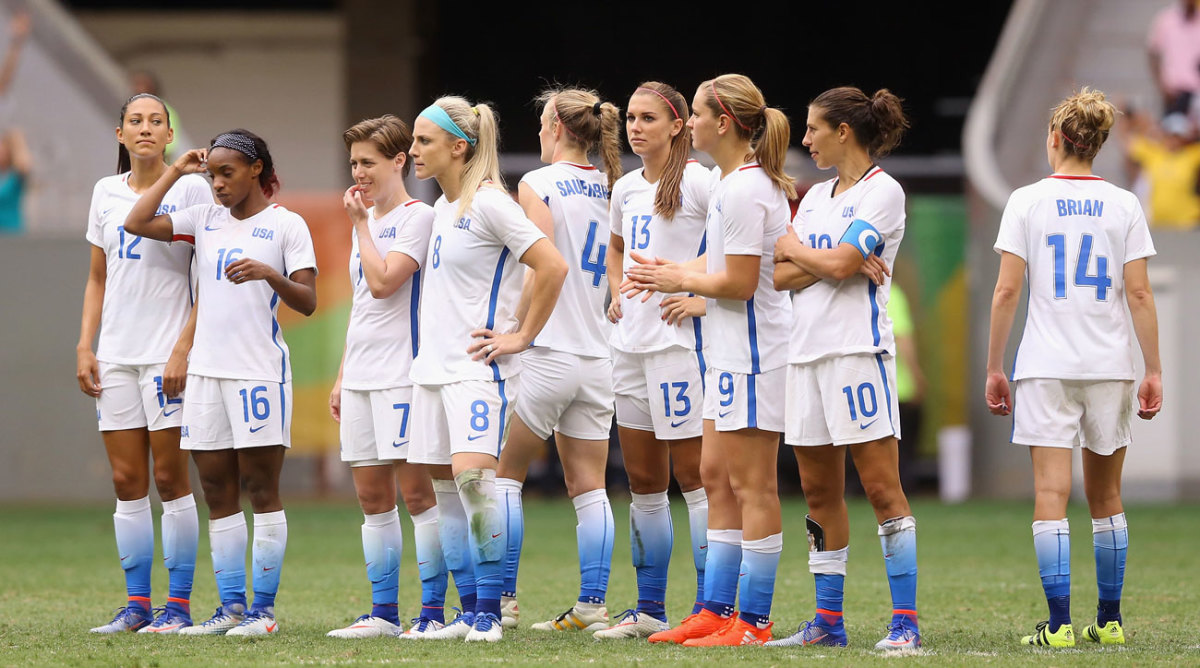
The long and stunned faces say it all, as the U.S. women try to comprehend a penalty-kick loss to Sweden in the Olympic quarterfinals. The 4-3 PK defeat after a 1-1 draw marked the earliest ouster for the U.S. women in a major competition ever.
USWNT vs. Colombia, August 9
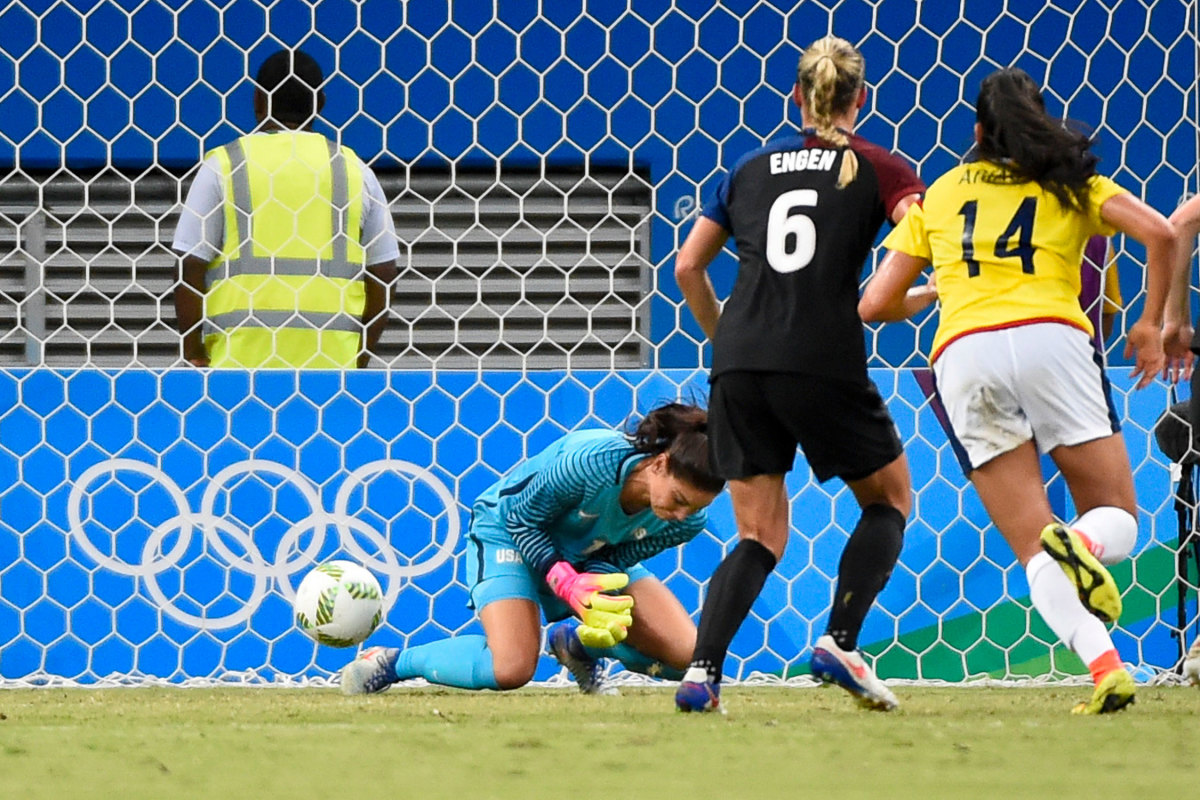
Hope Solo lets a Catalina Usme free kick slip through her hands and legs in a shocking 2-2 draw. The USA still won its Olympic group despite the slip-up.
USWNT vs. France, August 6
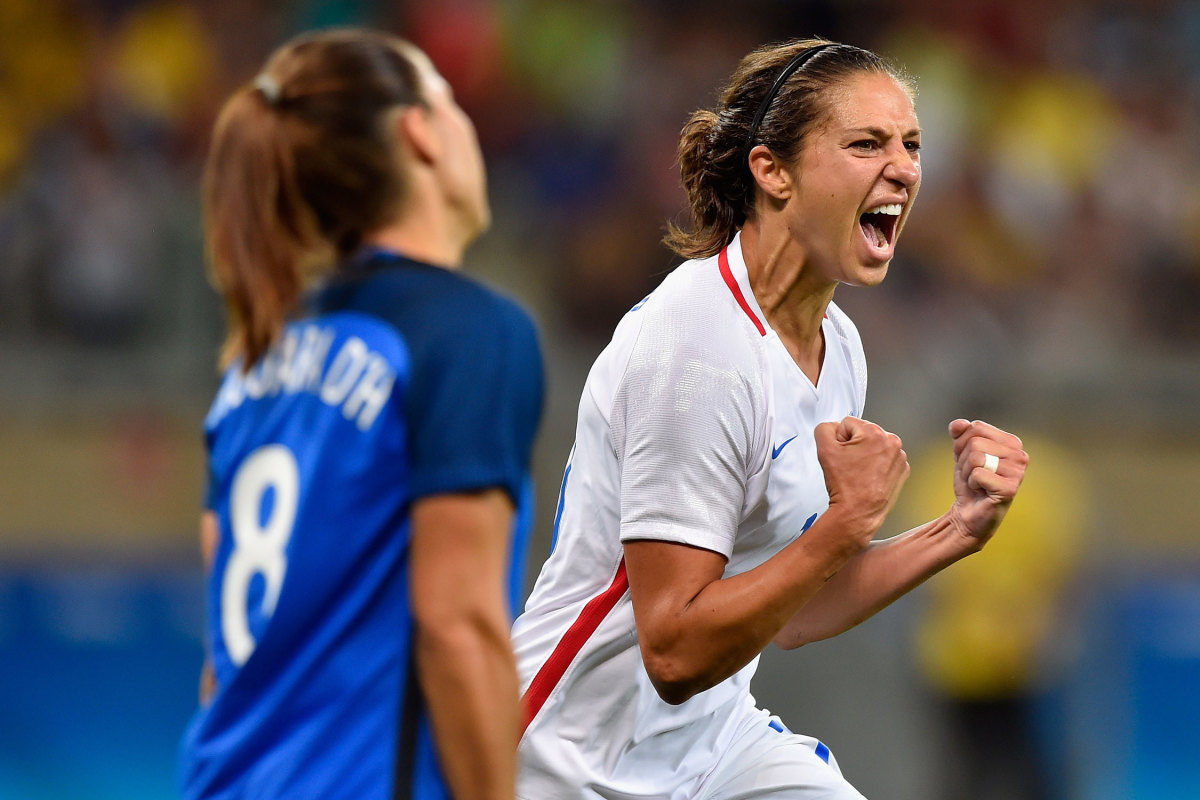
Carli Lloyd scores the only goal in a 1-0 win over a stout France side to punch the USA's ticket to the knockout stage at the Olympics.
USWNT vs. New Zealand, August 3
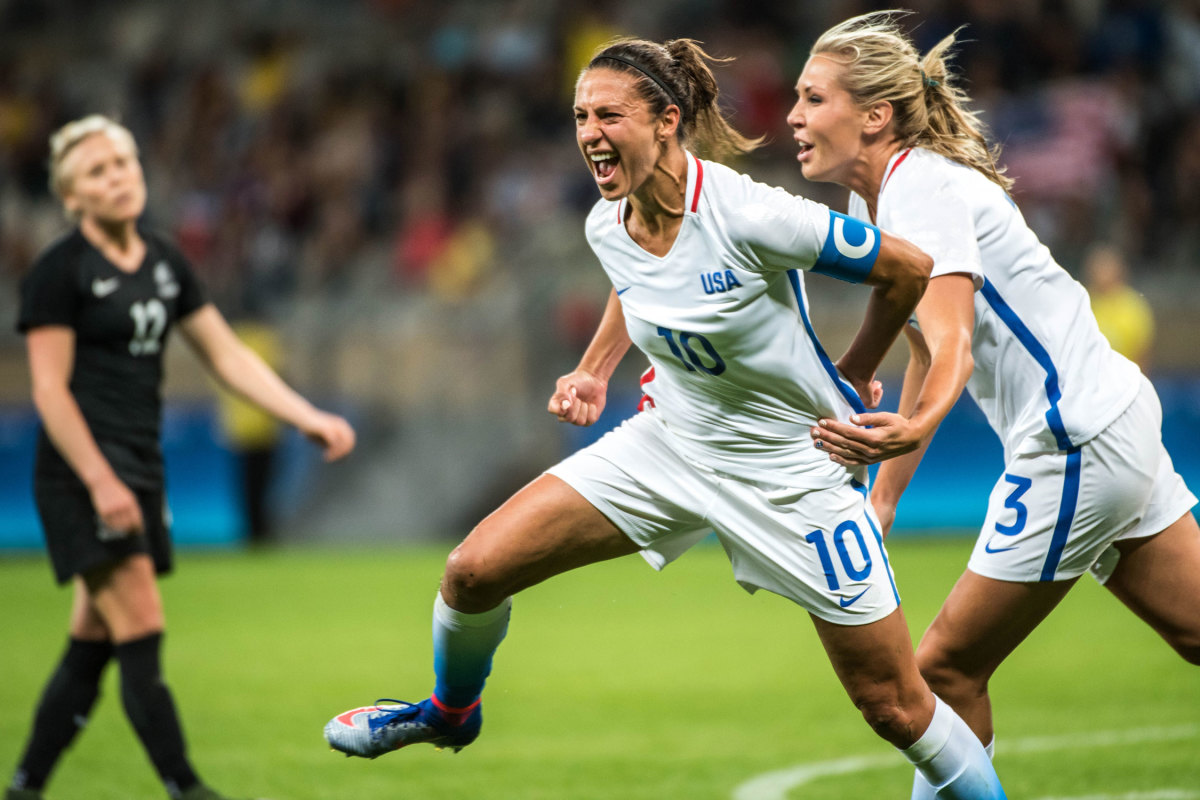
Carli Lloyd celebrates her goal in the USA's 2-0 win over New Zealand in their opening match of group play at the Olympics. Alex Morgan doubled the USA's lead in the second half.
USWNT vs. Costa Rica, July 22
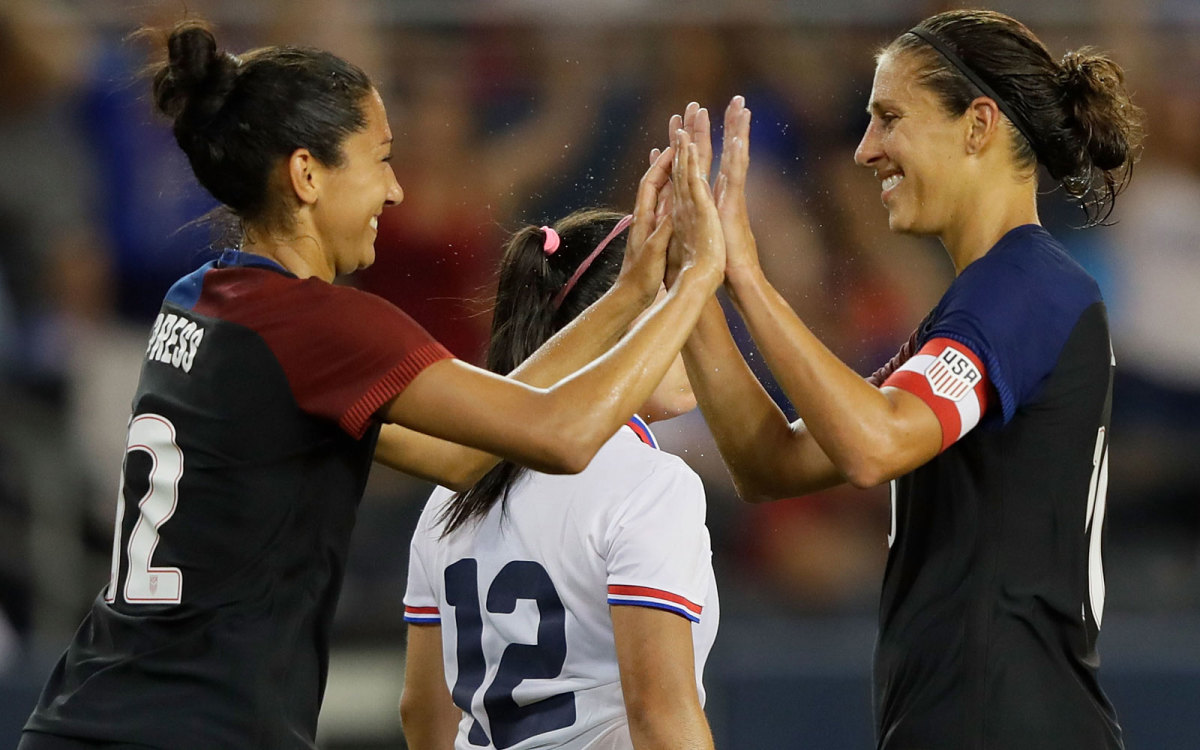
Christen Press and Carli Lloyd celebrate an easy 4-0 win, which sent the U.S. on its way to Rio with an unbeaten record in 2016.
USWNT vs. South Africa, July 9
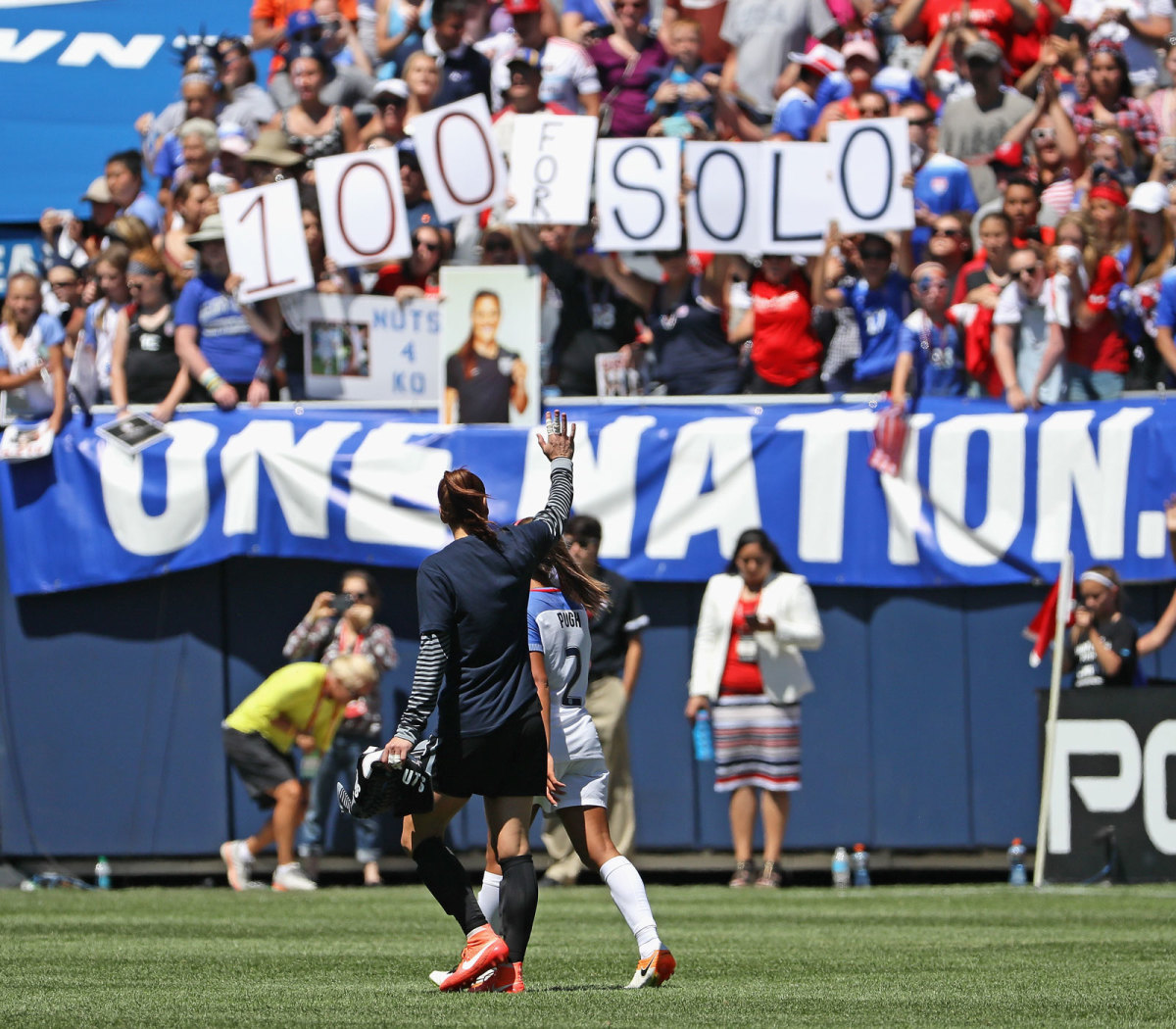
Hope Solo salutes the crowd after posting the 100th clean sheet of her career in a 1-0 win in Chicago. Crystal Dunn scored the lone goal.
USMNT vs. Colombia, June 25
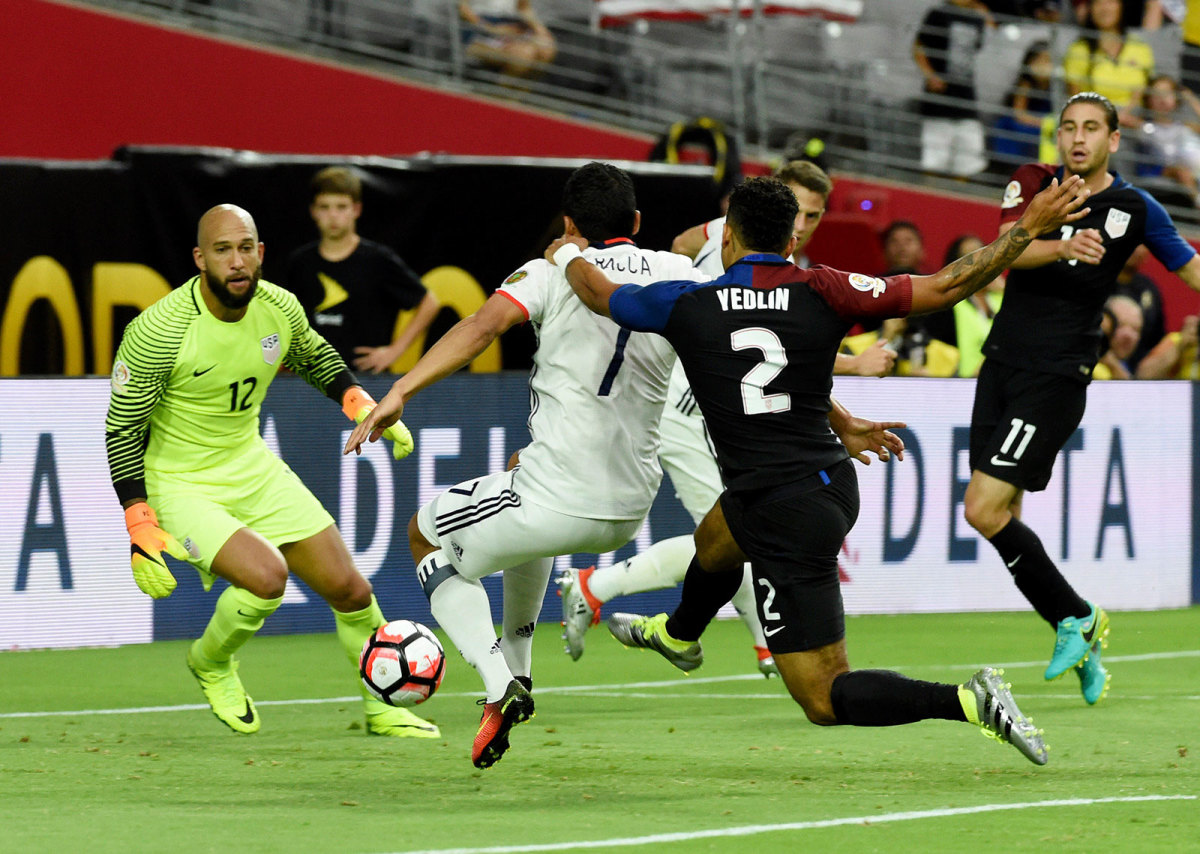
For a second time at Copa America, the USA falls to Colombia, with Carlos Bacca's goal the difference in a 1-0 result in the third-place match in Arizona.
USMNT vs. Argentina, June 21
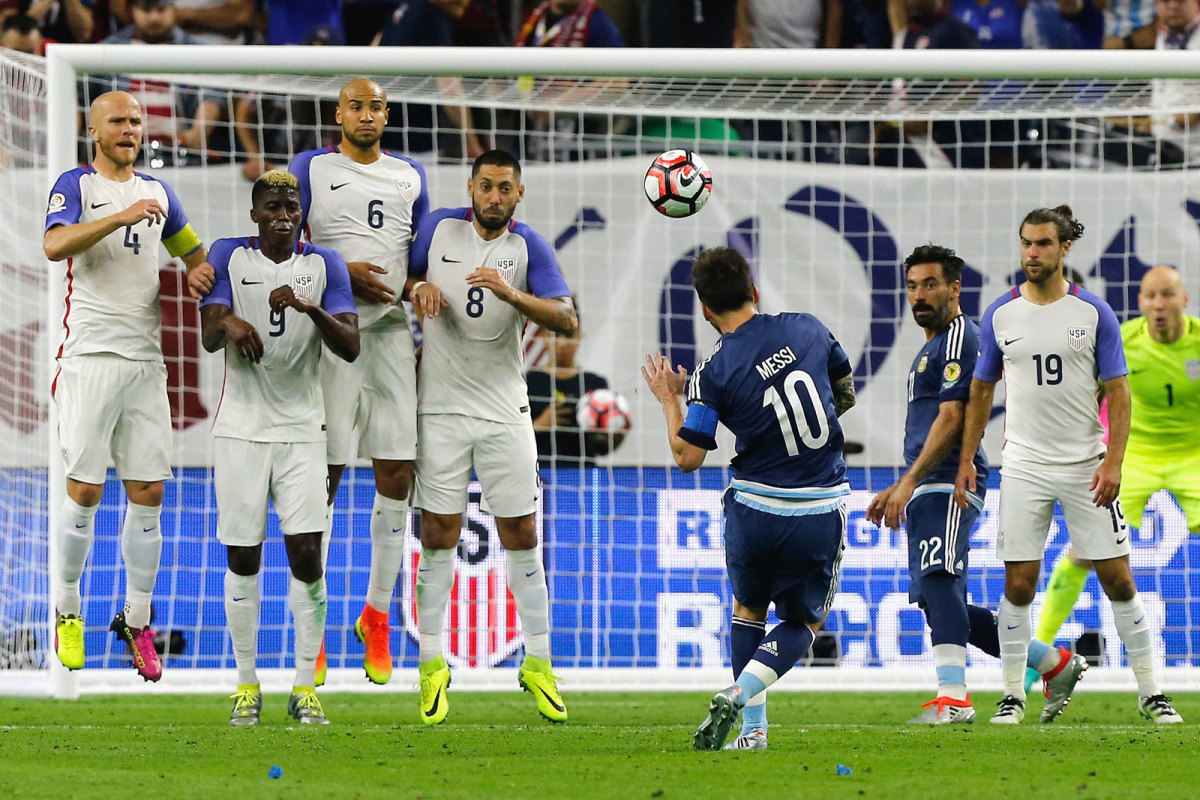
Lionel Messi converts an incredible free kick to punctuate a dominant performance for Argentina against the USA in the Copa America semifinals.
USMNT vs. Ecuador, June 16
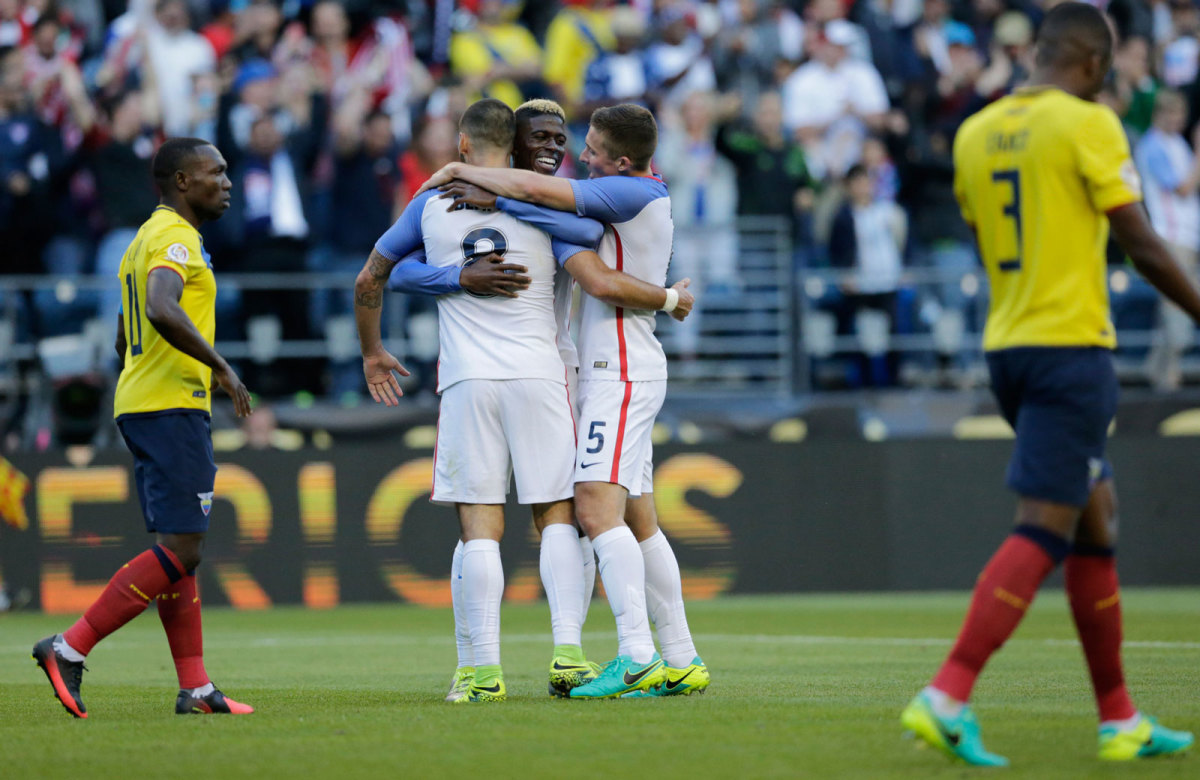
Goal scorers Clint Dempsey and Gyasi Zardes share a celebratory hug with Matt Besler in the Copa America quarterfinals, where the Americans held on for a 2-1 win and a place in the semis.
USMNT vs. Paraguay, June 11
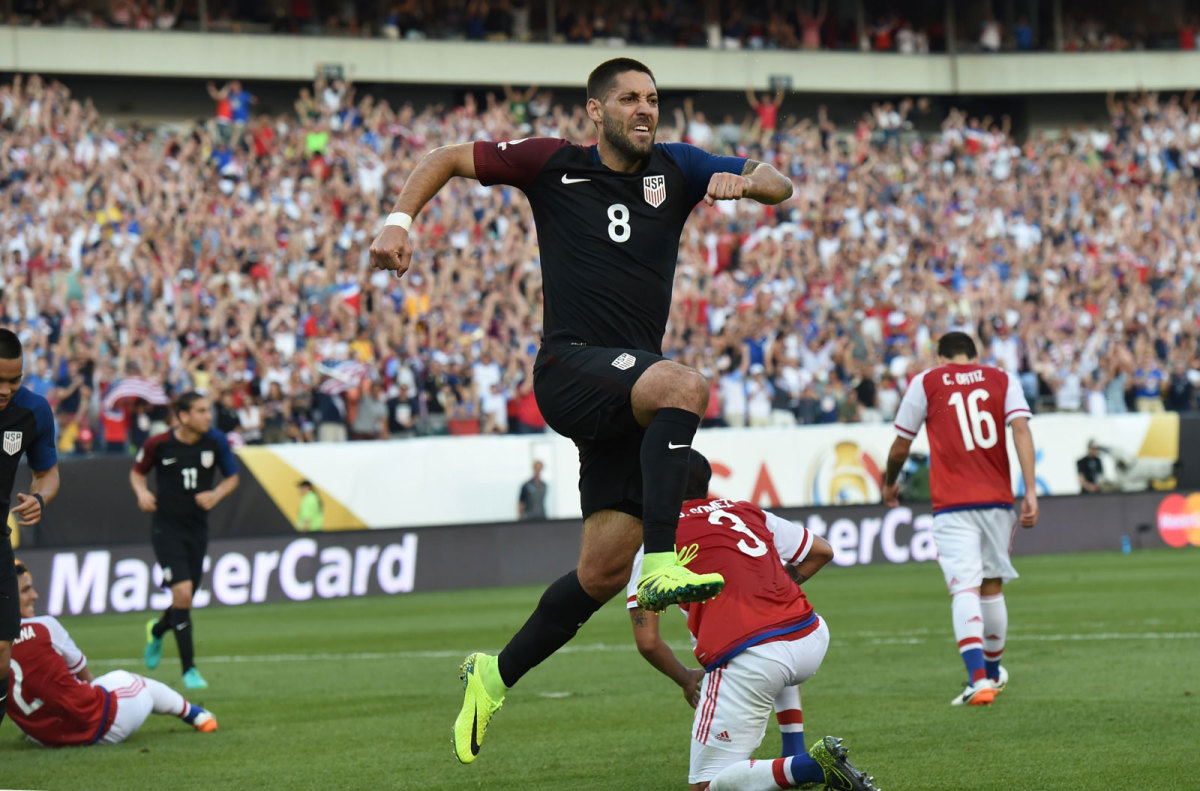
Clint Dempsey celebrates his goal in a 1-0 win over Paraguay, which secured the USA's place in the Copa America knockout stage.
USMNT vs. Costa Rica, June 7
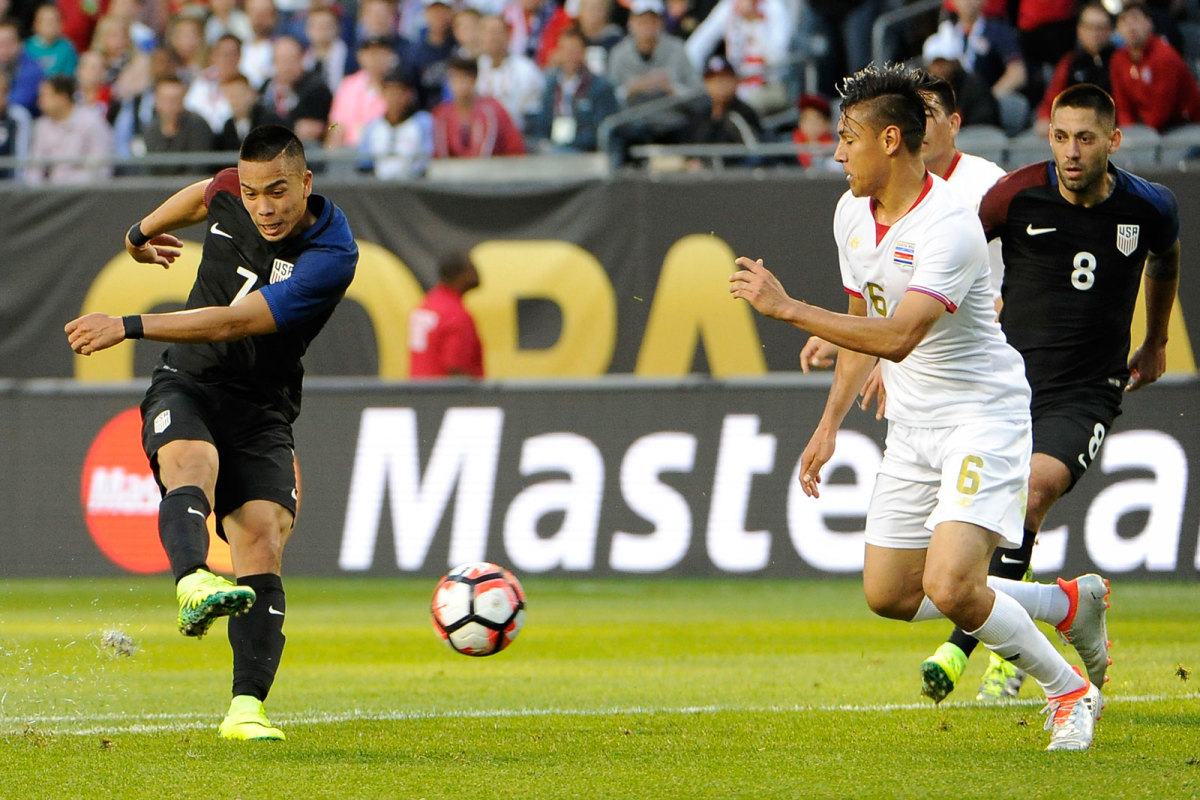
Bobby Wood caps a dominating first half for the USA in a must-win game vs. Costa Rica in Chicago at Copa America. Clint Dempsey, Jermaine Jones and Graham Zusi also scored.
USWNT vs. Japan, June 5
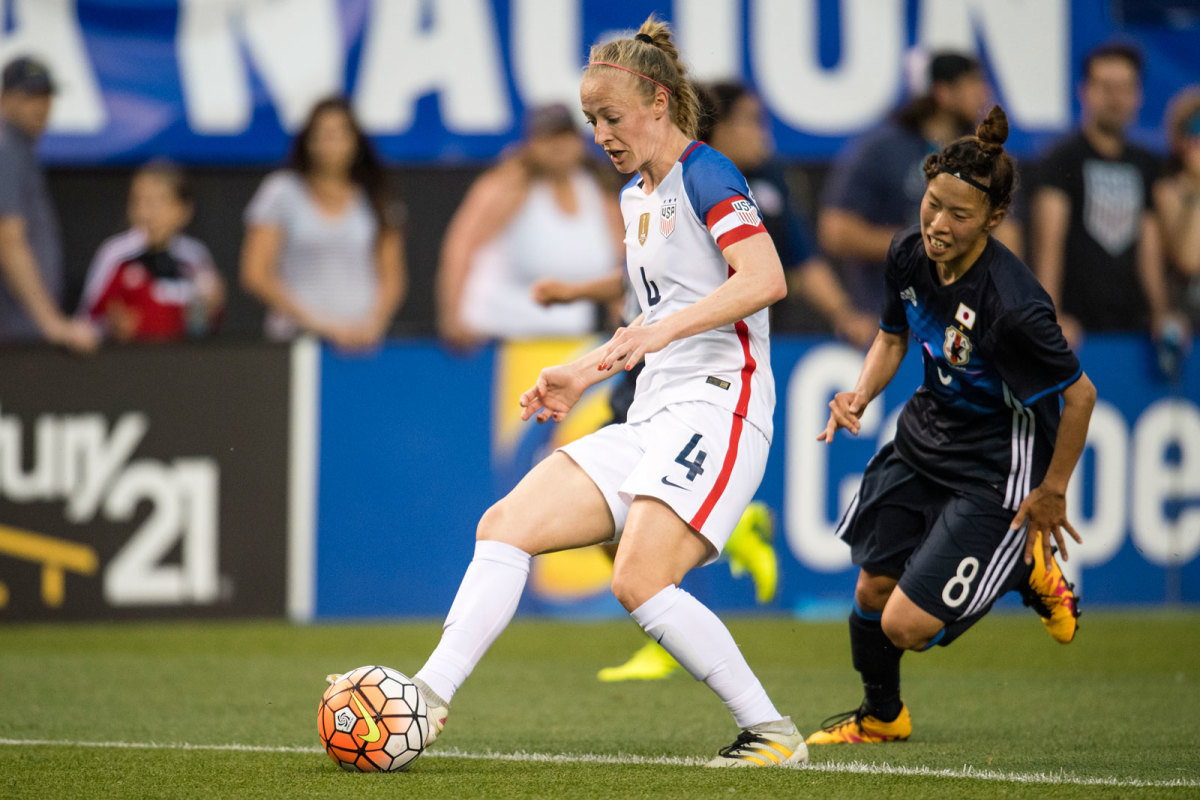
Co-captain Becky Sauerbrunn defends as the U.S. bounces back to shut out Japan 2-0 in a rain-shortened friendly in Cleveland.
USMNT vs. Colombia, June 3
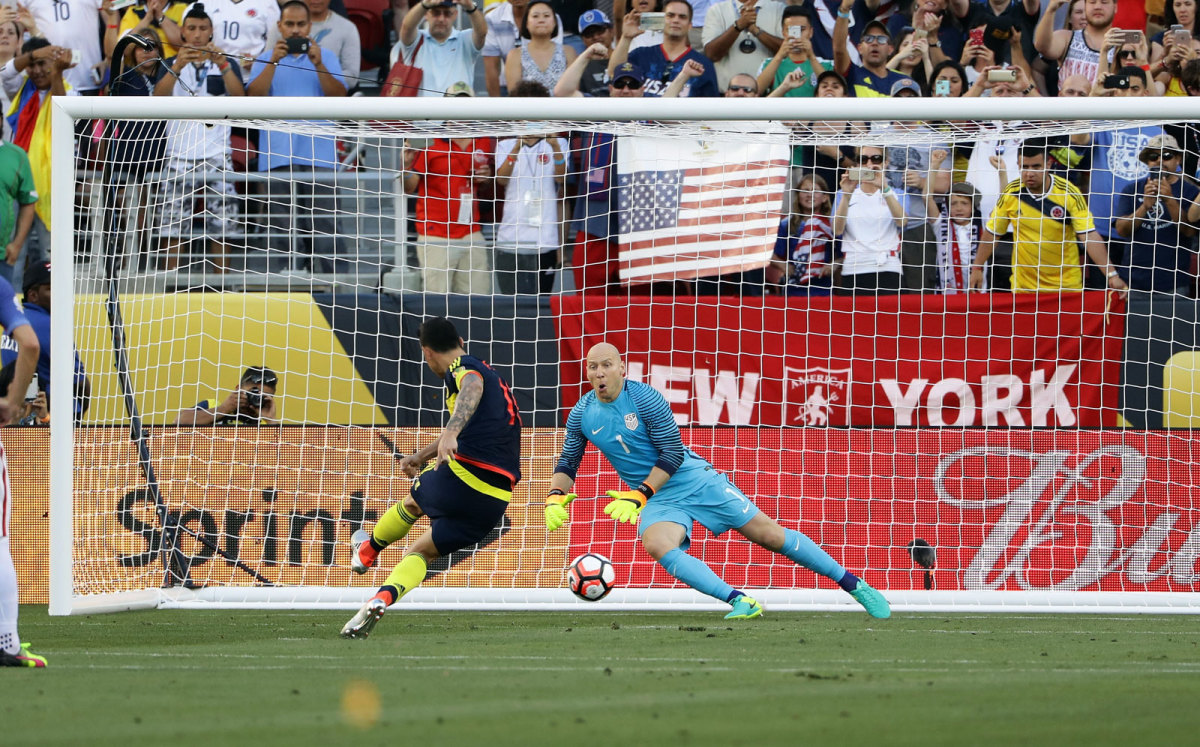
James Rodriguez beats Brad Guzan from the penalty spot in Colombia's 2-0 win over the USA to open Copa America Centenario.
USWNT vs. Japan, June 2
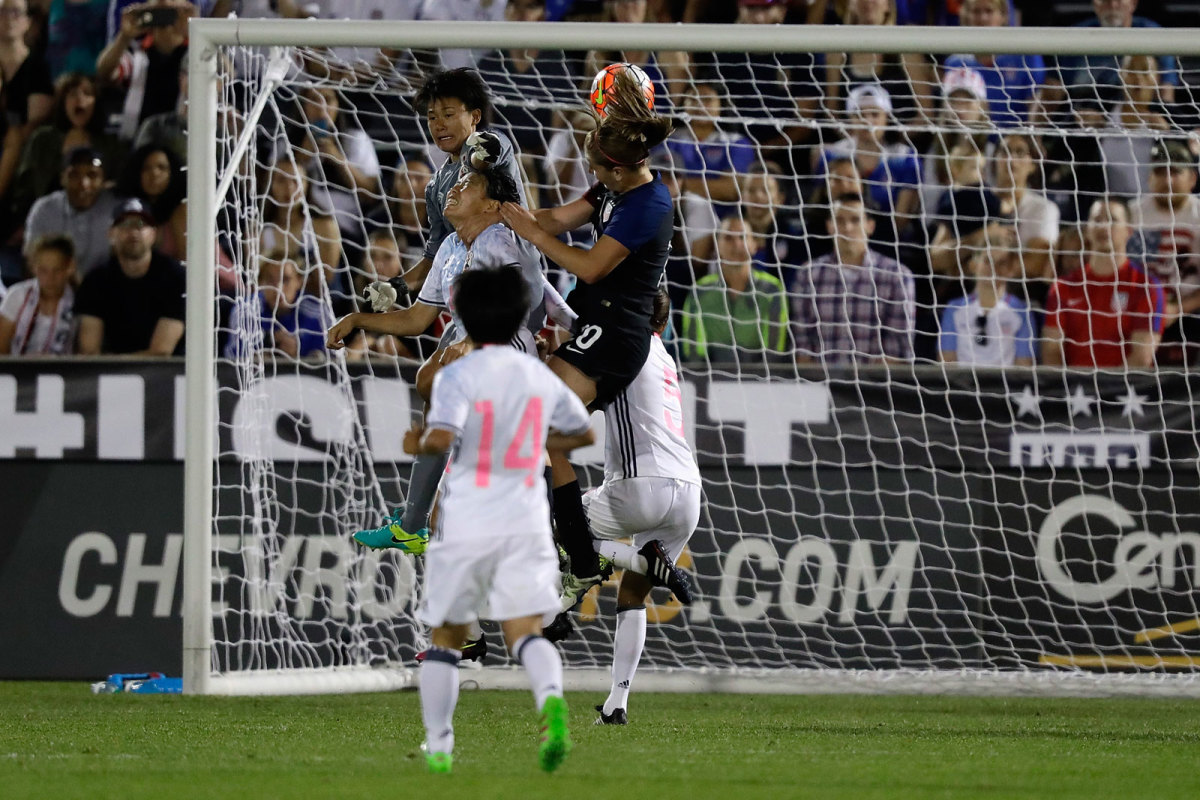
Lindsey Horan heads the USA in front to cap a comeback from two goals down, but the Americans conceded in extra time to 10-woman Japan, settling for a 3-3 draw.
USMNT vs. Bolivia, May 29
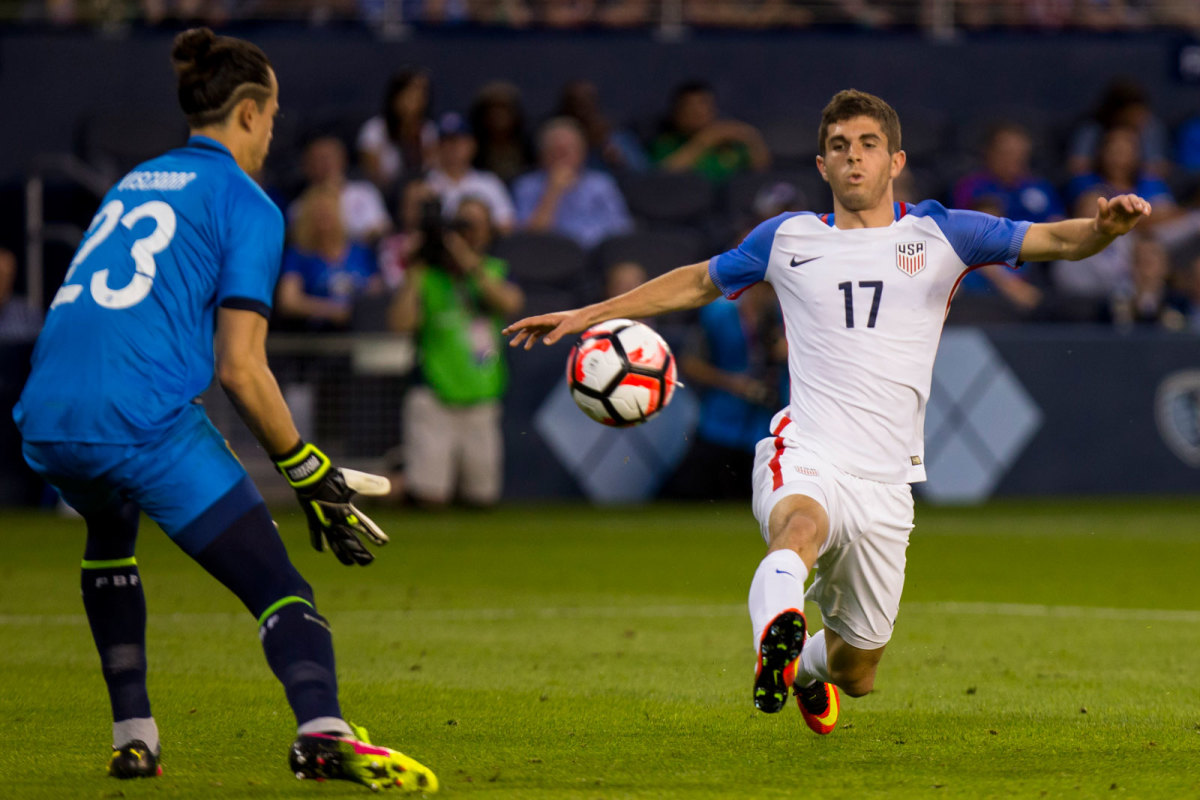
Christian Pulisic scores his first international goal in the USA's 4-0 win over Bolivia in a final tune-up for Copa America. Gyasi Zardes scored twice, and John Brooks added one of his own in the triumph.
USMNT vs. Ecuador, May 25
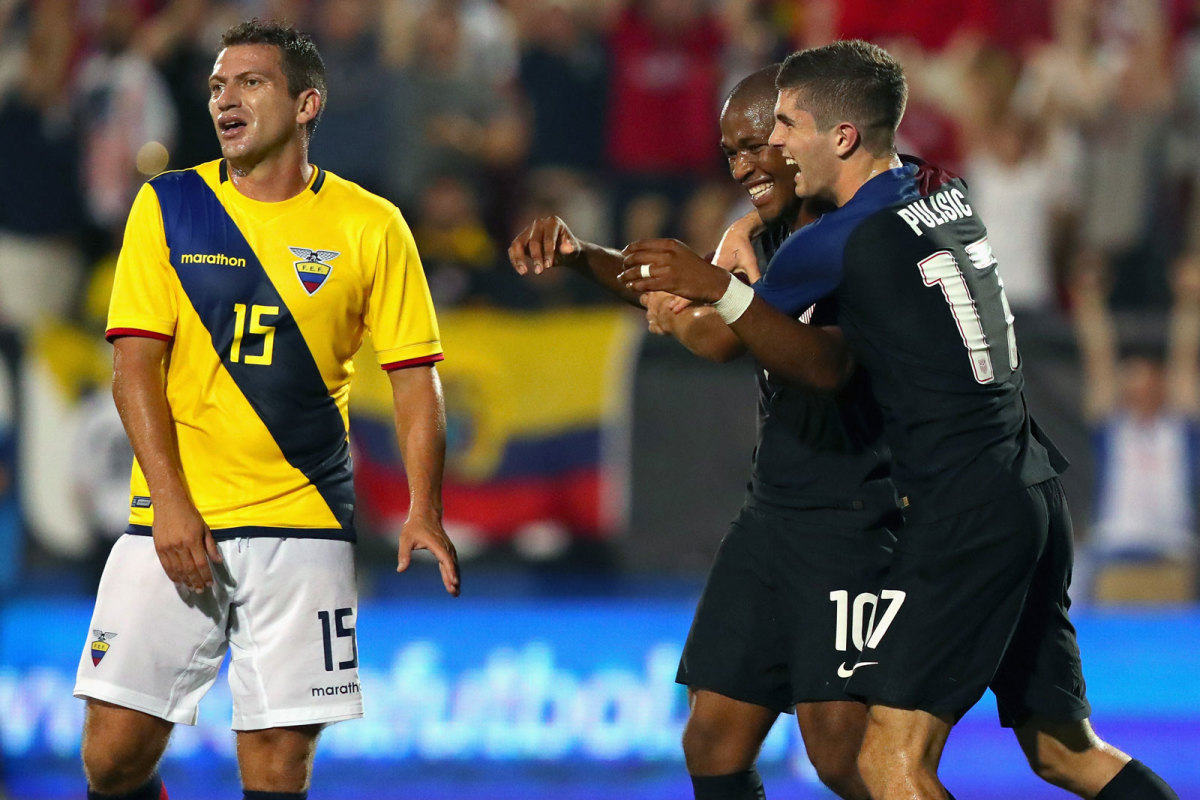
Darlington Nagbe is hugged by Christian Pulisic after his 90th-minute volley delivers a 1-0 victory for the USA in a pre-Copa America friendly.
USMNT vs. Puerto Rico, May 22
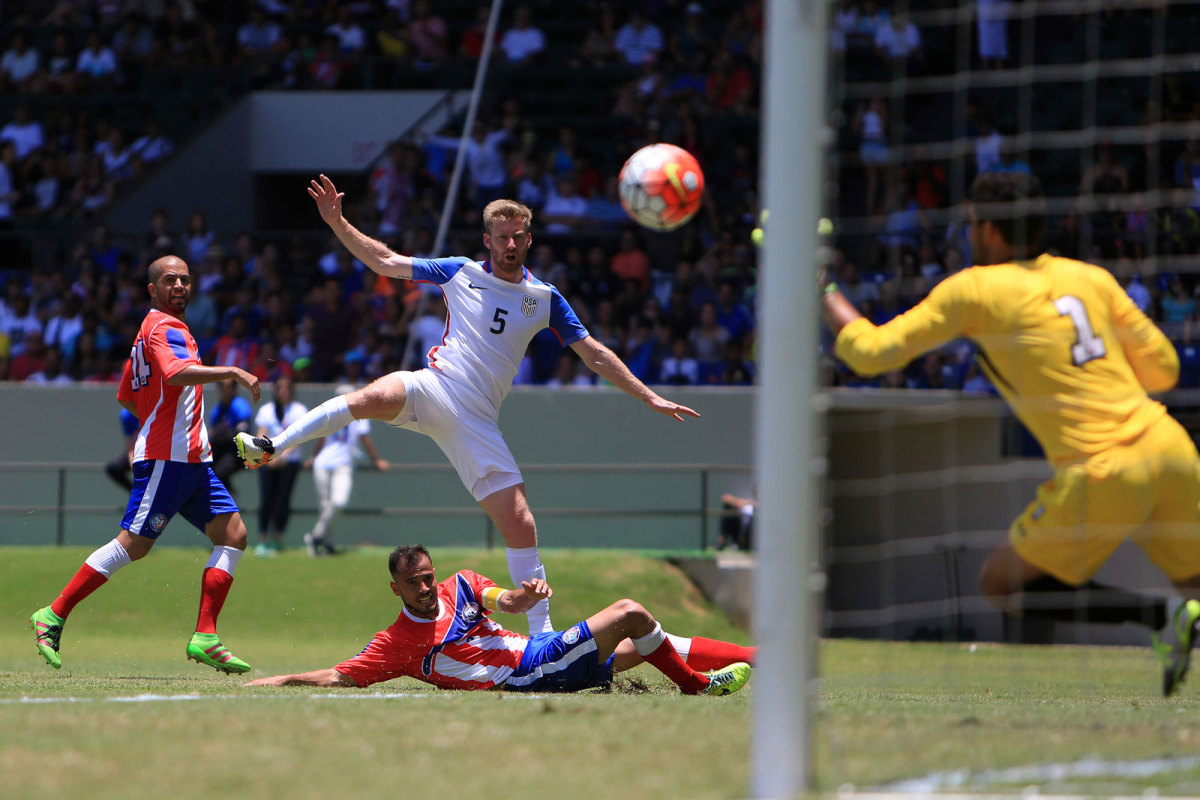
Tim Ream scores the opening goal in the USA's 3-0 win over Puerto Rico in the first meeting between the two sides. Bobby Wood and Paul Arriola scored as well.
USWNT vs. Colombia, April 10
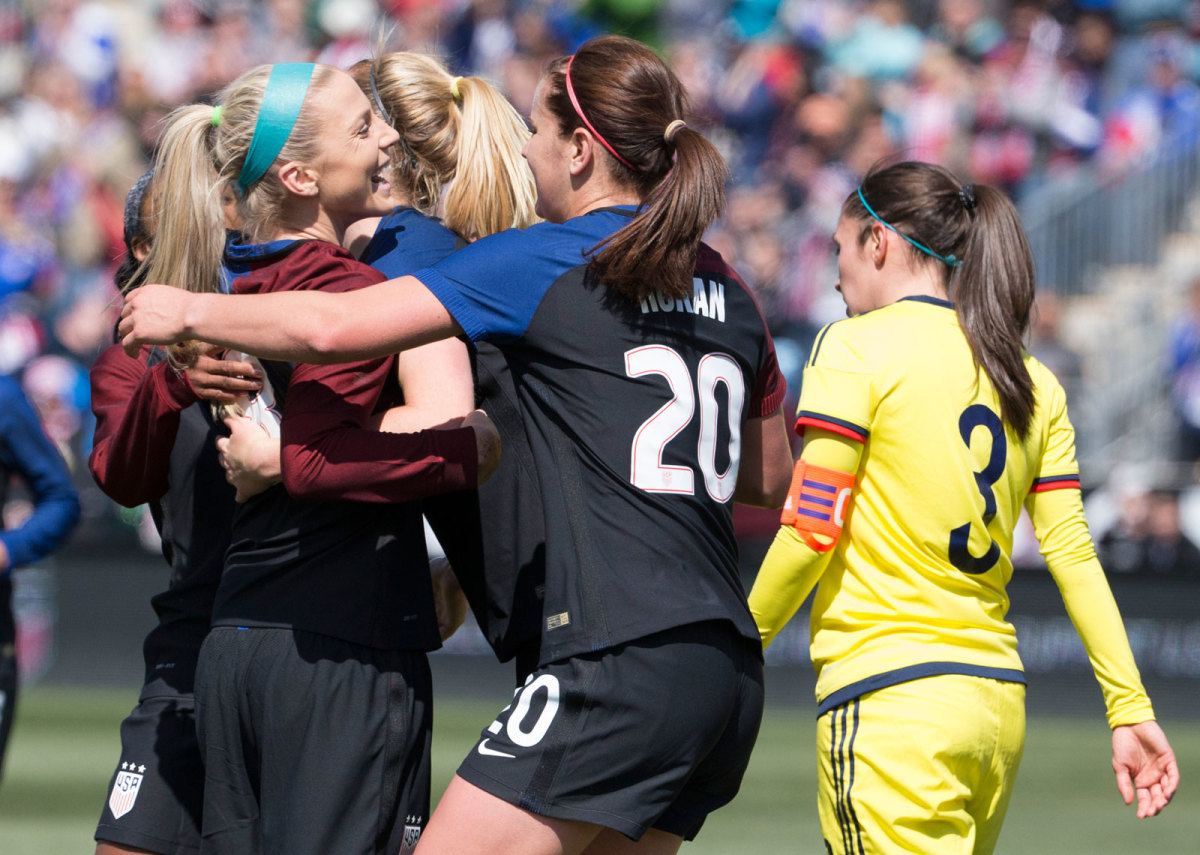
Julie Johnston, left, is mobbed after one of her two goals in a 3-0 USA win at Talen Energy Stadium in Chester, Pennsylvania.
USWNT vs. Colombia, April 6
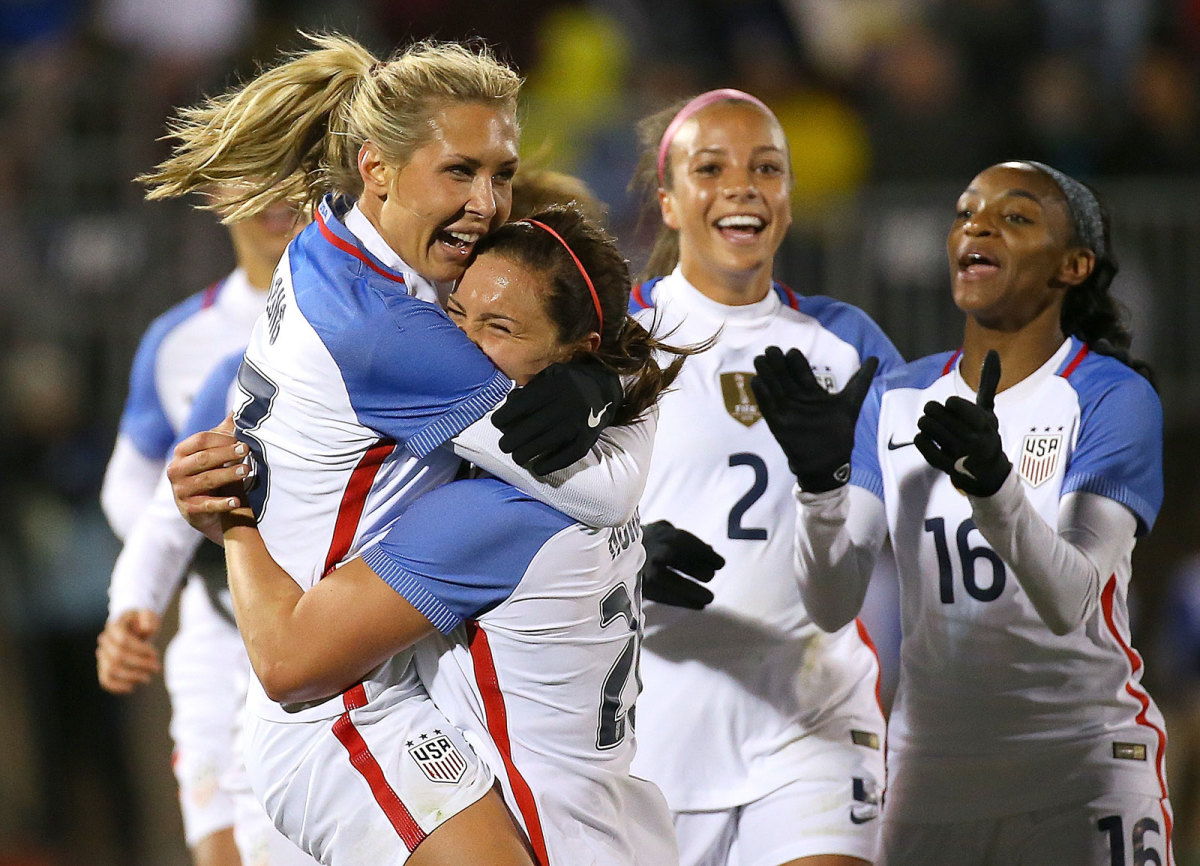
Allie Long, left scores twice, and five other players score as well in a 7-0 rout of Colombia in East Hartford, Connecticut.
USMNT vs. Guatemala, March 29
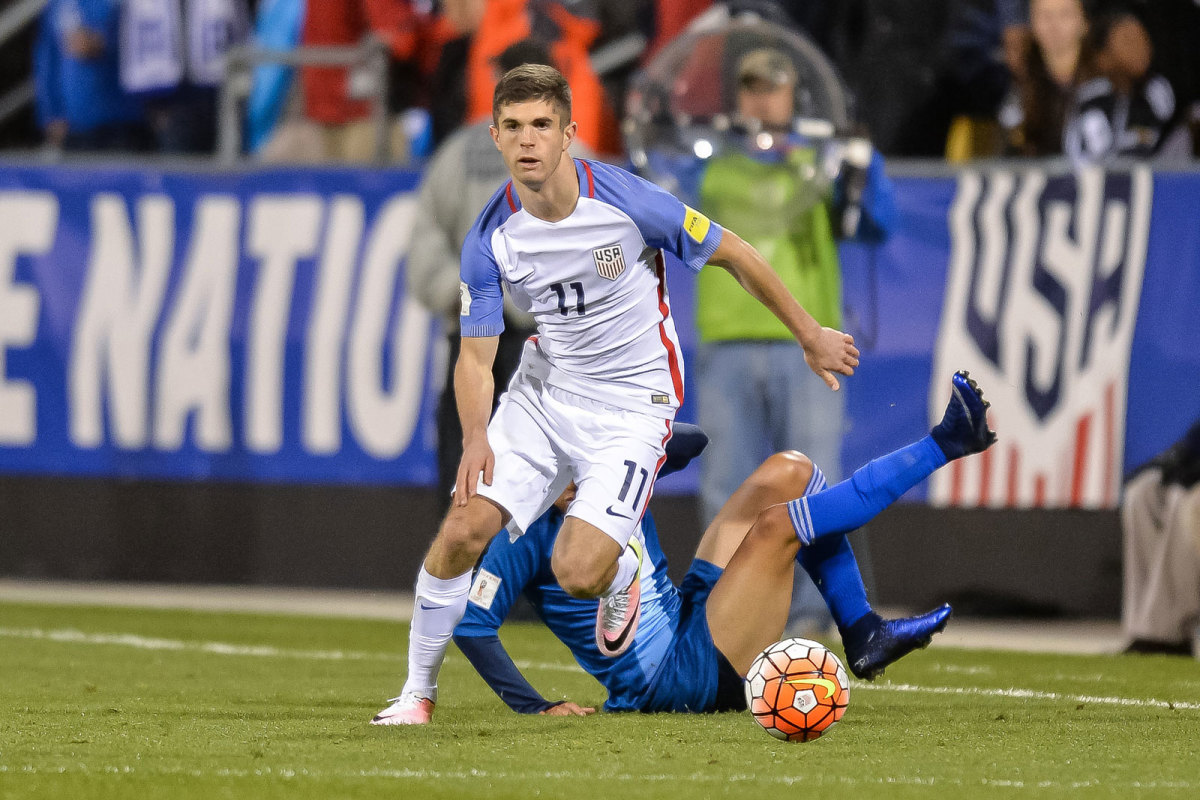
Christian Pulisic, 17, makes his U.S. debut in a World Cup qualifier in Columbus, Ohio, becoming cap-tied to the USA. He was otherwise eligible for Croatia.
USMNT vs. Guatemala, March 29
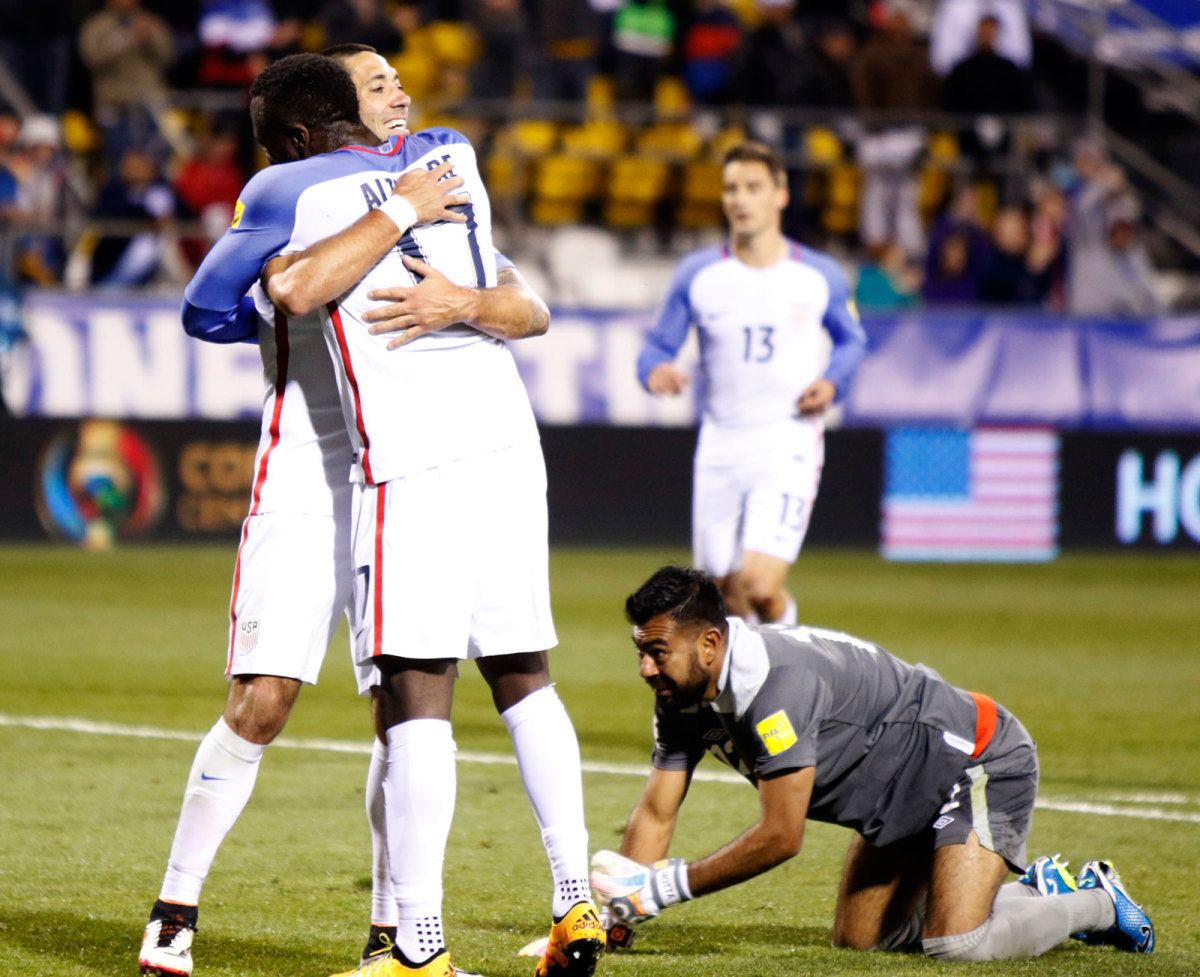
Clint Dempsey and Jozy Altidore celebrate during a thorough 4-0 World Cup qualifying win, putting the USA's campaign back on track after the setback in Guatemala.
USMNT vs. Guatemala, March 25
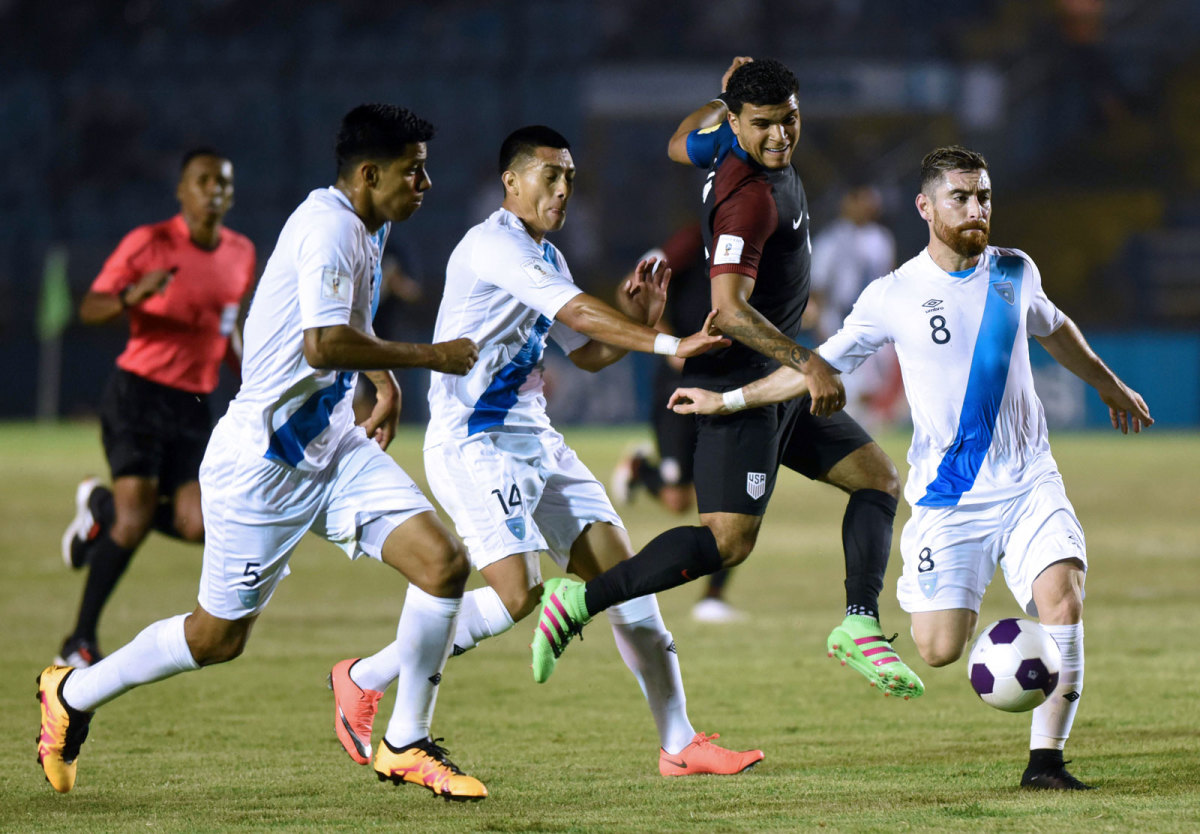
There was no way through for DeAndre Yedlin and the USA during a 2-0 loss in Guatemala in what was a stunning setback in the Americans' World Cup qualifying campaign.
USWNT vs. Germany, March 9
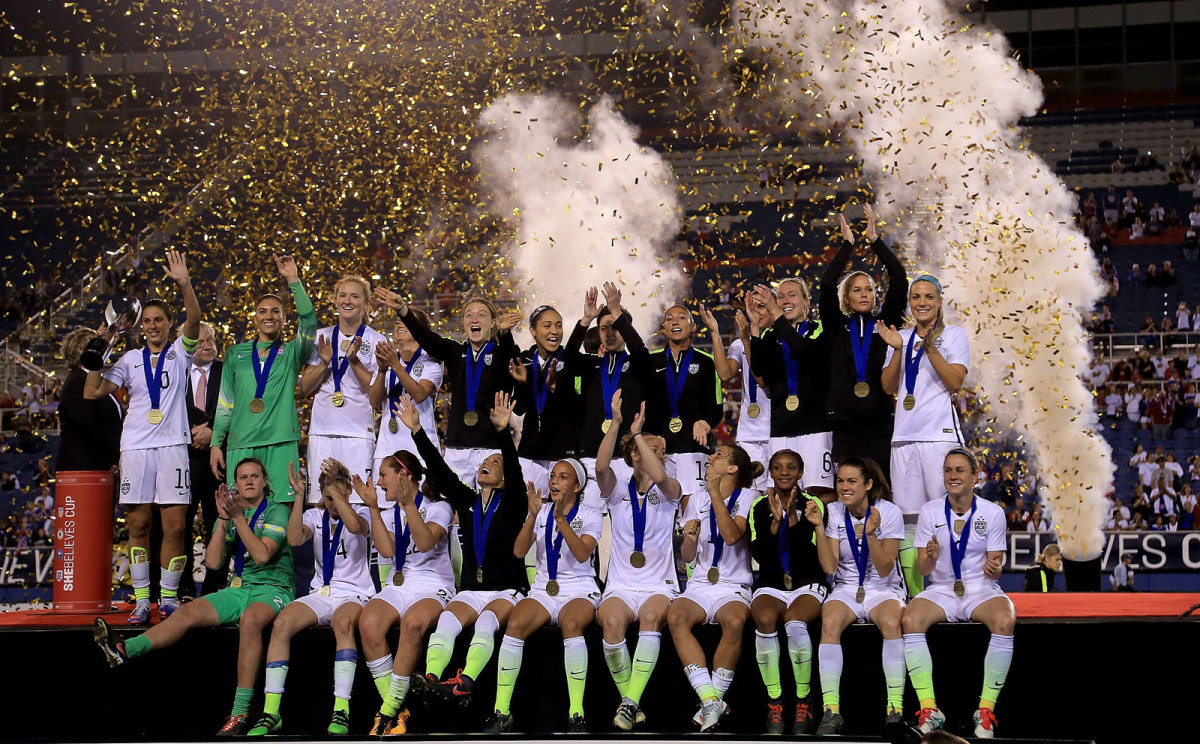
The USWNT celebrates the inaugural SheBelieves Cup title after beating European powers England, France and Germany in succession.
USWNT vs. Germany, March 9
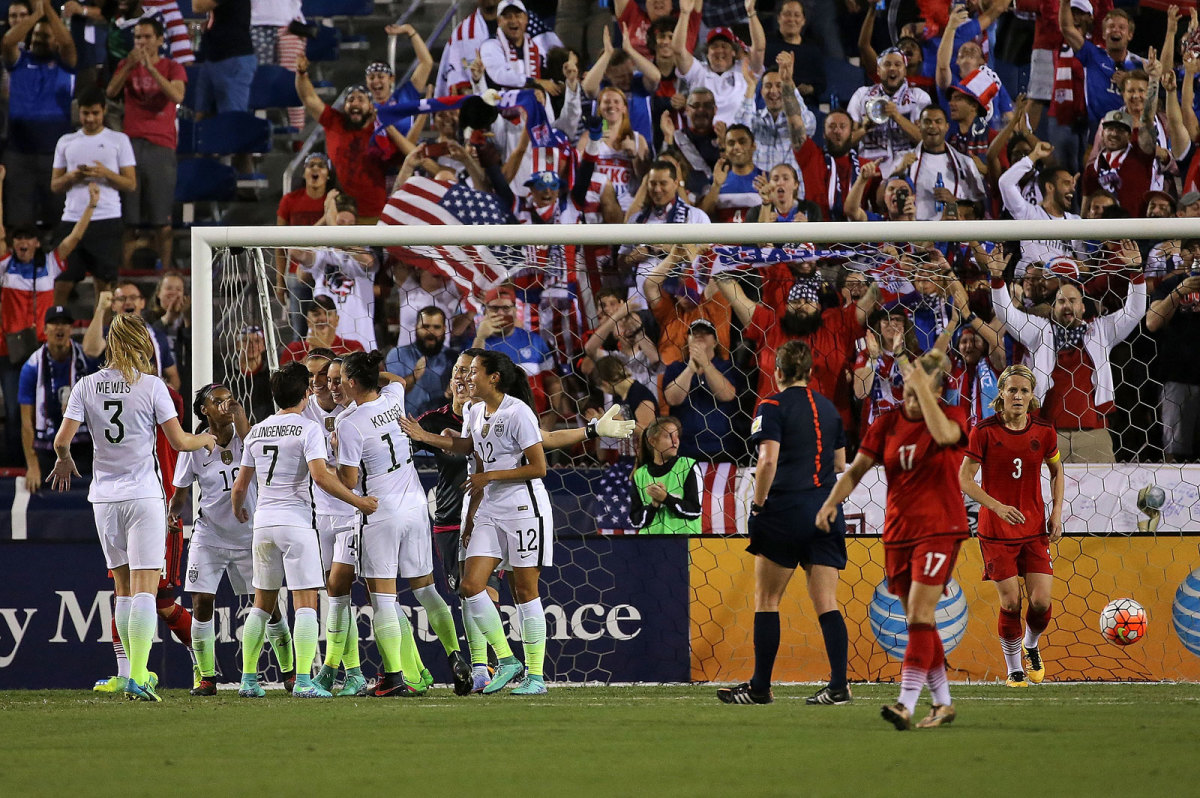
The U.S. celebrates Alex Morgan's equalizer vs. Germany in the SheBelieves Cup in Boca Raton, Florida. Samantha Mewis's winner a few minutes later cemented the Americans' overall triumph in the competition.
USWNT vs. France, March 6
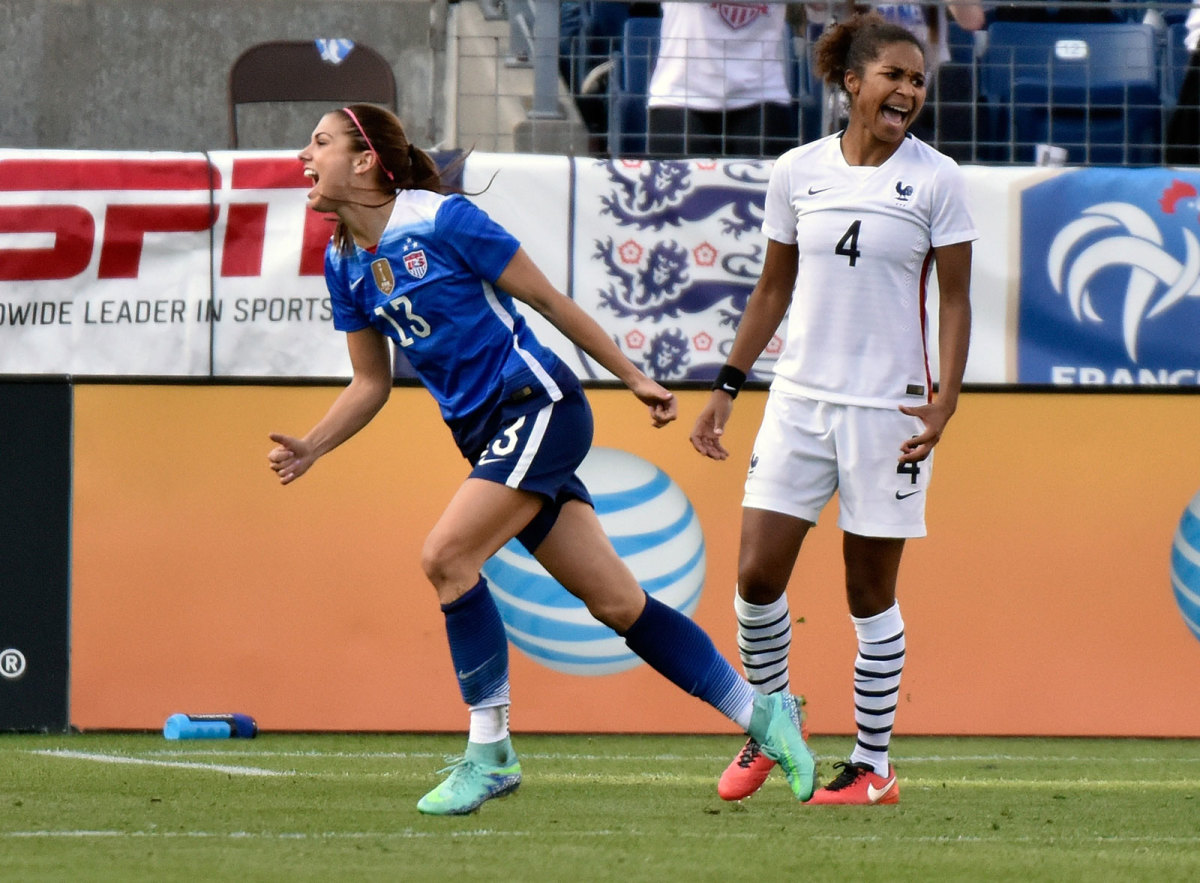
Alex Morgan scores the game-winner in a 1-0 victory over France in the second game of the SheBelieves Cup in Nashville, Tennessee.
USWNT vs. England, March 3
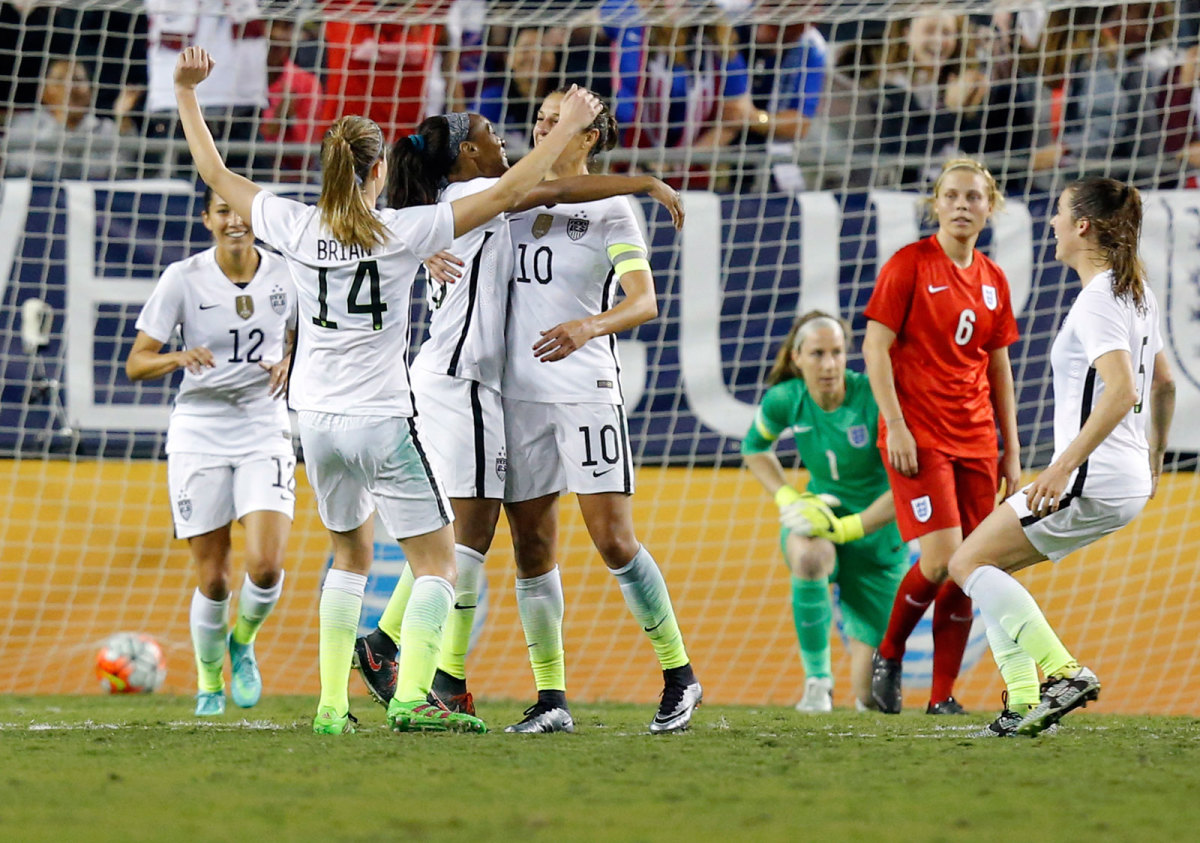
Crystal Dunn is mobbed after her game-winning goal kicks off the SheBelieves Cup in a 1-0 triumph in Tampa Bay, Florida.
USWNT vs. Canada, February 21
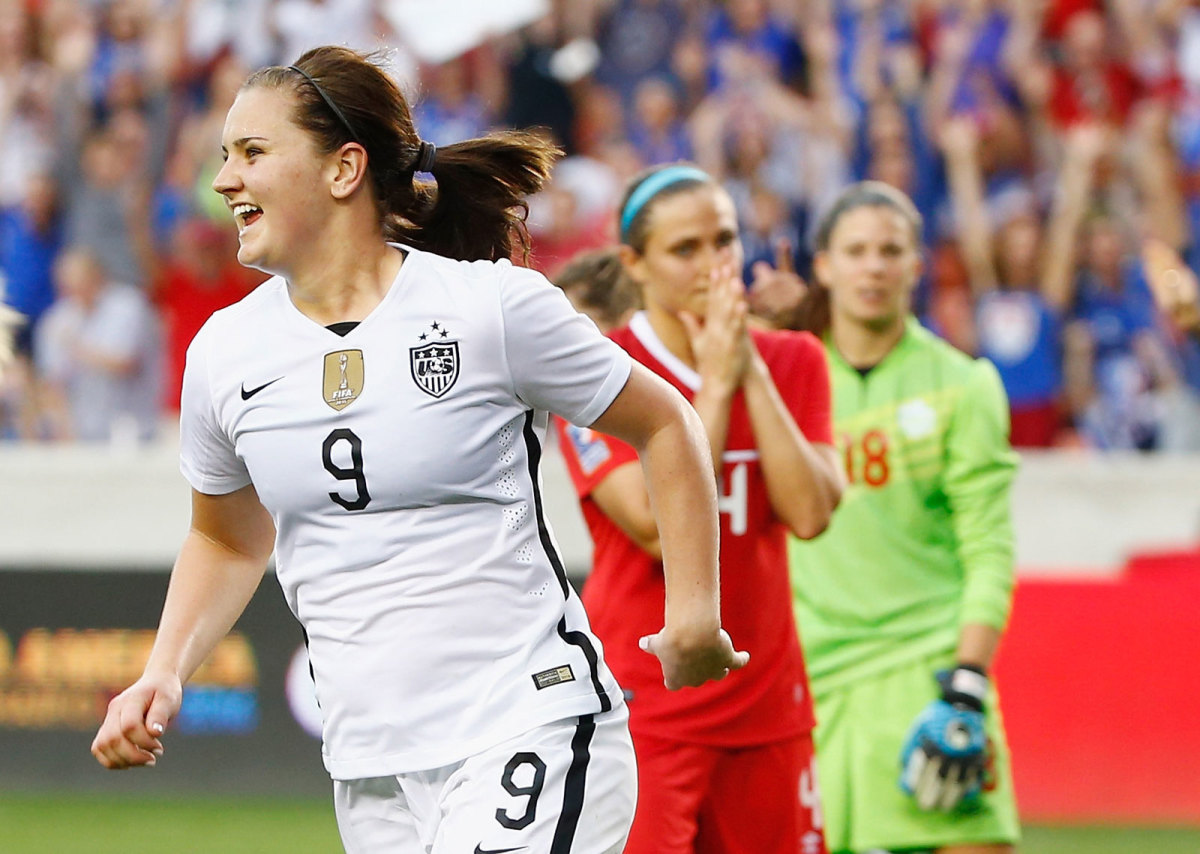
Lindsey Horan celebrates her goal that helps the USA to a 2-0 win over Canada and a first-place finish in CONCACAF Olympic qualifying.
USWNT vs. Trinidad and Tobago, February 19
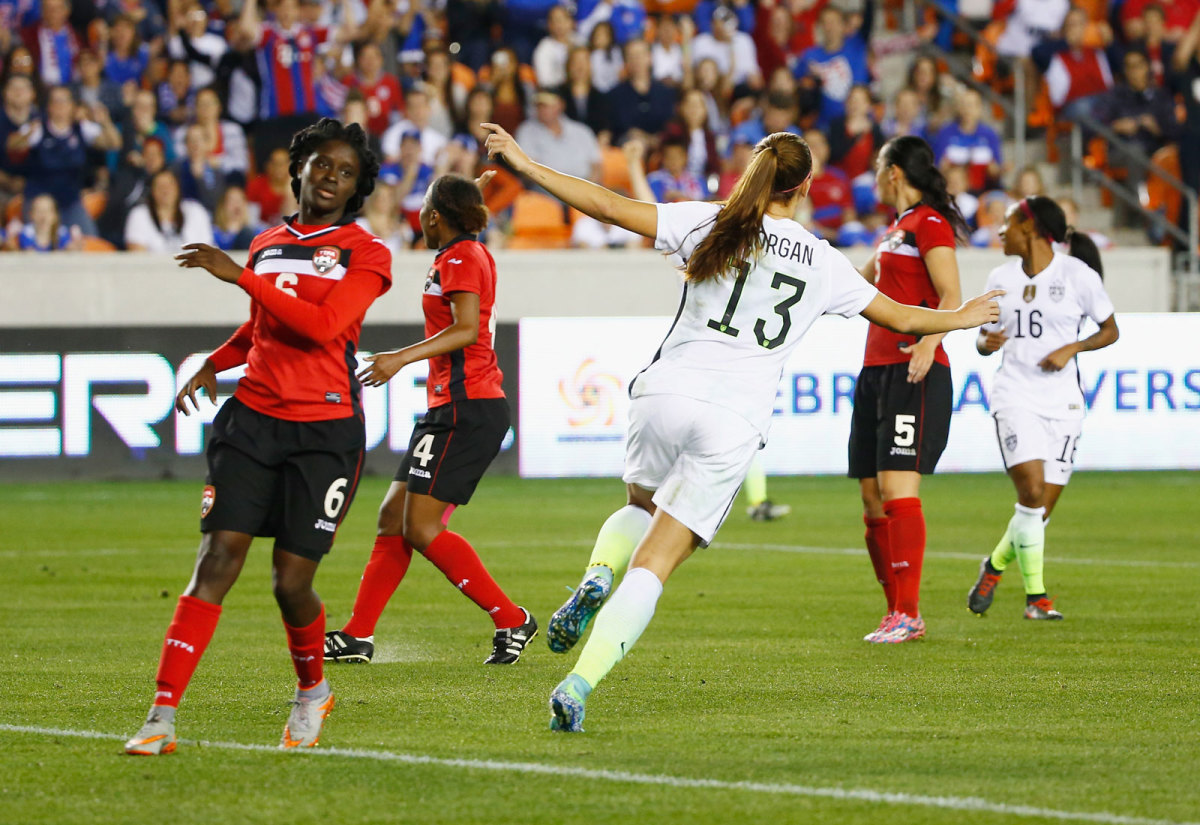
Alex Morgan celebrates one of her three goals that helped the U.S. clinch a berth in the 2016 Olympics after a 5-0 triumph in Houston.
USWNT vs. Puerto Rico, February 15
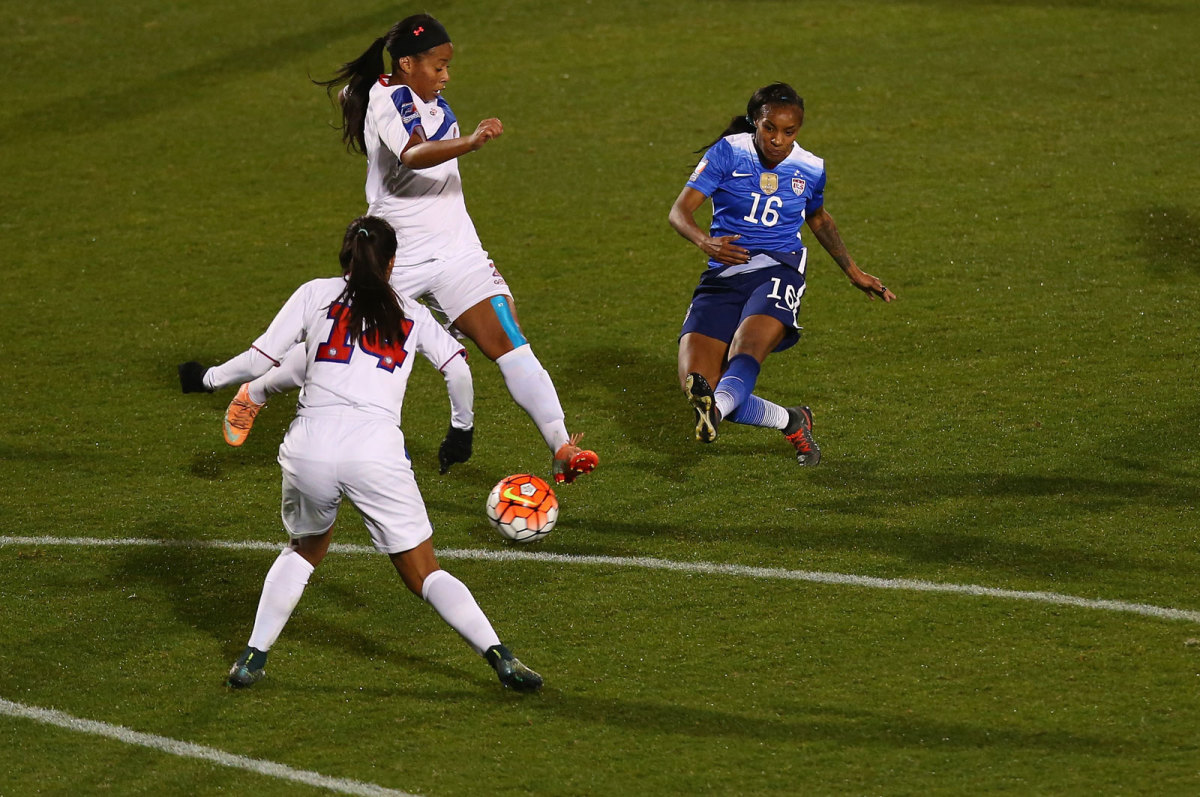
Crystal Dunn scores one of her five goals, tying a single-game U.S. record in a 10-0 rout to close group play in Olympic qualifying.
USWNT vs. Mexico, February 13
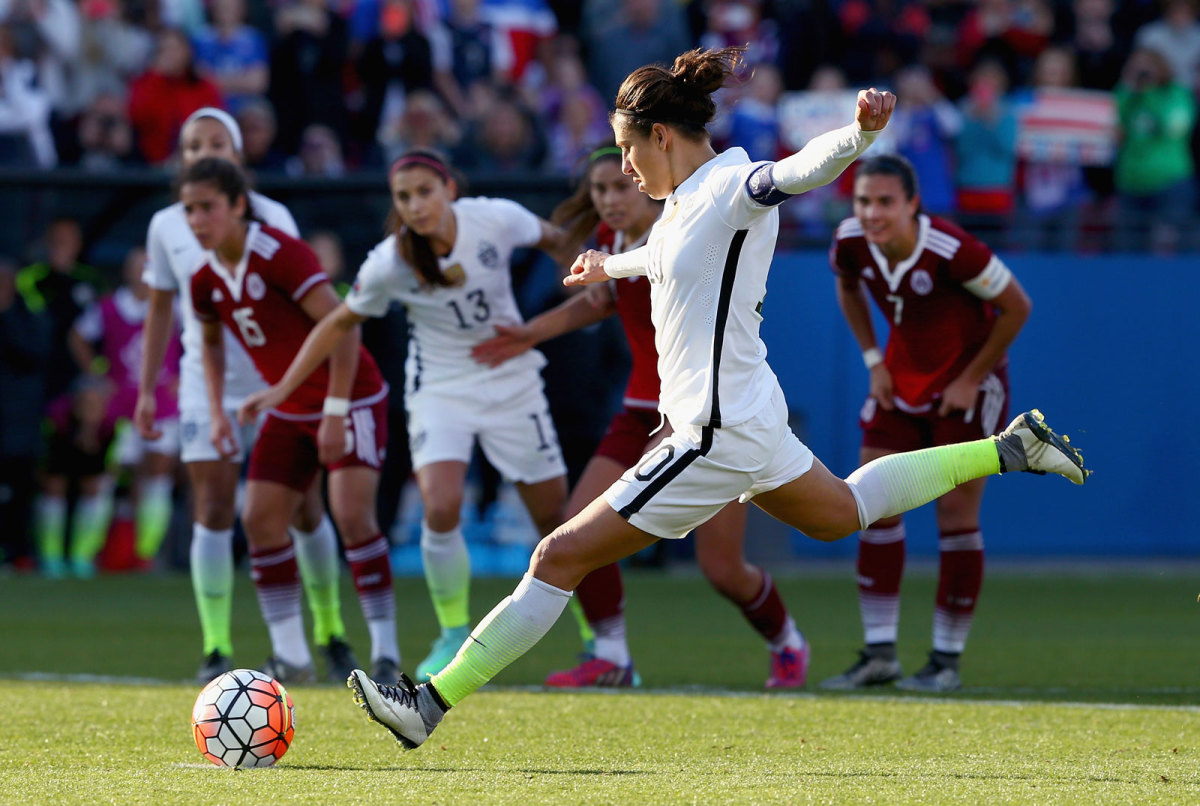
The U.S. needed a penalty kick from Carli Lloyd to beat Mexico 1-0 in the second match of CONCACAF's Olympic qualifying tournament.
USWNT vs. Costa Rica, February 10
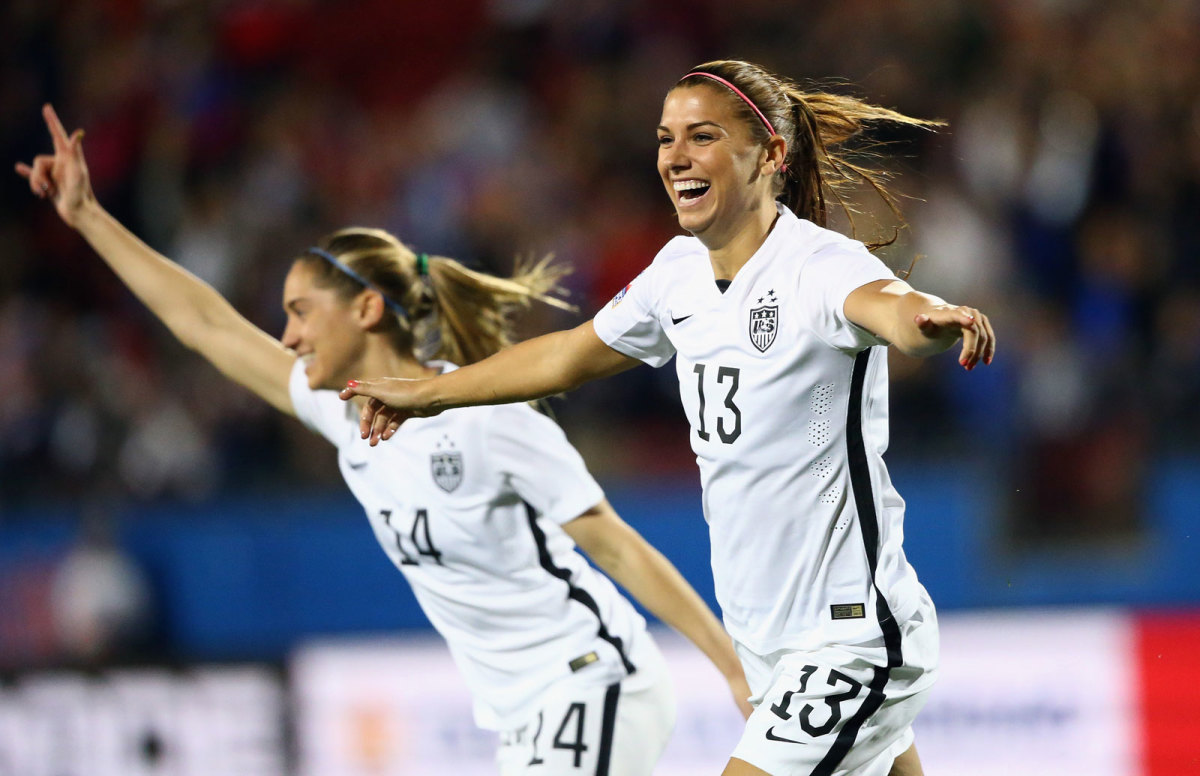
Alex Morgan scores the fastest goal in U.S. history, netting 12 seconds into the USWNT's Olympic qualifying campaign and sending the Americans on their way to a 5-0 win.
USMNT vs. Canada, February 5
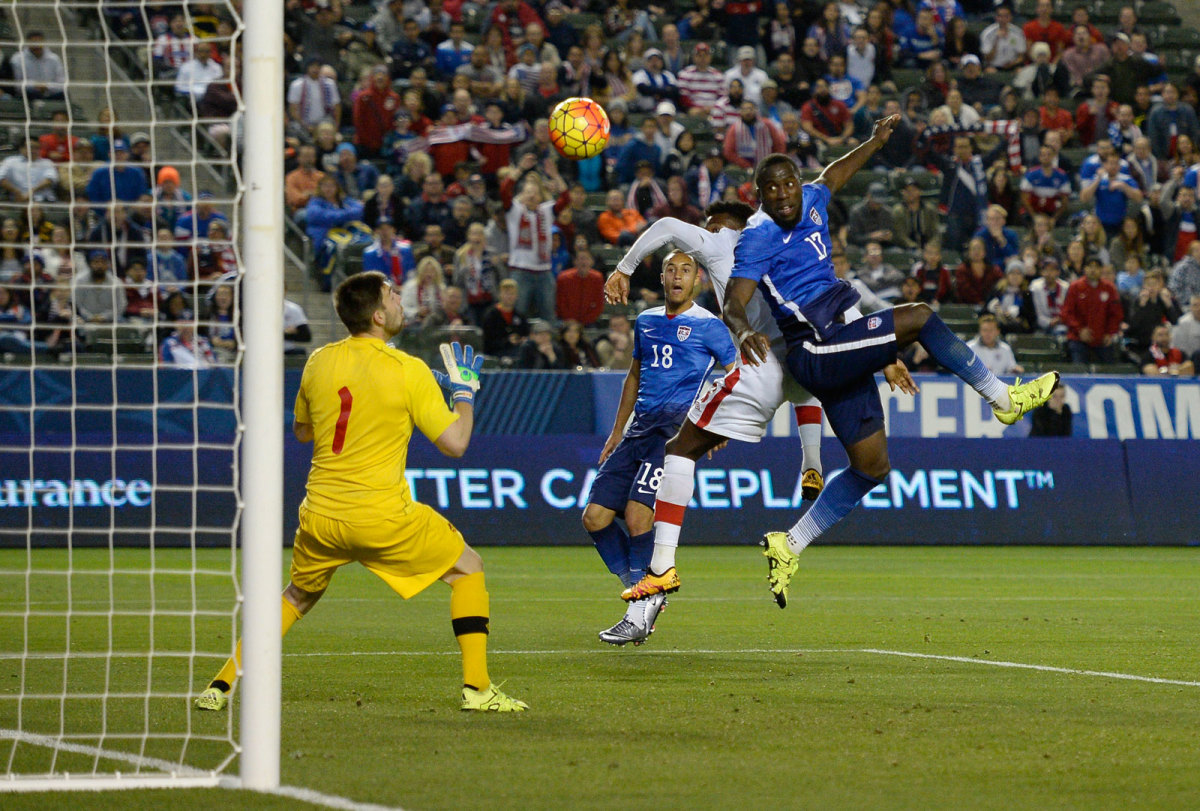
Jozy Altidore heads in the winner to secure a 1-0 win over Canada at StubHub Center to cap the annual winter training camp.
USMNT vs. Iceland, January 31
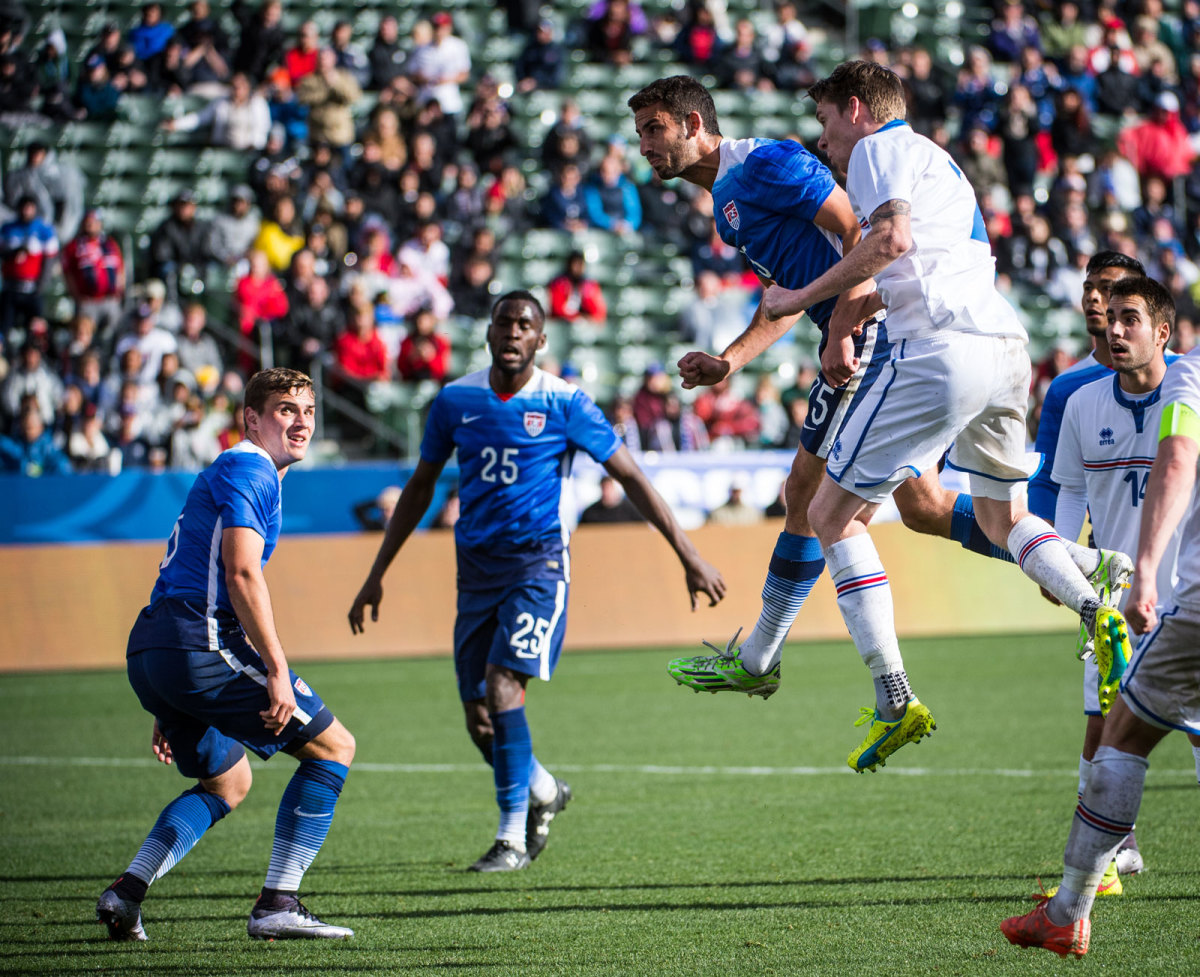
Steve Birnbaum heads in a late winner in a 3-2 victory over Iceland in the opening match of the year.
USWNT vs. Ireland, January 23
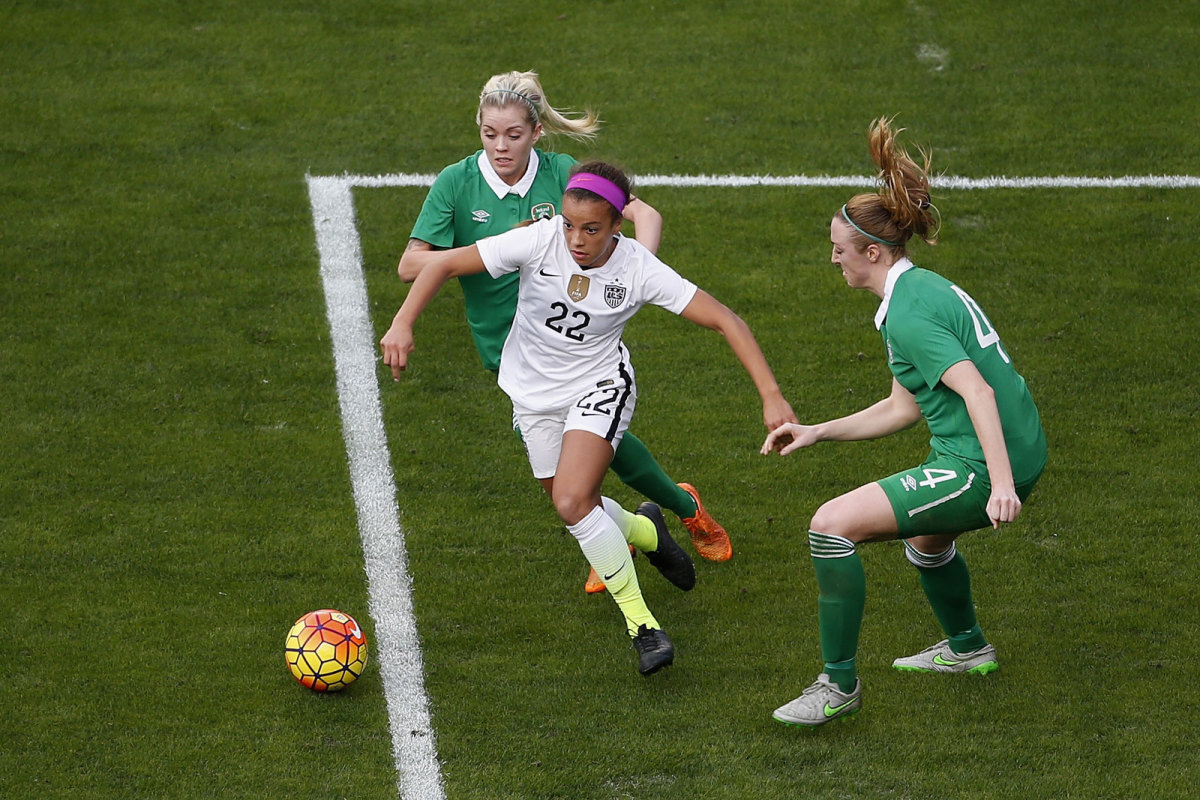
17-year-old Mallory Pugh scores on her debut, helping cap a 5-0 win for the USA to open the year. Carli Lloyd led the way with a hat trick, and Alex Morgan scored as well in San Diego.
Five years in, we know who Klinsmann is. There is no more mystery. The trajectory during the remainder of his tenure, whether it’s another two days or another two years, isn’t going to change. The U.S. will not be a top-10 team in 2018. Klinsmann is an idealist. He’s never satisfied. There can always be more. It can always be better. The impulse to try new things and push his players to do the same isn’t going to go away. His belief that players are the sole architects of their success—that context, circumstances, coaching, tactics and other external factors are distractions or excuses—isn’t going to go away. He is who he is. Recent results, the swing between confidence and chaos, the climb and then the plunge—that’s just how it’s going to be.
What we don’t know is how Gulati will respond. The president has been sending slightly mixed messages since he awarded Klinsmann a contract extension six months before the 2014 World Cup. During the Copa, Gulati said, “No one has ironclad job security.”
Before the Mexico game, he said, “We have never changed coaches in the Hex … and I expect that to be the case here.”
Following the loss in Costa Rica, he said, “When you lose two games, there’s obviously some concern. But Mexico qualified [for 2014] with 11 points. There’s a lot of points left on the board, 24 to be exact. As I’ve said the last two cycles, the sequence of games matters a lot … I’d be more concerned if we didn’t have any points and it was some of the other opponents.”
From this day forward, the fate of the national team program rests on Gulati’s shoulders and reflects Gulati’s priorities. He’s an economist and inclined to see the bigger picture. It’s about wins and losses, but also about potential replacements, contracts, budgets, media pressure, sponsors, ratings, attendance, marketing, player development, his interest in re-election in two years, etc.
The Education of Christian Pulisic: Inside the Dortmund, USA rising star's rapid growth
It’s about the massive project Klinsmann took on in 2011, his promotion to technical director two years later and Gulati’s faith that any of that is salvageable. It’s about whether he thinks it can be done at all. It's about short-term sacrifice and long-term gain. Would Gulati accept that the man he hand-picked, to whom he’s paid so much money and devoted such significant resources, is no longer right for the job? Perhaps he shares Klinsmann's idealism. Perhaps the rest of us don't have the insight to understand where this all is going to lead. Is this an image or ego issue? Like Victor Frankenstein and Captain Walton trying to maneuver through the Arctic ice, could Gulati come to a point where he’s ready to give up and turn around?
Klinsmann said in Costa Rica he still believes he’s the right guy. This past week is just one more road block on the path to the 2018 World Cup semis. Can Gulati be convinced? Does he want to be convinced? The coach’s tenure has been about pushing the envelope and testing his players’ limits. It’s up to Gulati to decide whether those limits have been reached. The president must determine whether his original vision is worth the roller coaster, not to mention the narrowing margin for error in the Hex. He must decide whether he wants to take the financial hit that firing Klinsmann would necessitate. He must consider his own legacy. He must define rock bottom.
We know what there is to know about Kinsmann. We’re about to learn a whole lot more about Gulati.
 Add us as a preferred source on Google
A lifelong soccer player, coach and fan, Brian Straus joined SI in 2013 after covering the sport for The Washington Post, AOL and Sporting News.