%20%20--%3E%0A%3Csvg%20version%3D%221.1%22%20id%3D%22Layer_1%22%20xmlns%3D%22http%3A%2F%2Fwww.w3.org%2F2000%2Fsvg%22%20xmlns%3Axlink%3D%22http%3A%2F%2Fwww.w3.org%2F1999%2Fxlink%22%20x%3D%220px%22%20y%3D%220px%22%0A%09%20width%3D%2239px%22%20height%3D%2240px%22%20viewBox%3D%220%200%2039%2040%22%20enable-background%3D%22new%200%200%2039%2040%22%20xml%3Aspace%3D%22preserve%22%3E%0A%3Cpath%20fill%3D%22%23FFFFFF%22%20d%3D%22M38.5%2C7H28.2v26h10.3V7z%22%2F%3E%0A%3Cpath%20fill-rule%3D%22evenodd%22%20clip-rule%3D%22evenodd%22%20fill%3D%22%23FFFFFF%22%20d%3D%22M26.1%2C25.5c0%2C5.8-4.1%2C7.5-12.9%2C7.5C3.9%2C33%2C0%2C31.2%2C0%2C25.2v-1.1h11.6%0A%09v2.4c0%2C0.7%2C0.1%2C1.4%2C1.2%2C1.4c1%2C0%2C1.2-0.4%2C1.2-1.3v-0.9c0-1.6-0.9-1.6-3.5-2.2C2.2%2C21.7%2C0%2C19.7%2C0%2C15.3v-0.9C0%2C9.3%2C5.5%2C7%2C12.9%2C7%0A%09c10.2%2C0%2C12.8%2C2.6%2C12.8%2C7.4v1.8h-11v-2.9c0-0.6-0.4-1.1-1.2-1.1c-0.6%2C0-1.2%2C0.4-1.2%2C1.1v0.9c0%2C1.5%2C0.9%2C2%2C3.3%2C2.5%0A%09c8%2C1.6%2C10.5%2C3.3%2C10.5%2C7.5V25.5z%22%2F%3E%0A%3C%2Fsvg%3E%0A)
Tennis Mailbag: Should Venus Williams Keep Getting Wild Cards?
As it is written, Wednesday is mailbag day.
• We’ll flood the zone next week with U.S. Open tips, predictions, previews etc.
• Here’s this week’s Served podcast with special guest Jason Hehir, director of Novak Djokovic: The Wolf in Winter, the forthcoming Novak Djokovic documentary.
• We’ll have some upcoming Served announcements soon—live shows, etc.
• As always, Colette Lewis has your Kalamazoo results.
Onward …
In the mailbag and on socials two topics have, at least in my silo, have gotten more play than Iga Świątek and Ben Shelton winning in Canada, or the Cincinnati results. The elongated Master 1000s and Venus Williams at the wild-card buffet.
• The ATP saw the majors become bigger forces—these four tentpoles on which the entire season spun—so it tried to bulk up Masters 1000s as mini-majors. The format might feature best-of-three matches, but the duration was nearly the same. And the draw size would be nearly the same, too. With all the extra inventory and sessions, surely media rights deals and sponsorship/hospitality would grow. And, in fairness, there was proof of concept: For decades, both Indian Wells and Miami have thrived as 11-ish-day events.
Why couldn’t the others emulate this? The problem(s)? First, Masters 1000s are not majors. Instead of feeling like mini-majors, they feel like bloated one-week events. Second, tennis has failed to accept this immutable law of nature: There is only so much tennis players can undertake. You can add bonuses (carrots) and fines (sticks), but it doesn’t matter. Players are not AI models or machines. They fatigue mentally and physically. They are also rational actors. If forced to pick between Canada and Cincinnati, it’s a toss-up. If they have to pick between Canada/Cincinnati and a major, they will pick the one that pays three times as much (and has the endorsement bonuses and clauses).
The extended Masters idea may get points for the creative effort, but it is an abject failure. A tweener attempt that ended up with a player hitting themselves in the groin. Players don’t merely complain; they don’t show up. So many of the sessions come laden with dead time. With finals ending midweek, the tournaments are confusing and deadly for generating attention. Fans, rightly, resent the bloat. And these events have come at the expense of smaller tournaments, which not only foreclose markets but strip players of opportunity. They add to injury (and mental burnout) by consigning players to living on the road and using tournament facilities and hotel gyms.
It’s just been awful and there’s no way to spin it otherwise. The question: Will the ATP have the courage/humility to unwind these deals?
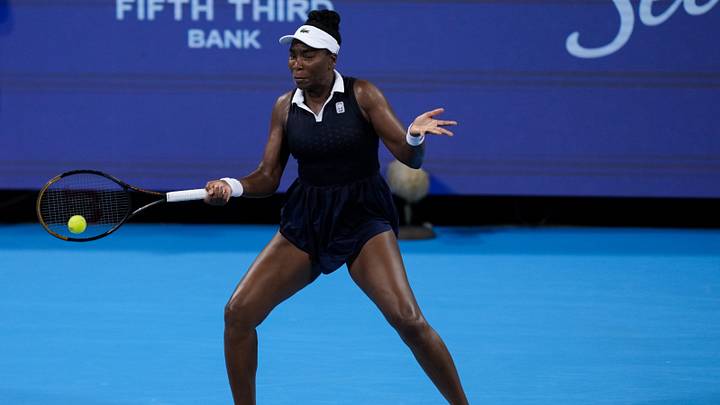
As for Venus, after a 6–2, 6–2 defeat against Colombia's Emiliana Arango in the first round of Cincinnati, she has now lost 14 consecutive singles WTA matches. Yet the wild cards keep coming. What’s going on here?
Let’s all acknowledge that there is something weird/jarring/off-brand about this whole scenario—about one of the towering champions of the sport losing more than a dozen consecutive matches, struggling to win games against the type of opponent she was demolishing in her prime.
Adding a layer of irony: When Venus was in her prime, there was open speculation that she had a diverse range of interests and that her tennis career would be short-lived. Her own father encouraged her to retire in 2002, almost a quarter century ago. Imagine it’s 2001 and saying to Richard Williams, You know those daughters you are encouraging to pivot to other careers? In 2026, at a combined age of 90, they’ll both still be playing.
Let’s also acknowledge that we are not Venus Williams. She hasn’t really explained her motivation or her thinking. It would be fascinating to have more insight here. Maybe this is a smell-the-roses victory tour. Maybe she is simply nourished by competing against players half her age. Maybe she genuinely thinks there’s an eighth major around the corner. She, of course, is not required to divulge anything, but some transparency of motive (we’d settle for translucency) would help.
Should she be awarded all these wild cards? No, on merit. No, if we are trying to kindle careers or reward players with enticing potential or with financial hardship. Yes, on history and the potential to add buzz/ticketing to an event.
Note golf and its automatic entry exemptions. Golf’s premise and underlying policy: Former champions deserve multi-year (and even lifetime) exemptions. Fans want to see champions, even if they are not realistically competitive. Champions deserve to keep playing even if they are not in their prime. If they deprive a younger or better player of a spot in the field, so be it.
Tennis wild cards are so inherently corrupt and icky. Management agencies use wild cards as inducement chits. (Note the number of non-IMG clients who get Miami wild cards.) The majors not only reserve slots for homegrown players but then trade them with other majors. Who’s gotten wild cards? The girlfriends, friends and siblings of stars. Andre Agassi, famously, would play an event on the condition that his practice partner and buddy, Sargis Sargsian, was part of the deal.
If we’ve conceded that merit has been sacrificed for commerce, it’s a little rich to tell events that seven-time major champions are suddenly barred from these golden tickets (even if they are closer to 50 than 40 and have lost 14 straight matches).
Maybe the Venus situation and the unease it engenders encourage some much-needed wild-card rules and guardrails. Limit how many wild cards a player can receive in a season. Limit the number of consecutive losses recipients can take. Make sure the management agencies running events distribute wild cards to non-clients. Reduce the allotment. Whatever. If the Venus situation calls attention to this necessary evil, tennis should use the occasion to improve and firm up the policy.

Q&A
Jannik Sinner didn’t play Canada or Cincinnati. Carlos Alcaraz is out. Novak Djokovic is on his way out the door. Women’s tennis is a jump ball. Yet, U.S. Open tickets keep increasing in $$$. How do they justify this? Tennis is noticeably not as good as it was. We were spoiled with the Big 3 + Serena Williams for so long. We’ll never see that again.
Dominic Ciafardini, Westchester, NY
• We will never see The Big Three plus Serena Williams again. That being the irreplicable reality, here’s what you do: Brand your tournament as a sports Coachella, a festival as much as a competition, with bells, whistles, influencers, a signature drink, a three-week spread, early mixed doubles, corporate hospitality and new club seating. The hard-core tennis fans might lament the star wattage. The majority of the crowd comes for the event itself, a day in the sun at a fashionable party. On a related note …
Huh? Whut? Is it the men’s hard court season? I must’ve dozed off. Seriously, is it just me or is men’s tennis SUPER boring right now? The two best guys are constantly injured/ skipping the 1000s, the third best guy is 100000 years old, the fourth best guy is [shudders] Alexander Zverev. That Canada Open had to be the most boring tournament I’ve watched since the 7th grade Mathlympics. You said men’s tennis would be fine when Fed and Rafa retired. Any chance you’d reconsider that statement or is this just some weird blip?
P.
• There are so many negative questions this week. Truth serum: This has not been a banner summer for tennis. The Sinner-Alcaraz rivalry masked the breakup of the Big Three, but without the Sinner-Alcaraz rivalry, there’s been a stock dip, no doubt. Women’s tennis is great, but there hasn’t been a 2026 rivalry or an obvious storyline either. And the rash of injuries has sidelined so many potential stars.
There have been B-side stories galore, including Alexandra Eala mania, the awesome Czech women, Djokovic watch, the return of Ben Shelton and Iga Świątek and of course, Serena’s comeback. But if you’re giving us truth serum, yes, this has not been tennis’s most gripping summer. Maybe that all changes at the U.S. Open.
Hello Jon, During this summer’s hard court swing, has there been any grumbling about how the top WTA players are showing up and playing while the top men are absent?
Cheers, Ken Wells, Newport, RI
• This is why the mixed events are the way to go and the equal prize money debate must be buried. Sometimes the men carry the day; other times, the men stay away (and lose early), and it’s the women who provide a Świątek–Elena Rybakina final (eight majors between them), while the men serve up Shelton–Brandon Nakashima (zero).
Jon, Hope all is well. Interesting insight on Steffi Graf and her lack of visibility hurting legacy and retiring at 30 (implying a lack of longevity).
The same can be said for players like Borg, Edberg, Pete (probably the most unfairly treated in terms of his greatness) because the media forgets players not trying to stay relevant.
The entire sports media today acts like nothing occurred before the year 2000. Case in point most athletes retired by age 30, yet you make the point to hold it against Graf, I expect you feel the same with Sampras. Stefi turned pro at 13 years old.
I recently heard a loud overexposed and paid mouthpiece claim Serena should be considered on the Mt Rushmore of Sports All Time, which is just the most absurd comment ever made. She’s not even in the top five greatest tennis players. Never won a calendar GS.
After 30, the players Serena beat: Radwańska, Azarenka, Sharapova, Wozniacki, Šafářová, Muguruza, Kerber and Venus. Maybe Venus is in the top 10 all time? (Granted sometimes the real final is in the quarters or semis but you get my point.)
All the best, George
• True, if Pete Sampras had decided to broadcast, coach, or direct a tournament (or resist becoming an outright Graf-level cipher—and do know this is not said critically), it would not give him additional majors. But I suspect it would change the way fans (casual ones, anyway) perceive his career.
True, I’ve written before that if players (starting with Chris Evert and Martina Navratilova knew that major titles would be the career benchmark, they would have schlepped to Australia and played Roland Garros rather than World Team Tennis. To mix sports metaphors, the goalposts moved in a big way. But, yes, longevity is worth reconsidering here, too. A generation ago, you wrapped things up when you turned 30. Now, you have players (Serena, Djokovic) who are as elevated post-30 as they were pre-30.
True—though I am not sure how relevant this is—that “turned pro” is often a misleading metric. How old was Player X when they played a full schedule?
I hope I am neither loud nor overexposed. But Serena, unquestionably, belongs on Mount Rushmore, much as we have grown to despise that cliché. Consider her longevity, titles, elevation of the quality of the sport, her doubles success, etc. (Aside: I am going to name-drop and say that Charles Barkley once told me what he admired about LeBron James: “What’s the worst thing you can say about him?” His point was that he has had no big scandals. What’s the worst thing you can say? His decision—more than 15 years ago—was tacky? He should have weighed in on China bullying Taiwan?) Likewise, what is the worst thing you can say about Serena? She can play peek-a-boo with the truth? She doesn’t always lose graciously? After more than a quarter century in the public eye, that’s a spotless record.
True, she didn’t take down the biggest names in finals post-30, yet you can only beat the player on the other side of the net.
Jon, What is the future of the one-handed backhand? Is there a future? I saw Lilli Tagger win a title and everyone went crazy. Maybe there is hope!
Steven A.
I wrote the other day that the one-hander is like the knuckleball. It looks cool and appeals to our sense of aesthetics. It’s different, fun and even subversive. And, sadly, it’s just not pragmatic given the current state of play. Blame rackets, strings and technology that enable players to do things to a ball that disadvantage the one-hander.
Here’s one (goofily) optimistic thought: Maybe this is cyclical, and the one-handed backhand becomes such a novelty that there is an advantage in its rarity. You can’t find a practice partner to mimic the stroke. Players can’t read this curious shot. It becomes this differentiator, its own southpaw stance. Writing this paragraph, I concede that this is magical, wishful thinking, not something grounded in likelihood.
Shots
• The women’s team representing Team USA at the World Tennis Masters 40 & 45 World Team Championships finished runner-up to Italy in a hard-fought final.
• The USTA and U.S. Davis Cup Captain Bob Bryan announced that Ben Shelton, Taylor Fritz, Tommy Paul and Christian Harrison have been named to compete for the U.S. in its Davis Cup qualifying second round tie vs. Czechia.
• From the USTA: “Moments after Thea Frodin captured the USTA Billie Jean King Girls’ 18s National Championships in singles, beating Janae Preston, 6–1, 6–0, on Sunday at the Barnes Tennis Center, she was asked the question every winner gets each year: “Now that you’re headed to New York with a main draw U.S. Open singles wild card, would you rather face a high seed on Arthur Ashe Stadium? Or a qualifier on a back court in the first round?” Frodin, from Woodland Hills in Southern California, took a few seconds to think about it, before answering: “I’m going with seeded player on Arthur Ashe. I want it all. Bring it on!”
 Add us as a preferred source on Google
Jon Wertheim is a senior writer for Sports Illustrated and has been part of the full-time SI writing staff since 1997, largely focusing on the tennis beat, sports business and social issues, and enterprise journalism. In addition to his work at SI, he is a correspondent for “60 Minutes” and a commentator for The Tennis Channel. He has authored 11 books and has been honored with two Emmys, numerous writing and investigative journalism awards, and the Eugene Scott Award from the International Tennis Hall of Fame. Wertheim is a longtime member of the New York Bar Association (retired), the International Tennis Writers Association and the Writers Guild of America. He has a bachelor’s in history from Yale University and received a law degree from the University of Pennsylvania. He resides in New York City and Paris with his wife, who is a divorce mediator and adjunct law professor. They have two children.