%20%20--%3E%0A%3Csvg%20version%3D%221.1%22%20id%3D%22Layer_1%22%20xmlns%3D%22http%3A%2F%2Fwww.w3.org%2F2000%2Fsvg%22%20xmlns%3Axlink%3D%22http%3A%2F%2Fwww.w3.org%2F1999%2Fxlink%22%20x%3D%220px%22%20y%3D%220px%22%0A%09%20width%3D%2239px%22%20height%3D%2240px%22%20viewBox%3D%220%200%2039%2040%22%20enable-background%3D%22new%200%200%2039%2040%22%20xml%3Aspace%3D%22preserve%22%3E%0A%3Cpath%20fill%3D%22%23FFFFFF%22%20d%3D%22M38.5%2C7H28.2v26h10.3V7z%22%2F%3E%0A%3Cpath%20fill-rule%3D%22evenodd%22%20clip-rule%3D%22evenodd%22%20fill%3D%22%23FFFFFF%22%20d%3D%22M26.1%2C25.5c0%2C5.8-4.1%2C7.5-12.9%2C7.5C3.9%2C33%2C0%2C31.2%2C0%2C25.2v-1.1h11.6%0A%09v2.4c0%2C0.7%2C0.1%2C1.4%2C1.2%2C1.4c1%2C0%2C1.2-0.4%2C1.2-1.3v-0.9c0-1.6-0.9-1.6-3.5-2.2C2.2%2C21.7%2C0%2C19.7%2C0%2C15.3v-0.9C0%2C9.3%2C5.5%2C7%2C12.9%2C7%0A%09c10.2%2C0%2C12.8%2C2.6%2C12.8%2C7.4v1.8h-11v-2.9c0-0.6-0.4-1.1-1.2-1.1c-0.6%2C0-1.2%2C0.4-1.2%2C1.1v0.9c0%2C1.5%2C0.9%2C2%2C3.3%2C2.5%0A%09c8%2C1.6%2C10.5%2C3.3%2C10.5%2C7.5V25.5z%22%2F%3E%0A%3C%2Fsvg%3E%0A)

00:22:59 |
Up Next
Mass Starts As We Near the Finish
10 hours ago
It's Time for the Warriors To Have a Steph Curry Conversation
Jan 28, 2026
Farmers Insurance Open Betting Preview
Jan 27, 2026
Amon Ra St. Brown: Trusts the Lions' Offseason Moves
Feb 6, 2026
Albert Breer on Seahawks Smothering Patriots in Super Bowl LX
Feb 9, 2026
Mass Starts As We Near the Finish
10 hours ago
It's Time for the Warriors To Have a Steph Curry Conversation
Jan 28, 2026
Farmers Insurance Open Betting Preview
Jan 27, 2026
Amon Ra St. Brown: Trusts the Lions' Offseason Moves
Feb 6, 2026
Albert Breer on Seahawks Smothering Patriots in Super Bowl LX
Feb 9, 2026
Tiger Woods Masters Status Unclear as he Hosts the Genesis Invitational
Feb 17, 2026
How Awful Announcing Took Over Sport Media Coverage
Feb 19, 2026
Alexander Volkanovski Wants Jason Statham to Play Him in His Biopic
Jan 30, 2026
Daniel Cormier Says Conor McGregor Needs to Fight on the UFC White House Card
Feb 6, 2026
Michael Vick: Being a Coach
Feb 6, 2026
Mixed Day for Team USA, Plus a Big Confession
Feb 11, 2026
Jordan Stolz and Chloe Kim Arrive
Feb 13, 2026
Transcript
Hello and welcome to SI's Daily Rings.
I'm Dan Gartland Hero Mitch Goldish.
Mitch, I, I, I don't know how I'm gonna get through this one.
I'm still buzzing after that US gold medal win.
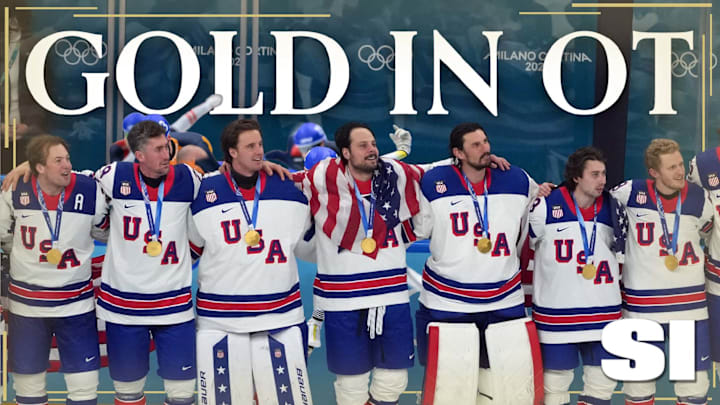
Yes, 116 Olympic medals now officially decided , ending, of course, with overtime in the men's hockey game.
I assume we're gonna start with, what do you want to do, bobsled first, curling first, halfpipe?
Where do you want to take the, uh, the start of our final daily recap show?
Mitch, I could talk about this game for like 90 minutes, I swear it was, it was unbelievable.
Um, I, I just, before we get into it, we should also, we should tell people, yeah, I think we're gonna talk mostly about hockey today.
We should tell people what else we have coming up, um, for anyone, uh, tuning.
So, so first off, yes, we're recapping day 16, uh, not our final show though.
Come back tomorrow, we are gonna have one more episode where we recap all of the Olympics, talk about every sport, some of our favorite moments, and stories we missed.
And then, uh, the other thing I want to say is stay tuned for the end.
We're gonna have an interview with Charlotte Carroll of the Athletic, who is going to be covering the Paralympics in person in Italy.
And so, uh, it was very fun to have her on and talk a little bit about the Paralympics , um, which we will not be covering on this feed, uh, but we wanted to just put something out there for people who are interested and want to learn a little bit more.
Uh, so I wanted to say that off the top and now, sorry to get in your way.
It feels like you were about to launch right into your, uh, gold medal analysis, so why don't you take us there on, on the game that just ended, uh, a few minutes ago.
Yeah, I mean, Mitch, I, I could have, I was ready to turn on the microphone like the second the puck hit the back of the net, like I just, I mean, I, you know, we waited a little bit to kind of gather ourselves, but I was just like.
I mean, just in awe of that game, and I, I'm glad I didn't turn, you know, turn the microphone on right away because then I got to watch the medal ceremony, which is fantastic.
I saw an interview with Jack Hughes, the hero, so the, the, the quickest of quick recaps here.
US beats Canada 2 to 1 in overtime, just like in the men's game, just like in the women's game, um, thrilling game.
Canada, frankly, the much better team throughout the game, particularly the 2nd and 3rd period.
Connor Hellebuck, the American goalie, outstanding, unbelievable.
I said earlier on the show that he was the best goalie in the world.
Glad I was validated there.
He's unbelievable.
Too bad he plays in Winnipeg where nobody gets to see him.
Um, you know, it was, it was an incredible game, an incredible result.
Um, the hero being Jack Hughes, whose brother Quinn scored the overtime goal against Sweden in the quarterfinals.
Jack Hughes, who, by the way, took a, he was the recipient of a, a double minor for a high stick, got a bunch of his teeth knocked out in the 3rd period, comes back mere moments later to score that winning goal in overtime.
I, like, Mitch, I could just, I could do a monologue here for, like I said, just the whole show, but I'll, uh, I'll let you cut in.
Yeah, I took a dig at at Winnipeg.
I feel like our Canadian listeners have been through enough.
That was frankly uncalled for, but Canadians don't like Winnipeg either.
OK.
I, I guess, see, I don't follow the NHL closely enough to know, uh, some of these, uh, the inner workings of, of how people feel about all these teams.
Um, but yeah, so you, you said like Canada was a better team .
It really felt like they were gonna win this game for a while.
So the US got out to the early lead.
Um, I will shout out Matt Boldy, who I had definitely heard of before, uh, today, um, who had a great goal.
Um, early in the game, he's, he was sort of, um, like streaking into the, uh, to the zone with like one defender there, and they, they did a good job showing it.
He like popped the puck into the air and then like wrestled back control of it and sort of backhanded in past the goalie.
I believe that was also the US's first shot of the game.
So that was, um, it was, uh, and then, um, the other, and then, well, so then Canada ties it up, um.
Uh, but then there were a couple of big moments.
There was like the double minor, uh, that was like, uh, that resulted in a 4 minute power play.
And so that's the, and that was actually after Canada had sort of been outplaying the US for like most of the 2nd and 3rd periods, I'd say.
Um, they had, uh, there were like a few moments, you talked.
Hellebuck, there was like a Connor McDavid breakaway, where he sort of like didn't actually get off a great shot.
He almost like skated straight into Hellebuck and we got the block.
There was that one amazing uh stick save that he had, that was just like, that will probably go down as, I mean, everyone's gonna talk about the game winning goal cause we always do, but like that was just such an unbelievable play.
Um, but yeah, Canada, when they scored to tie it up, uh, I, I jotted down that the shots on goal at that time were 25-15 , and, uh, it kind of just felt like it was a matter of time.
I will also say the, uh, broadcast did a great job breaking down that goal, showing, um.
Talking about how like face-offs are a team stat and showing how the one guy, uh, the one Canadian sort of cut off a player to create the space to get the pass off to, to score the goal.
So that was cool.
But then you're watching this and it's like, OK, it's potentially a matter of time, and the US is actually on a power play when there was, um, like a delayed penalty and Canada is just like skated around with the puck to kill as much time, so that they would have the extra attacker for as much.
Time as possible, um, sends it into overtime, and then that intermission is just like you can feel the goosebumps and the nerves building.
It, it felt like so many of these events that are just like huge at these Olympics, um, like, you know, whether it's the figure skating or, um, you know, pick your favorite, but you're just thinking about that and it's like, OK, sudden death, enormous stakes for both teams.
One of these teams is gonna win a gold medal against their rival, whoever.
scores this goal is just gonna be like an all-time legend.
They're still talking about Sidney Crosby's goal in 2010, and part of that is because he is Sidney Crosby and look at the career he's had since then.
So that's the reason, uh, people keep bringing it up.
But, but this is just one of those, you know, they kept, they showed, I saw Mike Ruzioni's goal from 1980, like five times on TV today over the course of the pregame and during the game itself.
And so, you just know, like whoever has this.
Whoever scores is just gonna have this moment for the rest of their life, and, uh, and, you know, I don't, I didn't know going in if 3 on 3 sort of like favors the underdog or if it sort of just depends on the style of play and, and, you know, the skill of your top line players who are going to be out there, but, uh, I was definitely a little nervous that they weren't going to pull it out and then, uh, and then there we go, Team USA wins the gold for the 3rd time in their Olympic history for the men's team.
Yeah , you mentioned that that power play.
So I mean, the, the, the failure of either team to come through on the power play was a big story in this game.
Canada had a 5 on 3 earlier in the game, at which point it seemed like the US just toast.
Canada had already kind of seized control of the game here, and then, you know, US takes 1 penalty, takes a 2nd penalty less than 30 seconds.
So Canada has a quite extended 5 on 3, something you don't see very often.
I think it was like 1 minute and 35, uh, managed to kill that off.
And then like you said, there was a double minor, right?
It was the penalty.
I forget who, who was the penalized player for Canada.
But like I said, the recipient was was Jack Hughes who had his teeth knocked out.
The reason for any non-hockey fans out there.
Uh, a minor penalty is 2 minutes, and so high staking is a minor penalty, but there's this weird quirk in hockey where if, if the, uh, the victim of the penalty draws blood, then there's a double minor, uh, 22 minute penalties stacked on top of each other.
Uh, you get 4 minutes.
If you score during the 1st 2 minutes, uh, the penalty, the power play gets knocked down to just 2 minutes instead of the whole thing being wiped out.
So.
Yeah, double minor, uh, for the hit on Hughes, and then, uh, like you said, then the US draws a silly tripping penalty near the end of the, the second half of the double minor, and then, uh, yeah, as you explained that Canada's able to kind of, uh, with the net empty, kind of control the puck, the US kind of sitting back, kind of, um, you know, cautiously, uh, lets a lot of time, drip off that penalty, uh, reduces, you know, the, the advantage, the, the time that then was, uh, 4 on 4.
And then at this point, you're thinking, wow, they're really blowing this, you know, not only did they blow the, the opportunity on the power play there, but now that Canada's gonna have its own power play on the other side of this, um, and longer than it should have been if they had been aggressively trying to, you know, gain control of the puck to, to blow the whistle there, really tough, and then, yeah, it, it.
It, it, it took up a lot at the end of that game.
This double minor occurred with like 6, 6.5 minutes left in the game and a 4 minute penalty, so you can do the math there.
Like, it was, um, it seemed to be, you know, I think after the US failed to, to capitalize there, it really did not seem good.
And then, of course, you know, it didn't matter.
Jack Hughes comes through, uh, in the overtime.
Yeah, um, just talking about Canada and sort of that, uh, strategy of staying ground and, and killing the penalty.
I thought the overtime strategy was interesting too, um, cause we've talked, uh, throughout these Olympics about how it's 3 on 3 overtime, followed by penalty shootouts.
Well, for the, they have, they have different rules depending on what round you're in, and today was not going to go to penalty shootouts.
They were gonna do 20 minutes of overtime and then just keep going with as many overtime periods as needed.
And so there really wasn't a ton of urgency, and it was interesting cause you would see these shifts where Like a face-off specialist comes in just to win the faceoff, and then it was like, all right, let's just like skate around for a little bit and, and he's gonna come out right away.
And actually, let's get, let's change off two guys while I'm controlling the puck.
And it was just like a sort of like that on ice chess match where it's like, I want to win the faceoff, we want to get our correct people and, we want to set all this up.
We're not worried about the clock at all, cause if we hit zeros, we're just gonna start over.
And so that as someone who, as I've been very open about, doesn't watch a ton of hockey, it was just, it was interesting to watch that strategy and like see how that was playing out also.
Yeah, it was similar to the Sweden, Switzerland women's bronze medal overtime where they, they, they, so in the bronze medal, it's 10 minute overtime and if it does, if it is scoreless after 10, then they will do a shootout.
They just won't do a shootout in the, in the gold medal match, either men's or women's.
So, um, kind of similar to that where Sweden ended up winning.
I think it was like 50 seconds left in the overtime.
So really milking the clock there, kind of, you know, waiting for the right moment to pounce.
Uh, I didn't take as long this time , but a similar approach in, as you were saying, being, you know, not quite as straight ahead, frantic, you know, hockey the way you see it in the NHL with that 5 minute, uh, 3 on 3.
Yeah, so, uh, not to go back to yesterday's rant, but like, I thought it was very cool.
This is the last event, and it was on all by itself.
I know there are American fans who are complaining and wish the game had been tucked into Saturday afternoon when like 5 or 6 other things were going on, but uh yeah, it started at 8:10.
And finished around, uh, what, in the 11 o'clock a.m. hour on the East Coast when, uh, a lot more people are awake and that's much more reasonable on the West Coast.
I, I just, I thought it was very cool that this is like the final event and it comes down to overtime and, uh, totally lived up.
It was like a perfect, perfect ending to these Olympics, I thought.
Yeah, and I think just like taking like a a big picture look at everything here, the NHL has to love what happened at this at these Olympics, you know, we've been talking all, all, all Olympics along about how anticipated it was to have NHL players back in the Olympics for the first time since 2014.
It's a great advertisement for the sport, um, you know, obviously the US Canada, like thrilling game there in overtime.
Uh, Sweden and Finland performing well as well.
Um, Slovakia, kind of a dark horse, you know, people are interested in it worldwide in this sport.
Um, it was just a really, a really great advertisement for the game, um, you know, the league has to be thrilled with how, um, you know, How they displayed the skill on offer that they're in that league.
Um, you know, I, it, it, it brought me back to, I was a senior in college in 2014 during the last NHL Olympics, and, you know, my friends and I, we'd wake up at, you know, 456 in the morning, whatever it was to catch those games and Um, you know, it really got me into hockey in a, in a, in a way that I hadn't been previously.
Um, you know, the Rangers, I'm from the New York area, I root for the Rangers theoretically, they're not like the team I follow the closest, but like, they ended up making the Stanley Cup Final that year, and then once I was back home after graduation, hanging out with my friends, going to watch.
Rangers games and, you know, I think there's, it's gonna be, it's gonna translate, uh, for sure.
A lot of other fans gonna be, you know, interested in watching hockey this season.
And more importantly for US hockey down the road, you know, they were talking about, you know, it's been 46 years since they won a gold medal in 1980, that famous Miracle on Ice team.
Um, You know, Mike Ruzioni, part of that team, was on the broadcast for NBC today, and you're gonna see a lot of people, a lot of young hockey players, you know, really buckle down and, and dedicate themselves to the game, inspired by the idea that they could be next to where that gold medal around their neck.
Yeah, I agree 100% on both counts.
You've got to think for like youth US hockey players, it's gotta be amazing for the pipeline, just getting people excited, seeing that, uh, you know, Americans can go win a gold medal.
And then for the NHL, same thing, like you said, it almost, you feel stupid that they didn't have this all along, um, that like they had it and took it away.
It's like, look how much better this is, um, you know, it's like imagine if the, uh, if in the Summer Olympics, they just went two games in a row and they said, you know what, no NBA player.
This time, and there would just be so much less interest and the quality of play would be different and the, you know, the star power that you have and, and this is so much better.
And I can say as like a, as a casual to the extreme, who, you know, I like hockey, I just don't watch it that often, but like now I've got all these players I'm much more interested in, and like, I could absolutely see myself tuning into more playoff hockey and just having an appreciation and being like, oh, I know this guy, I know that guy, I remember him.
Um, and so, you know, I think, like I'm right in that wheelhouse of, of people that You know, the NHL would probably love to hook in and, and get watching more games and talking about more games and, and all that kind of stuff.
And so, yeah, I think, uh, a great, great Olympics for the sport of hockey, for the NHL, for a lot of these countries.
It was a great ending.
I like to think you and I would be saying the same thing if Canada had won in overtime and that we're not just being biased homers overreacting to a US gold medal, but, um, yeah, you know, I think that's, uh, that's pretty clearly the case that all those, uh, parties involved are big winners.
All right, quick shout out to one of my favorite things in my closet right now, Cozy Earth.
First off, their bamboo pajamas, ridiculous.
These are hands down the softest pants I own, like unbelievably soft.
I wear them when I'm working from home, running errands, even just lounging on the couch.
They somehow feel cozy without being too warm, and they actually look good enough to leave the house in, which is rare for pajamas.
Whether it's for someone special or just for yourself, Cozy Earth makes it easy to bring comfort and care into your everyday life.
This Valentine's Day season, we are offering a buy one, get one pajama deal you won't see any other time of the year.
Share a little extra love this February and wrap yourself or someone you care about in comfort that truly feels special.
Head to cozyEarth.
com and use my code Daily Rs BOGO, Daily Rings B O G O for up to 20% off.
And if you get a post-purchase survey, be sure to mention you heard about Cozy Earth right here.
Celebrate everyday love with comfort that makes the little moments count.
I watched that, uh, Netflix documentary on the Miracle Ice team this week, uh, with my dad actually, who was, you know, remembers watching that game as it was happening.
Um, but it it was interesting how they mentioned during that documentary, hockey was, was so intensely regional in the United States at that time.
It was really Massachusetts and the Upper Midwest, uh, Minnesota and the Boston area primarily, some in Michigan, some in Wisconsin, but really Michigan, I'm sorry, Minnesota and Massachusetts.
Um, but hockey today in the US is so much more widespread, and you're gonna see people inspired by this team really pick up the game, I think, especially, like, a great example, well, two of them, uh, Florida Panthers have won two Stanley Cups in a row, um, you know, the Tampa.
Lightning before them won a couple as well.
So, you know, there's successful professional teams in the, in the Sun Belt.
Um, Austin Matthews, the captain of this US team, he plays for the Toronto Maple Leafs, but he's originally from Phoenix, and um he's of Hispanic descent.
His, his mother, I believe, is Mexican American.
Um, so there's like diversity on this team in a way that, that you, you haven't seen before, um, you know, not, not, not quite so much ethnically, right, it's still primarily white players, but, but, you know, in the places that they're coming from, they're from different parts of the country, um, you know, from.
From New Jersey, from, from Michigan, from all over, from Arizona of all places, the, the best player on the team, you know, one of the greatest players in the NHL these days is from Arizona.
So, uh, yeah, I think it's just gonna be a, a, a great sign for things to come for, for US hockey.
Um , you mentioned New Jersey there, so that might be a good segue.
I feel like this is one of the big stories that I don't think we've even really touched on this necessarily.
Maybe we did in the preview way back when, but the Boudreau brothers, and that was, I mean, that was the, the scene after the game.
Do you wanna tell people a little more about this for anyone who either missed that or, or sort of caught flashes of it, doesn't have the full story.
Yeah, so Johnny Gaudreau was a great, great player for the Columbus Blue Jackets, an American from New Jersey, South Jersey, near the Philadelphia area.
Um, he was one of the top players in the NHL.
Definitely would have been on this Olympic team, but he was killed, um, by a drunk driver in New Jersey.
He was riding a bike with his brother Matthew, near the family's home once, I think it was 2 summers ago.
Um, the driver was arrested.
The legal process, I believe, is still ongoing.
Um.
Or maybe he was convicted.
I, I, I should look that up.
But, um, you know, tragic loss, you know, senseless loss, a really terrible decision by that driver to get behind the wheel.
Um, and Guudreau, his family flew in for the semifinal round.
His father, um, his wife, uh, their kids, I believe that his wife was pregnant at the time of his death.
Um, so a really tragic story there.
His brother Matthew was a hockey player, not an NHL hockey player, but still, you know, part of this US hockey community.
Um, so, yeah, so he was, he died tragically, and the team really, you know, made sure to honor him throughout this tournament.
They had his jersey there, they had his jersey on the ice, uh, during the ceremony here.
They had it in the locker room, um, you know, the family was in the stands.
They really made, I think, went out of their way to make the family feel part of this, even though, you know, Johnny's not gonna get a medal, the family's not gonna get a medal.
I think they, they really did a good job of, of honoring somebody who really would have been a key contributor to this team.
Yeah, and not just like a shoo-in to be on the team, but he was the kind of guy who had been teammates with so many of these players, um, you know, you think about it, like, obviously in the NHL they're all on different teams, but like, he came up through the US program and so it, you know, youth tournaments and All-Star games and whatever, like, you know, he was a part of this team and, and I thought the most, maybe the most touching moment in the entire Olympics, um, you know, at the end, they're on the ice taking the sort of team championship photo and Um, they went up in the stands and got his two young kids and brought them on the ice to, um, you know, they had his jersey out there and they had his kids posing, um, in like the official, like after game team photo on the ice after they just won, and I just thought that was like, unbelievably touching, and, um, you know, yeah, they, like you said, they honored him throughout the entire run, but to be, you know, they were, they really made it clear they were thinking of him and, and I thought it was very special how they made his family part of it and, and.
Just an unbelievable ending the way they did that, and we should say his son, um, Johnny Junior, today is his birthday, uh, which is just one of those things I saw people talking about like before the game.
Um, it also happens to be, by the way, the anniversary of the Miracle on Ice, and so I think a lot of people just felt like.
There was serendipity around and this was just like all these things were coming together and , um, you know, it would have been a special moment for that family had they lost anyway, but just the way they want it, um, you know, I just thought that was such a big story that so many people are focusing on and, and, um, you know, just kind of a beautiful moment to have his, uh, his kids be there and, and try to make them be part of the team here.
Yeah, really leading the charge in honoring Guudreau was Zach Warensky, who had the primary assist on Jackie Hughes's, um, overtime winner.
Warensky is a defensive who plays, plays still currently, I believe, for the Columbus Blue Jackets, was a longtime teammate of Guudreau, so he was, you know, you could tell that this was really weighing heavily on him, and he was the one along with, I believe it was, uh, it was Brady Kochuck holding the jersey during the medal ceremony.
Um, so yeah, it was great for Warensky, somebody who had this really especially close tie to Guudreaux to be able to be part of this team.
All right, um, any other thoughts?
We will have another show to talk about hockey, but do you have anything else you want to say here before we do move on to, uh, some of these other sports that were in the early morning hours here of, of day 16?
Yeah, like while we're talking about hockey brothers, um, Jack Hughes, I mean, I just came away, I, I knew of him before these Olympics.
I'm not like, those are the Devils, he's a, a forward.
I was not like, you know, I, I know he's a really great player.
He was, I believe, the number one pick in the draft in 2019.
Um, you know, but I came away from his performance that just like really enamored with the guy.
He wasn't like, I, Mitch, I think, uh, based on your messages to me after the final horn, you may have not seen his interview after the, after the game ended.
Did you, did you happen to catch this later?
I missed that.
No, but thanks you have, you have my message.
Thanks for telling everyone that I.
Very quickly took a shower before this episode to get ready.
Yes , but, but I showered during intermission.
So, you know, like, some of us had different plans .
But no, so, um, you got to seek out this interview.
I hope, I hope NBC ends up posting it because it was, it was fantastic.
So Catherine Tappan, the silent reporter, um, she ends up grabbing sorry.
Hughes as he goes through the, the, the mix zone, right?
He's leaving the ice, um, before they're gonna go back out to the ice for the medal ceremony.
And it was incredible TV because, first of all, he's got a bunch of teeth missing from getting hit by a stick in the 3rd period, and then, you know, he's, he's sweaty and he's just like, he's so, you can tell, just like so amped up on adrenaline.
And, like, one of the first things he says is, uh, I feel so proud to be an American, and I just like him saying that with the teeth missing after scoring the winning goal, I was just like, this guy rocks, this guy is so cool.
He, and then I, I, the medal ceremony after this game was the only medal ceremony that I watched all Olympics.
I, you know, I, I probably.
I think I watched more of them in the summer.
I just didn't feel compelled to watch so many of them, but I was like, no, I gotta see these guys get these medals.
It was, as a side note, incredible to see Canada, like, just accept the medal and then kind of they all gave the same polite, you know, half smile.
Um, it was, it was really a sight to see, but then the US players obviously all thrilled to get their medal.
None more than Jack Hughes, who, you know, as he's like, he knows he's next in line, he's just beaming ear to ear smile, you know, he, he bends down, they put the medal over his neck, and he's just smiling so wide with those missing teeth.
Um, I just, you know, he's 24 years old, he comes from a hockey family, like I said, Quinn, the, the older, oldest of the three brothers, scored that winning goal against Sweden.
Luke, the youngest brother.
Uh, he also plays in the NHL, I believe, with, uh, with Jack in New Jersey.
Um, all three of them top 10 NHL draft picks, uh, a really great story and a great moment for, you know, I think a lot of times middle children get overlooked and that's, that's Jack in this case, but not anymore, man, because he got that overtime goal and got to soak it all into that medal ceremony, that great interview.
I mean, that just really a, really a big fan of that guy now.
Yes, I will, uh, definitely check out that interview and, uh, I guess I'll give the, the blind endorsement that other people can check it out.
I'll, I'll second yours cause I, uh, I trust your spot.
I'm surprised you watched, uh , that few medal ceremonies.
There are some good ones that I can remember watching that were also emotional and, and very nice.
But we, I guess we should say, by the way, this is the 12th gold medal of these games for Team USA.
Uh, yesterday in Ariels, uh, the US won its 11th, which had already set a new record for the Winter Olympics.
So now looking at 12, that'll be the new number to beat 4 years from now in the French Alps.
And hopefully have the goal for uh men's hockey.